Tuesday, January 15, 2019

Getting a feel for different species of people

I've written a little about the biology of the four species of people, but that's not an easy place to jump in.  In this post, I'm not going to talk about how their bodies work or what they make their homes out of.

Let's talk about what these people feel like.

We'll start with the most stereotypical views, what outsiders think of each species.  Afterwards, we'll look at variations, and how to adapt them for your own campaign.

Humans


Humans are the most like adventurers.  They're rowdy, bold, and hungry: hungry for knowledge and money and power.  They're noisy, with barking dogs and a fearsome battle cry.  Humans come to town and there's gonna be a brawl or a party, or maybe a mix of both.

For an outsider's perspective on humans, think pirates and nomads and outlaws, roving teams of deadly hunters, ragged fearsome bands carving out their survival in the post-apocalyptic wilderness.

a wedding haka


(Read about the people of the Ashen Council, or how to roll up your own human town.)


Giants


Giants are fur-trapping mountain men, pensive loners.  They're quiet and brooding, wandering the land fishing and watching the stars, remembering the stories passed down from their grandmothers' grandmothers.

Giants would rather leave you alone.  But if you harm a giant, they will never forget, and they will bring vengeance down upon you, and their descendants will tell the tale for generations.

For a giant, think of an old prospector, a ranger in the woods, a self-reliant hobo riding the rails with stories to tell and a keen glint in their eye.

a Mongolian herder


(Read about their great annual gatherings, or how they trade the stars.)


Colonials


Colonials are a bit like you and me, something like modern day people.  They're city folk, a product of a civilized world.  Colonials are suited for comfortable houses full of manufactured goods, social organizations with books full of rules, and mixed drinks with too many ingredients.

Take away their coffee and their indoor plumbing and they're pretty much lost.  The end of the world has been especially hard on the colonials.  They're not really the wilderness survival type.

But despite all their weaknesses in this dark age, colonials are rich.  In their few remaining cities, the remnant of empire has amazing gadgets and powerful weapons, libraries full of knowledge and vaults full of artifacts of the old world.

Imagine law-abiding clergymen and diligent chemists, by-the-book naval officers and studious accountants, ordinary folk who distressingly find themselves carrying a gun these days.

Aurangzeb, Mughal emperor


(Read about colonial alchemy, or the last remnant of their empire.)


Goblins


Goblins are the backwoods clan you don't want to stumble across.  Get on their good side and they're known for their hospitality.  They'll feed you some kind of meat and give you weird stuff to smoke and ask all manner of nosy questions about what your kind of people do for fun and how shoes are supposed to work and why you're not married yet.

But most folks are not on their good side.  Goblins are the reason you don't go too far into the woods.  They're sharp teeth and haunting calls.  They're not afraid of outsiders; they lure them in just to get a fresh meal.  They've got strange medicines and hexes and hoodoo.

Goblins are curious about the world, yet they're sure they know how it really all works.  They're eager for news even though they're sure it's all some conspiracy they're glad to be avoiding by staying at home.
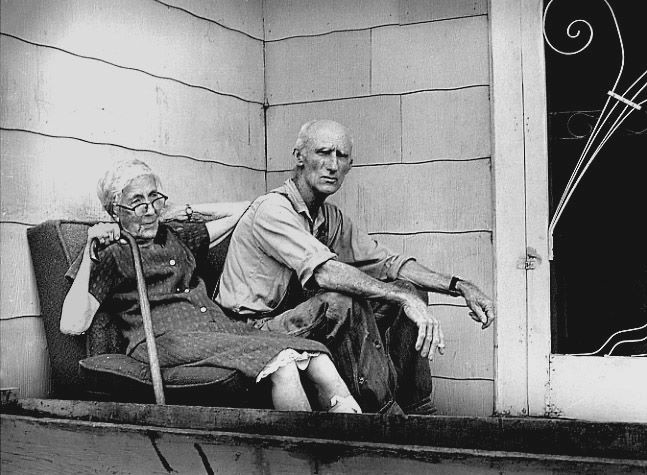
porch sitting


(Read what goblins think of writing, or how they ambush prey.)


Now that you know what's typical, it's time to make some changes for your own setting.  For each of these species, you could choose two attributes from the table below.
  1. They're overly _____, almost absurdly so.
  2. They're not really as _____ as people say.


Traits (d8)humanselvesgiantsgoblins
1bravepolitevengefulsuspicious
2noisylegalisticquietcurious
3aggressiveeloquentobservantfond of complaining in solidarity
4boastfulritualisticpensivegood at reading people
5adventurousarrogantpracticalloyal
6heroicschemingdourskittish
7celebratorysecretivefond of appealing to historyproudly unrefined
8casually violentmeticulouspedanticexcitable


typical traits
Humans are overly...
Humans aren't all that...
Elves are overly...
Elves aren't all that...
Giants are overly...
Giants aren't all that...
Goblins are overly...
Goblins aren't all that...


Player-characters are the protagonists of a roleplaying game, so if anyone's going to be an unusual example of their species, it's probably them.  You could use the traits above as a guideline, but don't let them be a straitjacket.  Feel free to portray your character (PC or NPC) however you like.

(Edit: This post originally used the term "elves" to refer to what I'm calling "colonials".  The name never really fit well.)

Monday, December 24, 2018

Post-apocalyptic 1700s

Some posts here are about the bright and hopeful future; this isn't one of those.  Signs in the Wilderness is a post-apocalyptic setting, and while it's been long enough that things are starting to look up, the terrible world after the fall is still everywhere.

When I think of these kinds of stories, movies like Mad Max, 12 Monkeys, or even Zombieland come to mind, all set around the modern day.  For this setting, I've been thinking about how the usual post-apocalyptic tropes can apply to an earlier era.

Reclaimed by nature


With so many people dead, the wilderness is full of ruins: forts and villages and mines that were once maintained by people, but have now fallen to the forest.  Abandoned sites have layers of history, even in the short time since the apocalypse.  You can see why they were built, how they fared in the end, how the forest has grown over them, and even who's been there since.

Overgrown Tomb, Steven Belledin


Ruins aren't clean, static places; they're as changing as the forest.  Rain gets in, flooding and rotting.  A wall becomes home to bees.  Tree goblins nest in the rafters.  A cellar holds a sleeping bear.  Floors crumble and rot through, stairs fall apart, and the site gradually fades away into the forest.

You'd have to be pretty desperate to try to make a living on scavenging from the ruins.  But most adventurers are desperate, in one way or another.

Raiders


Crops failed in the starving time.  Tens of thousands left home in search of a chance at survival, anything to eat, anything better than where their neighbors died.  When it's either you or them, someone dies and someone gets to eat for another day.

Those few who were better stocked with food found themselves the target of repeated attacks.  In many cases, the walls held and the raiders starved or moved on.  Others were not so lucky.

Over time, raiding and thieving became a way of life for many, an accepted means of supplementing your food supply in lean times.  Out away from more prosperous parts, it's still a desperate world, full of people who have no qualms about robbing a stranger to feed their kids.


Ambush at Lovewell Pond


Meeting someone on the road is a wary affair.  There's a decent chance they're here to rob you, or that you're here to rob them.  Keep your hand on your pistol and assume every encounter is a trap.

Everyday violence


This generation was raised by a broken and traumatized people.  Their parents watched people starve in the streets, buried piles of bodies when the plague came, and did things to survive that they're not proud of.  Brokenness begets brokenness, and their children learned hard lessons at a young age.

Rude words lead to a fistfight.  Slight someone's honor and you might face them in a duel.  Intrude on the quiet of a town and you might get a beating, but you might get hanged from the nearest tree.

Duel with Cudgels, Francisco de Goya


A party of adventurers is always in danger around other people.  They're perpetual outsiders who can be blamed for all ills, strangers with no one to avenge them.  To survive, they'll have to be ready for violence, which only makes isolated settlements even less likely to want them around.

Warlords


The cruel hand of fate didn't strike everyone evenly.  Anyone with a good source of food and some decent weapons might find themselves much better off than their neighbors.  That kind of power corrupts.  You end up with petty warlords, ruling over a valley or two by doling out survival to those who fight for them.

Loyalty to the warlord means you get to eat.  Defiance brings punitive raids.  You can't fight for long once someone's burned down your barn, and with it all your corn for the winter.

Powhatan, John Smith


These days, every government or power structure operates a bit like a warlord.  A company administrator hands out rations and beatings just as well as a tribal chief or an elected mayor.  Traditions and pieces of paper don't bring power the way food and guns do.

For up-and-coming adventurers, this means hard choices.  To get along, you're going to have to gain the favor of some bad people.  The company might pay well, but they might send you to burn down a whole village.  The council might keep you fed, but only as long as you bring them the heads of their rivals.  And what happens when you're powerful enough that you don't need some warlord's support?  How do you stay in charge without resorting to their cruelty?

Dirt and grime


Everything is broken and dirty.  Someone comes stumbling into the tavern?  You know they're covered in mud, soot, dust, blood, whatever.  Every inn is a grimy little place.  Every traveler looks a bit like the road they travel down.

Couple in a Tavern, Todeschini


But to make the griminess really stand out, a bit of contrast is in order.  The spirit glass hanging outside the city is actually kept clean and sparkling.  The boss takes a bath every night, and her guests eat a proper dinner from fine china.  The telescope is wrapped in a clean, white cloth.

If you want to look rich, look shiny.  Hot baths and clean clothes are a luxury few can afford.

Makeshift and repurposed


People are clever, especially when they don't have any better options.  Old things that can't be made anymore are too valuable to throw away, so they get repurposed and made into other things.

Every settlement has something from the old days that's been repurposed.  The inn used to be a grist mill.  That spearhead used to be a drainpipe.  The tank from the brewery is now a boat.  They tore apart the ship and built it into their fortifications.  That necklace is made of old doubloons.

Zuni blacksmith shop


Things have stories.  Treasure in this world comes with complications: competing claims, malfunctioning parts, and unexpected benefits.

Earth-that-was


After a great collapse, people tell stories about the world that came before.  The past is simplified and idealized, turned into a standard story to help you understand the way things are now.

Some people say it was a better time, venerating the ancestors and calling for a return to their way of life.  Some say it was a decadent age, swept away in a great cleansing of the world.

city of the Mound Builders


Many are in mourning for the old world.  Those few elders who lived in it wistfully think back on the days of their youth.  Their children and grandchildren who grew up in the new days speak of the old as a lost age of glory that will never be attained again.  Whole societies can go on for centuries mourning their golden age.

Relics from the olden days elicit mixed responses, from awe to disdain.


For this article, I've deliberately avoided mentioning some of the usual post-apocalyptic tropes about cars and ammunition.  I think you can still get across most of that concept in a world of muskets and canoes.

I've got a few ideas for posts I'm working on.  What would you like to see next?
  • how people are changed by the frontier
  • population dynamics of the elven hive
  • prophets and preachers of new religions
  • how humans are scary monsters
  • newfangled inventions

Saturday, December 8, 2018

Apocalypse for everyone!

Signs in the Wilderness is a mash-up of a few concepts, but a big one is this:

What if the American apocalypse happened to both sides?

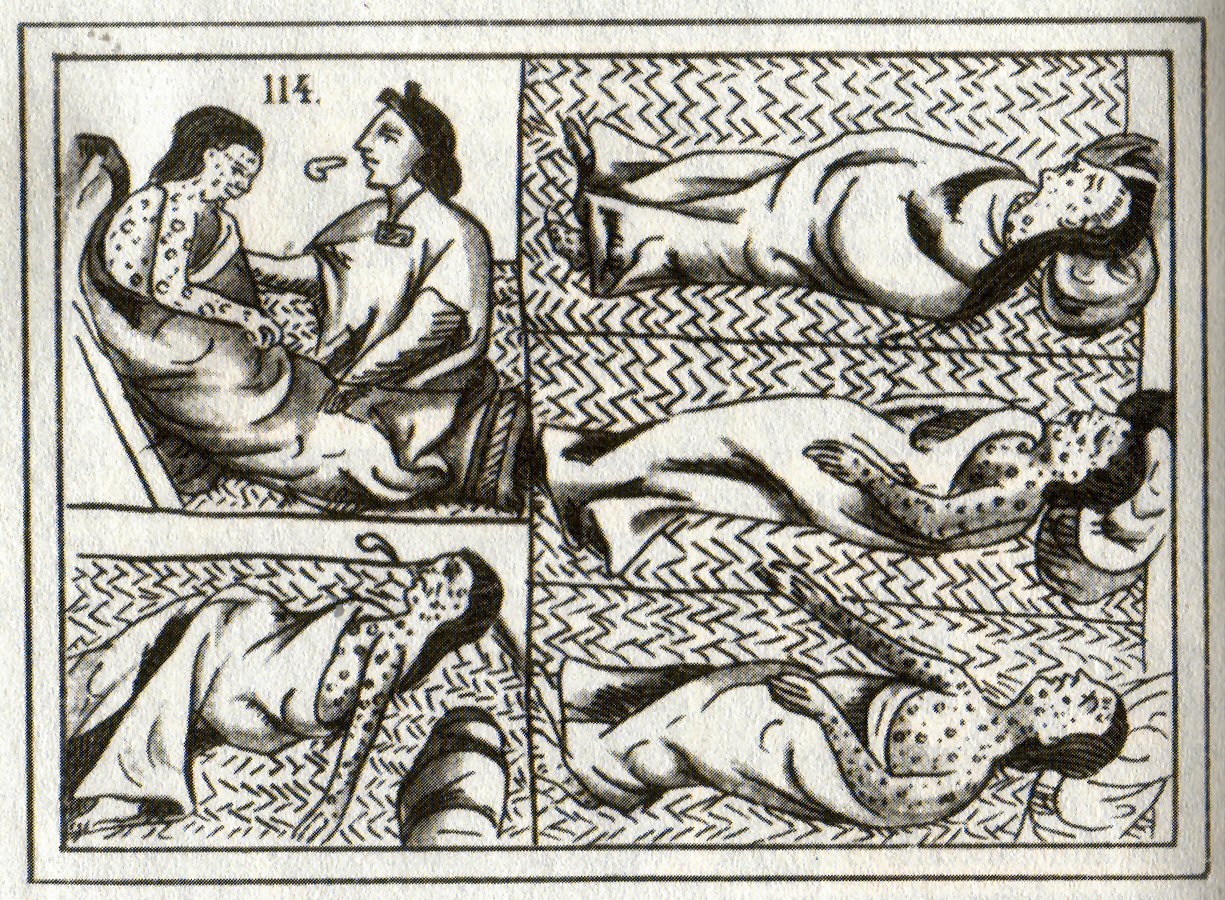
You might not have heard of the American apocalypse by that name.  I'm talking about the vast outbreak of Old World diseases that came over with Columbus and so many ships thereafter.  Smallpox, cholera, a mighty host of sickness that felled tens of millions.

It's likely the greatest outbreak of disease the world has ever known.  Central America, home of the powerful Aztec Empire, is believed to have lost 90% of its population in the first century of contact.

To put that in perspective, imagine if everyone in the US died except for those born in another country.  Or everyone in the US outside New York and Pennsylvania.  Or everyone in the US under the age of 65.

The exact numbers get debated heavily, but the basic fact remains: the Americas are a post-apocalyptic world.

It's an apocalypse that's easy to miss.  Most of the accounts we have of indigenous Americans are from the era after the apocalypse already happened.  It was a vast, empty continent, ripe for the taking because most of the locals had died.

Aztec drawing of smallpox victims.


None of this is a surprise these days.  Maybe you've read Guns, Germs, and Steel or 1491 and you know all about the Great Dying.  It was probably an inevitable plague.  And with human nature as it is, the conquest of America and the near-extermination of a large part of mankind's culture may, sadly, have been inevitable too.

So I started to wonder what it would be like if the apocalypse struck both sides, indigenous and colonial alike.  What if the European world came to an end at the same time?  How would the survivors of both sides move forward?  Who would rule this New World, with the ashes of the old worlds swept away?

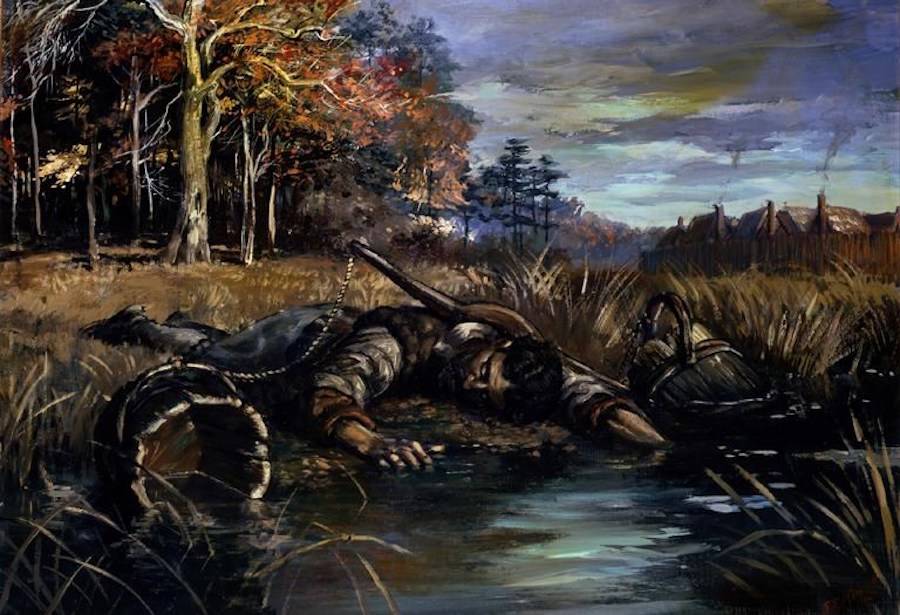
Jamestown settler dead, Sydney King


What would that European apocalypse even look like?  Imagine if, somehow, Europe itself just went missing.  News from the old country would cease, as would immigrants and supplies.  Ships sent out to investigate would leave Virginia, never to return as they ran out of food somewhere in the ocean where Europe once was.  The fledgling colonies might die out or be absorbed into the local populace, Roanoke writ large.

Signs in the Wilderness is about the frontier between civilizations, but also between the lost world of the past and the new world to be built.  The apocalypse has already happened.  One way or another, most people died, and their worlds died with them.  Now the survivors have grown up, and their children have grown up, and they've begun to build something new.

It's a world that's still mostly empty, with ruins of the past but hope for the future.

William McAusland


So how did the world end?  I like to leave plenty of mystery around the days of the apocalypse.  It's a dark time that the elderly survivors don't like to talk about.  But it left scars not only among the people, but on the world itself.  At some point, you'll need to know how it happened.

Pick two items from the table below.  The first is what actually caused the end of the world.   The second isn't the main event, but it may have happened as well or it might just be a widespread rumor.

Apocalypse (d10)signs
1-2meteorite impactwave-scoured shores, tales of darkened skies and crop failures, meteor shower every year
3-4pandemicbones and abandoned villages, fearful isolated settlements, chance the plague may return
5-6forbidden knowledgescientific research into terrible things, backlash against science
7divine retributionnew theology, theories about what distinguished those who were allowed to live
8long wintertales of starvation and years of ice, dead forests
9hibernating creaturesphysical remains, legends, theories about how many centuries the creatures sleep
10years of droughtland scorched by fire, fallen trees, lost crops from the old days


apocalypse
the real cause of the apocalypse
but at least one rumor or sign points to

Saturday, December 1, 2018

Religion that can't be avoided

The world is a dangerous place, full of death and chaos.  What little people have been able to figure out about it they've passed down to their children and grandchildren.  Societies that discover the right way to live might prosper; those that don't are doomed to fail.

This hidden knowledge of the ages isn't something you can afford to ignore.  It's folklore and science and culture all wrapped into one.  This is religion.

Tuvan shaman, Alexander Nikolsky


In our present day, there's a rift perceived between religion and science, two areas of life set at odds against each other.  To many, religion is something you do in private for vaguely "spiritual" reasons or to "be a better person".  Science (like its aft-facing counterpart history) is seen as a proper area of learning and study, where useful knowledge can be obtained.

With that mindset, it's easy to forget about religion.  In the world of Signs in the Wilderness, everyone is religious, in one way or another.
  1. Religion is ancestral.  It's been passed down from generation to generation, a tangible link to the ancestors who came before you.  You might not own anything your great-great-grandmother once had, but you can still practice her religion and know her story.
  2. Religion is cultural.  If all our people do things the same way, that way identifies us as a people and shows who belongs to our group.
  3. Religion is political.  When religion determines identity and prescribes conduct, religious authority becomes political power.
  4. Religion is knowledge.  The ancestors did things this way for a reason.  We've lost a lot since the apocalypse; following their ancient rule may save us from dangers in ways we don't even understand.
That's fine for background material, but you might be wondering how it actually matters.  How does all this religion make any difference in a roleplaying game?  Why would a party of adventurers actually care?

Let's look closer at those four points:
1. History is passed down through religion.
  • Your grandfather's musket comes with a code of honor and a story of how it was used.
  • Conflicts in the past can spill over into the present, especially if they're still talked about in the religion.
  • Likewise, old alliances can be rekindled if both sides remember the old stories.
2. Cultural identity is religious identity.
  • If you want to fit in, you're going to need to show that you know the signs and the stories.
  • Breaking the religious rules gets you exiled from the group (or worse).
  • If you're of the wrong religion, you're not welcome here.
3. Political power can stand on religious authority.
  • A revered prophet speaks, and the people believe.  The one who bears the signs of the prophecy will be given great power.
  • A leader breaks a taboo or opposes the will of the ancestors, and the people will not allow them to remain in power.
  • Religious support strengthens a regime, so a wise conqueror will go to the priests for confirmation of their right to rule.

4. Hidden knowledge can be found in religion.
  • Throwing salt over your shoulder might actually ward away bad luck.
  • Hanging mirrors around a graveyard might actually keep the spirits of the dead out of the village.
  • There might actually be a being watching from the mountain, and the local religion teaches how to avoid angering it. 

W. D. McIntyre

Fifty-odd years ago, the world nearly came to an end.  Darkness covered the sun, cold winds blew down from the north, and there was hunger and war and death.

Beliefs were tested.  Many didn't survive.

Think of difficult times as a scientific experiment.  Previous experimenters had come to various conclusions, but now a larger experiment was being run, testing the foundational beliefs of the world.  Everyone had a hypothesis, a theory of their own about how the world truly worked, and everyone was about to see the result.  Some beliefs turned out to be right, gaining support from the experiment.  Some beliefs turned out to be wrong, leading some to change to better-supported theories while others dug in their heels.

The old ways have been shaken, challenged, and often broken by the apocalypse.  Great rifts in society have opened up, room for conflicts that can engulf everything, including unwary outsiders.  People today fall into a few major groupings:
  1. Those who hold even tighter to the old ways.  They're deeply conservative, trying to protect their people from any dangerous innovations.
  2. Followers of new religions.  They are certain that the old ways led to destruction.  They believe in their religion's promise of a new world.  It's likely that they follow a teacher or a prophet.
  3. Victims of the ongoing social trauma of the apocalypse.  They're stunned, in mourning, part of a culture that has lost its purpose.
At least one religion predicted that a great catastrophe was imminent.  It's no surprise that they've only gained adherents since the apocalypse, going from a tiny tribal religion to a widespread movement throughout the North.

New religions have also shown up since the apocalypse.  For many people, it seemed like none of the theories explained what had happened.  That's when to sit down and think and come up with a new theory, a new way to understand the world and figure out what to do next.

Santeria, Mick Palumbo

If religious movements were purely scientific, there'd be a lot less resistance to changing from one to another.  (Though there'd still be some resistance — scientists are as stubborn as anyone else.)  But when religion isn't just about knowledge, but also political power and cultural identity and ties to one's ancestors, changing religions undermines all of society.


A few topics I'd like to get to in future posts:
  1. rolling up a random human religion
  2. the fracturing of the elven religion after the loss of the great temple
  3. goblin shamans: spirits and pharmacology
  4. giants who converted to the old orthodox elven faith
  5. playing as a missionary character
Do any of those sound interesting?

Thursday, November 29, 2018

Behind the scenes: generating a completely random adventure

And by "adventure" I mean "bit of campaign setting" or more realistically, "gibberish you could hammer an adventure out of".


I've written up a lot of random tables.  For this post, I'm going to roll up a brand new Signs in the Wilderness adventure and explain the results as I go.  (Normally I don't recommend choosing everything at random.)  At this moment I haven't picked anything out yet, and I'm not going to backtrack along the way, so this is going to be completely at the mercy of the dice and my horribly incomplete tables.

Great opportunities


Let's start with the table of great opportunities, since those are what drive the story.

The first opportunity is an unexplored wilderness.  According to my notes, this could look like an expedition of discovery, charting the wilderness, cataloguing new species, or establishing a claim.  I haven't written up the subtables for this one yet, but that's four (somewhat overlapping) options right there, so I'll roll a d4 and...charting the wilderness it is.  That means I'll need to figure out who wants this wilderness charted and why.  This opportunity is shown by the existence of the unknown country itself, and by competitors being sent to do the same job.  Plenty of open questions.

In the meantime, the second opportunity is wealth, an opportunity for a salesman.  Some indicators of this opportunity: a new invention, shortages or high prices, eager/hungry newcomers, and isolated communities.  This could dovetail well with charting the wilderness.

Tuesday, November 27, 2018

Random adventure?

Would anyone be interested in reading about an adventure made entirely at the whim of the dice?

I've been writing up a lot of random tables for Signs in the Wilderness.  My usual rule is that if I can't think of three options for a concept, I probably don't have a good sense of that concept yet.  So every time I'm writing down notes for an adventure, I end up building a new random table or expanding an old one.

At this point, I've got enough tables to start rolling up a completely random bit of setting, enough to cause some conflicts, present some interesting stuff to do, and have a bit of the world to adventure in.  I know the random tables are incomplete, so trying to use them for everything would probably fall flat, but it might be an interesting experience to share.

Kick-Up at the Hazard Table, Thomas Rowlandson


So would you be interested in reading along as I try rolling up a completely random adventure/mini-campaign?

Saturday, November 24, 2018

Elven delicacies

There's the simple way, then there's the elven way.  Elves have a reputation for complexity and over-engineering, in everything from law to technology to food.  A fine elven meal is hardly complete without a special delicacy, a treat for everyone at the table.

(This is a rather silly post, so if you're just here for wilderness adventures, you should probably look somewhere else.)

Chinese pastries, seriouseats.com


Start with its shape.  I'll roll up a random delicacy as we go to show you how it works.

Shape (d12)
1round ball
2flat disc
3long stick
4spiky/star-shaped
5diamond/parallelogram
6pyramid
7ring
8twisted into a knot
9flattish with a pressed floral pattern
10elephant/camel/giraffe
11irregular cluster
12layers of the exterior and filling

Decide what the outside of the delicacy is made of, and then what kind of finish it has.

5: This food is cut/pressed/molded into a diamond or parallelogram shape.

Exterior (d20)
1-4no outer layer around the filling
5candy shell
6mochi (sticky rice candy dough)
7steamed dough
8baked dough
9fried dough
10sugar glaze
11chocolate
12a pepper
13frosting/icing
14crispy pastry
15a tomato
16hollow/folded pasta
17a raspberry
18sticky rice
19cheese
20crumbly cookie

14: It's a diamond-shaped crispy pastry.

Finish (d20)
1-2no special finish
3powdered sugar
4nutmeg
5edible rice paper
6patterned paper wrapper
7salt
8cocoa powder
9crushed walnuts
10shredded coconut
11pine nuts
12dusting of flour
13cinnamon
14sesame seeds
15poppyseeds
16seaweed
17smoked
18honey
19grated cheese
20olive oil / butter

3: Diamond-shaped crispy pastry coated or topped with powdered sugar.

Cucidati, savingdessert.com


There's a filling inside:

Filling (d20)
1hard candyflavored with (d20) 1: honey, 2: molasses, 3: tomato, 4: pistachio, 5: cheese, 6: lemon, 7: pineapple, 8: peach, 9: coffee, 10: butter, 11: tea, 12: jasmine, 13: lavender, 14: rose, 15: licorice, 16: peppermint, 17: frankincense, 18: salt, 19: rum, 20: roll twice
2chewy sweet (like nougat or taffy)
3jelly/gel/gummy
4creamy filling
5ball of cotton candy
6spongy bread/cake
7crispy cookie/cracker
8candied apricot
9marzipan
10cluster of sesame seeds
11walnut
12bean paste
13egg
14puffed rice
15candied ginger
16fig paste
17dried plum
18soft cheese
19hollow inside
20an inedible trinket with writing on it

19: The pastry is hollow inside.

Anastasiya Sviderska


In polite society, there's a proper way to eat these delicacies.

Method of Eating (d12)
1-2Pick it up with two fingers, but not using your thumb.
3-4Use a spoon.
5-6Use small tongs.
7-8Use chopsticks.
9-10Use a tiny sieve to dip it in tea or coffee.
11Stab it with a sharp skewer.
12Break it apart with a flat knife and a little mallet, then pick up the pieces on the knife.

7: You're supposed to eat this pastry using chopsticks.  Hopefully it's small enough to make that reasonable.

But there's a complication, something that makes these rather awkward.

Complication (d12)
1They are absurdly large.
2They are very small.
3They are eaten together with another delicacy.
4You and your neighbor feed each other.
5Surprisingly, these are the main course of the meal.
6Eat one to show that you would like to leave.
7You will have to pay for each one you eat.
8You are supposed to take one and pass the dish.
9The dish is placed near you, but you are supposed to ask the host to serve you when you want one.
10A large number of them are served to you, but this is not the main course. You are expected to return any you do not eat.
11They are served in a sauce.
12They are eaten in silence.

2: Turns out it's surprisingly small: a tiny, hollow, crispy pastry in a diamond shape coated in powdered sugar, eaten with chopsticks.  I'd eat that.

Let's roll up a few more:
  • A flattish layer of sesame seeds (probably held together with honey or something) with icing on top in a floral pattern, and then more sesame seeds sprinkled on top.  Eaten with chopsticks, but it's understood that you'll pay for each one you eat.
  • An irregularly-shaped crumbly cookie, filled with fig paste, wrapped in edible rice paper.  You take one and pass the dish, then dip it in your tea/coffee with a small sieve.
  • Egg, pressed into the shape of a camel.  (That's it, no exterior or finish.)  Pick one up with two fingers (but not your thumb) and feed it to your neighbor.
  • A long, skinny pepper filled with marzipan and dipped in olive oil.  Eat one to show that you would like to leave.  (I don't want to eat one of these).
  • A ring-shaped folded pasta (like tortellini, I suppose) with a creamy, tea-flavored filling, and sprinkled with poppyseeds.  The dish is placed near you, but you ask your host to serve them to you, then you dip them in your tea.
  • A crispy pastry shaped like a hockey puck, with a walnut inside.  Eaten with your fingers as the main course of the meal.


Roll up an elven delicacy of your own:

delicacy
filling
exterior
shape
finish
method
complication