Showing posts with label elves. Show all posts

Saturday, August 6, 2022

Elves, the City People

Elves are the city-dwellers, the colonial conquerors from beyond the ocean sea.  They came a century ago in their great ships and established outposts of empire here in the North.  Now the empire is gone, but a few colonies remain, citadels of power and wealth.

Appearance

Elves (cazandi cah-ZAHN-dee in their own tongue) are primates from a hot and dry continent.  They are taller and thinner than humans, with long spindly limbs and digits.  Outsiders cannot recognize any distinctions of gender among them.  Their skin tends toward dark, earthy shades of gray and brown, but their eye colors are brilliant gem tones.

Roleplaying

Playing as a cazand one must be careful.  Elves are weaker and more easily injured than most people, and are unskilled at running and throwing.  But what they lack in physical prowess they make up for in wealth and connections.  An elven character starts with more money, access to more technology, and membership in the organizations of colonial society.

If you're looking for some roleplaying tips, here's how I like to make a character feel more cazandi:

  • Always be polite, especially when being cruel.
  • When in doubt, do it by the book and the ancestors wrote a book for everything. 

An elven adventuring party likely has a name, an emblem, elected officers, and written bylaws, with specific provisions for what happens if a member dies and the proper ritual for inducting a new member into the group.

    Lifestyle

    Elves are a eusocial species: only a few of them, the Mothers and Fathers, actually reproduce.  Each city is like a vast extended family, all descended from the city's lineage of Mothers.

    Within the city, each cazand is part of several different overlapping societies: a guild or company where they make their living, a fraternal order where they share a morning meal, a temple maintenance society where they work together for the upkeep of one of the city's shrines, an alumni association for the cohort of schoolmates they were raised with, and so on.

    They subsist mostly on bread and vegetable products, but they do also eat fish and a few types of meat.  Elves are the only people capable of digesting milk as adults, so they keep livestock for dairy products.

    Technologically, they're at the level of muskets, telescopes, and joint stock corporations.  Most elves can read and write.

    Their cities are usually on the coast or on rivers, as they use ships for most of their commerce.  They have some draft animals to pull wagons (oxen, donkeys, and even a few surviving elephants) but they do not generally ride animals.  In the cities you might run across an elf with a tally bird, a sort of domesticated parrot that can count and do basic arithmetic.

    In extreme conditions of drought or heat, elves can go into hibernation, seeming nearly dead until conditions improve and they wake again.

    Other People

    The typical elven view of the other species of people is deeply racist and condescending:

    • Giants are like some kind of intelligent livestock.  Strong and useful, and even possible to educate if you're patient.  Occasionally giants have been known to revolt, for some reason.
    • Humans are fearsome enemies, preventing the colonies from making full use of the countryside.  They're treacherous and primitive, but sometimes you have to make concessions to keep the peace.
    • Goblins are vermin at best, deadly threats to travelers at worst.  The forests cannot be trusted, full of goblin ambushers ready to attack with teeth and claws.

    Those kinds of views are common in the cities where cazandi only deal with other cazandi.  But out on the frontier where the Four Peoples meet, you learn to get along or you find yourself getting in trouble.

    Inspiration

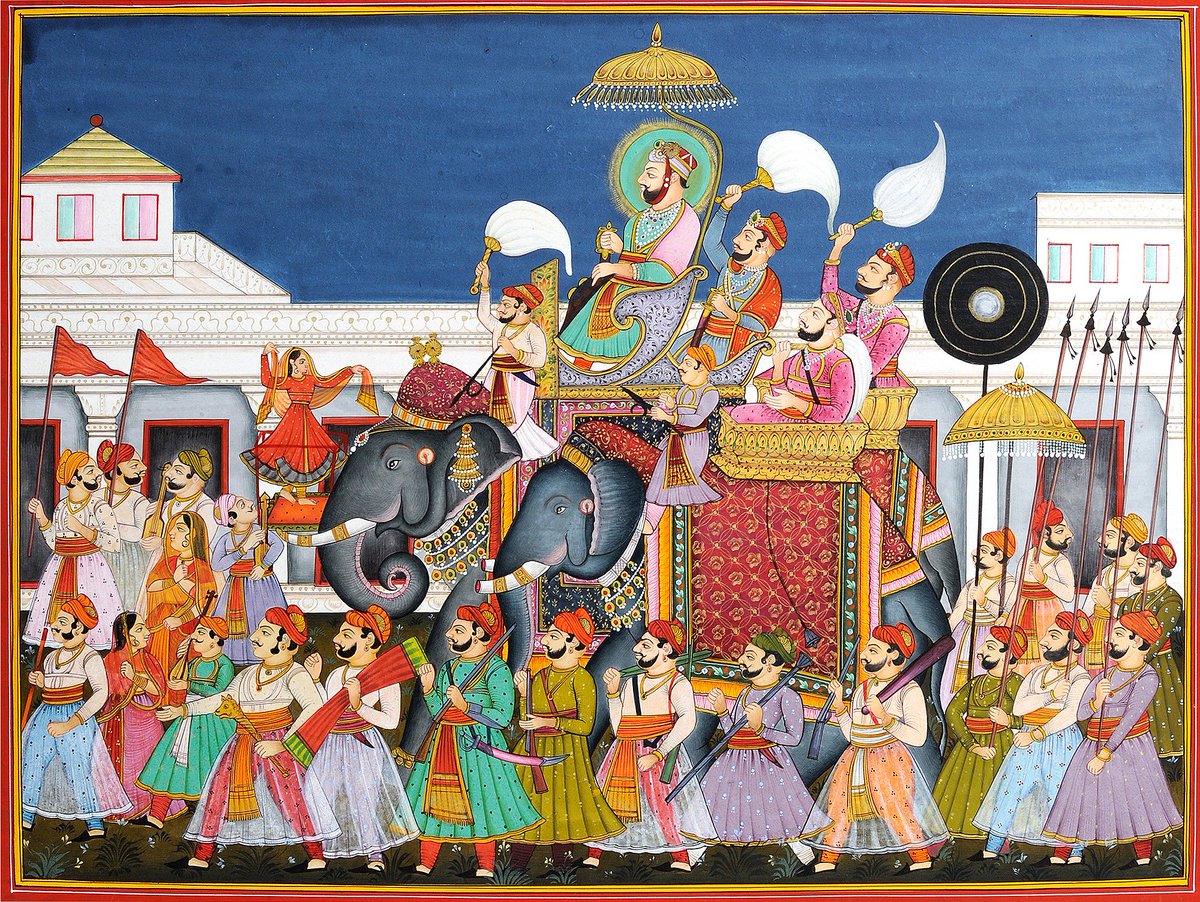
    Elves in this setting take the role of the European colonial powers in the New World.  As such, I've styled them after a mix of some of Old World aesthetics: Mughal architecture and textiles, Mediterranean galleons and xebecs, English hats and coats, etc.

    Their language is meant to sound vaguely Romance without being from anywhere specific, like it's wearing the coat of Catalan or Old French, but underneath it's something entirely different.
    Sunday, November 1, 2020

    Tavern generator

    Taverns and inns are the heart of the community in the Northern Lands, a place for lodging and drink, where news is told, letters are received, and new ventures are begun. 

    In fantasy roleplaying games taverns are a traditional gathering place and springboard for adventure.  This, I think, has less to do with anything medieval (where taverns were yet to develop) and has everything to do with one salient example from literature Tolkien's Prancing Pony.  While taverns may not have been especially medieval, they were certainly a feature of colonial America, and thus they're entirely appropriate for Signs in the Wilderness.

    We'll start with the name. Roll 1d6 and 2d12.

    Name (d6)

    1-2: X and X 3-4: Color X 5-6: Adj. Inn


    X (d12) Color (d12) Adj. (d12) Inn (d12)
    1 Anchor Red Wayside Tavern
    2
    3 Fish Blue City
    4 Key
    5 Fiddle Old Publick Inn
    6 Lobster Shoreside
    7 Lion White Stone
    8 Goat Admiral's
    9 Eagle Green Shepherd's House
    10 Hook Black Governor's
    11 Gong Great Wayfarer's
    12 Hen Golden Seafarer's Alehouse

    I rolled up two example taverns: (2, 5, 3) gives us the Fiddle and Fish.  (6, 8, 3) is the Admiral's Tavern.

    Roll 3d20 for what you find at this tavern.

    Features (d20 thrice)
    1-2 folks down on their luck, eager for work
    3-4 a wretched hovel: cold draft and leaky roof
    5-6 reading a newspaper aloud: news of trouble or a great opportunity
    7-8 fearful of strangers due to recent trouble
    9 militia drills outside, smell of gunfire
    10 work for someone tough, brave, and discreet
    11 influential people discussing a grave threat
    12 a party to celebrate a safe return from afar
    13 military recruitment drive
    14 hiring for a job seemingly proper and official
    15 a letter for you or someone where you are traveling to
    16 crowded, smoky, no room to stay tonight
    17 a peddler showing their wares
    18 song and storytelling
    19 an unwanted inspector or tax collector
    20 people of an unexpected species

    The Fiddle and Fish (3, 12, 15) is a wretched little place: cold in the winter and leaky when it rains, but it's the best this frontier town has to offer.  Tonight there's a bit of celebration going on, as one of the townsfolk has safely returned from a long journey.  There's a letter waiting for you at the tavern -- did someone back home know you'd be passing through here?

    The Admiral's Tavern (9, 11, 6) has an atmosphere of grave concern.  Outside the militia has been performing drills all day, and the smell of gunpowder pervades.  Someone here is reading the latest newspaper aloud for their neighbors: an article about recent trouble.  Influential people from this town are gathered at one table, discussing a threat to the community.

    Food and drink are obvious, but what's a tavern without gambling?  Roll a d6 to see what game of chance is typical at this establishment.

    Gambling (d6)
    1 A noisy game of dice and rhyming in the corner.
    2 All have wagered money on the outcome of a game of cavál (akin to chess, but where one spends money to ransom captives).
    3 A round table of a card game with pictures of tropical animals and farm implements.
    4 Guessing the weight of a sheep outside or the number of coffee beans in a jar.
    5 Selling tickets for a raffle for a cow, a bottle of drink, or an unexpected reward.
    6 Gambling is decried as sinful and not practiced here; perhaps a lecture is offered instead.

    At the Fiddle and Fish, there's a rowdy crowd gathered around a game of cavál.  They're all betting on who's going to win, so you can tell when someone makes a strong move just from the noise.

    The Admiral's Tavern doesn't go for any of that low-class gaming nonsense.  Instead there's a sign up that they're raising funds to rebuild the church; buy a raffle ticket for a chance to win a fine bottle of whiskey on display behind the bar.

    Frontier towns are short on community spaces, so the tavern tends to fill other purposes.  Roll a d8 for another complication about this place: once if it's in a big town, up to four times if it's in a remote frontier outpost.

    Also (d8, 1-4 times)
    1 Coin is in short supply in this settlement; folks run a tab and settle their debts monthly.
    2 The tavern also serves as general store for the town.
    3 They're closed during the work day.
    4 Instead of smaller rooms, there's one big communal room upstairs where guests sleep.
    5 If you want to buy the local products, they're auctioned off here monthly.
    6 A local official conducts business at their usual table.
    7 The inn serves as the town's courtroom when needed.
    8 This is a polling place for elections. The local council meets here.

    The Fiddle and Fish is in a small outlying settlement that's short on actual currency.  Folks run up a tab at the tavern and settle their debts monthly, usually in farm produce.  On that day there's also an auction for the sale of livestock, grain, tools, whatever surplus the town has to offer.

    The Admiral's Tavern is a more respectable establishment that isn't open for public drinking during the workday.  When this town has occasion to convene a court, the court meets at the tavern. 

    Roll up your own tavern:

    Click here for a random Tavern.
    name
    feature
    feature
    feature
    gambling
    also
    also
    also

    Friday, April 26, 2019

    Strangers from a distant land

    Recent years in the North have been dominated by the strange folks from over the sea, the empire that sent colonists and then vanished, never to be heard from again.


    So far I've been calling these people "elves", but it's a very poor fit.  They're not forest-dwellers, not long-lived embodiments of human ideals; they're not archers, and I don't really care whether their ears are pointy.  (I guess they do manufacture toys more efficiently than anyone else, but Santa's elves these are not.)

    Instead, these people are:
    • from a coastal hot and dry climate
    • physically weak, bad at throwing things
    • hive-based, where only a few Mothers and Fathers in each city breed, while the rest work
    • excellent tool-users, with nimble fingers and specialized tools
    • flexible and acrobatic
    • milk-drinkers and bread-eaters
    To humans, tree goblins, and giants, these people are strange interlopers, outsiders who don't fit the usual understanding of life.

    To the northern folk, these are the Strangers.  It's a North-centric term (no Stranger would call themselves one) but considering three of the four intelligent species are indigenous to the North, I don't mind leaning in their direction.


    What they call themselves almost doesn't matter, as they've never dealt with other intelligent species until now.  When you don't know anyone else, you end up calling yourself something generic, like the People or the Ordinary Boys.

    In the pseudo-American framework of Signs in the Wilderness, the strangers are inspired by English alchemists, sultans of Delhi, Malay pirates, master craftsmen of the Great Qing people from all corners of the Old World, strange and exotic to the people of the New.


    I'm still rolling the term around my head, but for now, I think I like calling the imperial folk Strangers.  A few terms I've considered lately:
    • elves
    • strangers
    • imperials
    • southerners
    One thing is certain: I'd like to use a name that isn't entirely invented.  Calling them Strangers suggests something, that they're known for being outsiders, mysterious newcomers.  Calling them Abskiul or Marecun or Tsadelath doesn't really suggest anything at all.


    (And yes, I'm being deliberately inconsistent with the capitalization of Stranger.  On the one hand, I haven't decided which I prefer.  On the other, I'll probably end up uſing more Capital Letters anyhow for that early modern Flair.)


    I'd love to hear your thoughts and suggestions on the topic.  I imagine there's no perfect solution, but I'm sure there's one out there that's good enough.

    Sunday, February 24, 2019

    Message for you, sir

    After a long trek through the wilderness, the party makes it back to the watering hole at Flint Ridge.  Dirty and exhausted, they slump into their usual chairs.  There's a letter waiting for them with the tavern master.  The lieutenant digs out a shilling for it, then unfolds the letter.  Could it be news about the war?  Answers about the lost treasure?  A letter of credit to pay off the party's debts?

    Ilya Repin, Reply of the Zaporozhian Cossacks


    In a world where writing is magic, the post office is like the astral plane.  Secret messages, hidden money, many powerful things can be sent through the post office.

    The colonial postal system almost didn't survive the apocalypse (hard to keep the mail going when no one's left to send any) but it's been a generation.  The viceroy, nominal ruler of the elven colonies, has reestablished post offices and messenger routes.  This is good for communication, but it also means the viceroy has agents visiting every major elven town, reporting back about the conditions and goings-on of the scattered colonies.

    Getting a letter


    In larger elven settlements there's a local post office.  Mail can be delivered to local addresses, though roving adventurers usually have things sent to the post office where they can pick them up.  Smaller outlying settlements aren't big enough for a post office, so there you can pick your mail up at the local tavern or the general store.

    Unlike modern mail, in the colonies the recipient pays for correspondence.  If you don't pay for your mail, it ends up being thrown away.

    Letters from another city cost a shilling (the usual small silver coin, worth half a day's wages or a ferry ride across a river).  Letters from across town cost only a penny or two.

    Thomas Webster, A Letter from the Colonies


    What they want (d6)
    1They want the party to do some work for them.
    2They want the party to stop interfering and go away.
    3They say the party owes them a debt.
    4They want to warn the party about danger.
    5They want information from the party.
    6They want to use one of the party's resources.

    Why the party cares (d6)
    1They claim to be the authorities or powerful figures.
    2They have something the party wants.
    3They are offering to pay in some way.
    4The letter contains valuable information.
    5They are close to an enemy of the party.
    6The party owes them a debt.


    a letter arrives for the party
    what they want
    why the party cares

    Sending a letter


    If you want to send a letter, there are a few different ways:
    • Larger towns and cities have a post office, so you can drop your letter off there.
    • In port towns, just hand your letter to the next ship captain headed to a major city.  They're supposed to drop it off with the postmaster when they arrive.
    • Many inland settlements are visited by postal messengers on their route.  Wait for one to come along and you can hand your letter to them.
    • You could entrust your letter with a member of the community (the innkeeper, the clerk of the general store, etc.) for them to hand off the letter for you.
    So how long will it be till someone picks up your letter?
    • From an elven city to the viceroy's capital in the Summer Isles (or vice versa), it'll be 1d6 days till a ship leaves carrying your letter.
    • From one city to another, 1d4 weeks.
    • To/from any other port settlement, 1d8 weeks.
    • To/from any other elven settlement, 1d6 months.
    Taconville, Messager Boiteaux

    There are many reasons the party might send a letter:
    • Asking for information: when a ship will sail, whether someone has been seen at an inn, where a lost ship was last seen, etc.
    • Requesting money from their sponsor, likely in the form of a check or a letter of credit that could be turned in for coin at a bank.
    • Mail ordering supplies.  Plenty of companies will do business through correspondence, shipping goods and accepting payment over a distance.
    • Asking a friend for help.
    • Impersonating someone powerful.
    • Getting information published in a newspaper.
    • Hiring someone to do a job.
    • Blackmailing someone.
    • Warning someone about danger.
    Beyond the elven colonies and a few of their allies, the mail just doesn't get through.  Humans send runners with messages, giants memorize copious amounts of news on their wanderings, and goblins pass along a lot of garbled rumors.

    Saturday, November 24, 2018

    Elven delicacies

    There's the simple way, then there's the elven way.  Elves have a reputation for complexity and over-engineering, in everything from law to technology to food.  A fine elven meal is hardly complete without a special delicacy, a treat for everyone at the table.

    (This is a rather silly post, so if you're just here for wilderness adventures, you should probably look somewhere else.)

    Chinese pastries, seriouseats.com


    Start with its shape.  I'll roll up a random delicacy as we go to show you how it works.

    Shape (d12)
    1round ball
    2flat disc
    3long stick
    4spiky/star-shaped
    5diamond/parallelogram
    6pyramid
    7ring
    8twisted into a knot
    9flattish with a pressed floral pattern
    10elephant/camel/giraffe
    11irregular cluster
    12layers of the exterior and filling

    Decide what the outside of the delicacy is made of, and then what kind of finish it has.

    5: This food is cut/pressed/molded into a diamond or parallelogram shape.

    Exterior (d20)
    1-4no outer layer around the filling
    5candy shell
    6mochi (sticky rice candy dough)
    7steamed dough
    8baked dough
    9fried dough
    10sugar glaze
    11chocolate
    12a pepper
    13frosting/icing
    14crispy pastry
    15a tomato
    16hollow/folded pasta
    17a raspberry
    18sticky rice
    19cheese
    20crumbly cookie

    14: It's a diamond-shaped crispy pastry.

    Finish (d20)
    1-2no special finish
    3powdered sugar
    4nutmeg
    5edible rice paper
    6patterned paper wrapper
    7salt
    8cocoa powder
    9crushed walnuts
    10shredded coconut
    11pine nuts
    12dusting of flour
    13cinnamon
    14sesame seeds
    15poppyseeds
    16seaweed
    17smoked
    18honey
    19grated cheese
    20olive oil / butter

    3: Diamond-shaped crispy pastry coated or topped with powdered sugar.

    Cucidati, savingdessert.com


    There's a filling inside:

    Filling (d20)
    1hard candyflavored with (d20) 1: honey, 2: molasses, 3: tomato, 4: pistachio, 5: cheese, 6: lemon, 7: pineapple, 8: peach, 9: coffee, 10: butter, 11: tea, 12: jasmine, 13: lavender, 14: rose, 15: licorice, 16: peppermint, 17: frankincense, 18: salt, 19: rum, 20: roll twice
    2chewy sweet (like nougat or taffy)
    3jelly/gel/gummy
    4creamy filling
    5ball of cotton candy
    6spongy bread/cake
    7crispy cookie/cracker
    8candied apricot
    9marzipan
    10cluster of sesame seeds
    11walnut
    12bean paste
    13egg
    14puffed rice
    15candied ginger
    16fig paste
    17dried plum
    18soft cheese
    19hollow inside
    20an inedible trinket with writing on it

    19: The pastry is hollow inside.

    Anastasiya Sviderska


    In polite society, there's a proper way to eat these delicacies.

    Method of Eating (d12)
    1-2Pick it up with two fingers, but not using your thumb.
    3-4Use a spoon.
    5-6Use small tongs.
    7-8Use chopsticks.
    9-10Use a tiny sieve to dip it in tea or coffee.
    11Stab it with a sharp skewer.
    12Break it apart with a flat knife and a little mallet, then pick up the pieces on the knife.

    7: You're supposed to eat this pastry using chopsticks.  Hopefully it's small enough to make that reasonable.

    But there's a complication, something that makes these rather awkward.

    Complication (d12)
    1They are absurdly large.
    2They are very small.
    3They are eaten together with another delicacy.
    4You and your neighbor feed each other.
    5Surprisingly, these are the main course of the meal.
    6Eat one to show that you would like to leave.
    7You will have to pay for each one you eat.
    8You are supposed to take one and pass the dish.
    9The dish is placed near you, but you are supposed to ask the host to serve you when you want one.
    10A large number of them are served to you, but this is not the main course. You are expected to return any you do not eat.
    11They are served in a sauce.
    12They are eaten in silence.

    2: Turns out it's surprisingly small: a tiny, hollow, crispy pastry in a diamond shape coated in powdered sugar, eaten with chopsticks.  I'd eat that.

    Let's roll up a few more:
    • A flattish layer of sesame seeds (probably held together with honey or something) with icing on top in a floral pattern, and then more sesame seeds sprinkled on top.  Eaten with chopsticks, but it's understood that you'll pay for each one you eat.
    • An irregularly-shaped crumbly cookie, filled with fig paste, wrapped in edible rice paper.  You take one and pass the dish, then dip it in your tea/coffee with a small sieve.
    • Egg, pressed into the shape of a camel.  (That's it, no exterior or finish.)  Pick one up with two fingers (but not your thumb) and feed it to your neighbor.
    • A long, skinny pepper filled with marzipan and dipped in olive oil.  Eat one to show that you would like to leave.  (I don't want to eat one of these).
    • A ring-shaped folded pasta (like tortellini, I suppose) with a creamy, tea-flavored filling, and sprinkled with poppyseeds.  The dish is placed near you, but you ask your host to serve them to you, then you dip them in your tea.
    • A crispy pastry shaped like a hockey puck, with a walnut inside.  Eaten with your fingers as the main course of the meal.


    Roll up an elven delicacy of your own:

    delicacy
    filling
    exterior
    shape
    finish
    method
    complication

    Sunday, October 21, 2018

    Memory transference

    When the elves first showed up in the North, they brought many wondrous inventions with them, but one of the strangest was their power of memory transference.

    It's a learned magic, a skill taught to every elven child.  With this power, one person can touch an object and imbue it with a memory or a thought.  Another who knows the skill can recognize the tell-tale markings on the object and retrieve the memory into their own mind.  It's best done using a wand or a brush of some kind, but simple thoughts can even be conveyed with nothing but your fingertips.


    You and I know this power as writing.  For us it's entirely unremarkable, but to an illiterate society, writing is magic.

    An incident from the 1620s might illustrate this better.  One missionary sent a note to another asking for a fresh canoe, and the Hurons traveling with him were amazed that it worked:
    They said that that little paper had spoken to my brother and had told him all the words I had uttered to them here, and that we were greater than all mankind.  They told the story to all, and were filled with astonishment and admiration at this mystery.
    They weren't fools, just people confronted with a radical new technology.  Theirs was a world where the spoken word was the only way to convey thoughts.  Reading someone's thoughts from a piece of paper was tantamount to reading their mind from far away.

    handwriting in the Cherokee writing system


    In Signs in the Wilderness a similar discovery of writing is underway.  Humans, giants, and tree goblins got on just fine without it for all the thousands of years they've lived in the North.  Now elves have shown up and brought writing with them.

    Giants are completely unimpressed.  They believe (like the ancient Gauls) that writing corrupts the mind, robbing you of your powers of memory.  To a degree, they're right.  No one who relies on the crutch of writing can remember the copious amounts of verse that an oral storyteller can recite.

    Humans are in awe of the power of writing, but they don't have any widespread theories about it yet, other than considering it some kind of elven magic.

    Goblins, however, know exactly what writing is.

    Trapped spirits of the written word


    Tree goblins have experts (shamans) who go into trances and dreams to contact the spirits and interact with them.  They understand that writing holds memories and can speak messages to those who listen.

    When you come across a piece of writing, the prudent thing to do is to take it to a shaman.  With their skills, they can contact the spirit in the writing and find out what it knows: not just the message it was tasked with delivering, but other things the spirit has seen and heard.

    For this reason, goblins are wary around writing, as they know the spirit trapped in the writing might be listening to every word they say.

    Destroying a piece of writing in the right way can release the spirit inside.  If it's a good spirit (or at least a harmless one) a shaman would prefer to release it so it doesn't become angry and hurt people.  But if it's already vengeful and evil, the shaman will probably bury the written material far from home to keep the spirit from getting out and causing trouble.

    Truth and superstition


    This is probably all just superstition.  Writing probably works just like it does in our own world, with no spirits or memory magic involved.

    But there's a chance that the goblins are right, that writing really does trap a spirit that remembers what you tell it.

    Personally, I like to have about a 20% chance of truth to these kinds of beliefs.  That's low enough that it's probably false, but high enough that you can't discount it entirely.

    If you're not sure about the nature of writing, roll to see what's really going on:

    trapped spirits of the written word
    the truth

    Thursday, October 4, 2018

    Better living through alchemy

    They're in every home and shop in the land: paper packets full of powders and tablets, glass bottles of unguents and solutions, pots of foul-smelling pastes.  Everyone swears by the alchemical products of the elves, many bearing the familiar red sign of the Three Spoons company, makers of those horrid pills your grandmother used to make you take.  They're an old-fashioned product for a scientific age.


    They don't always work.  Some of them never work.  In fact, it's unclear if alchemists have had any real success since inventing gunpowder.

    Most magic isn't real.  But every once in a while it turns out to be true.  Maybe most alchemical solutions are phony, but there's that one gooey liquid that actually turns iron into gold.  Maybe most monsters are just rumors, but the spiny tree-goat turns out to be real.

    Signs in the Wilderness is a setting full of rumors and superstitions.  Most of them are false, but just enough of them are true that you can't afford to dismiss any out of hand.  I like a truth rate around 20%, low enough you can rail against superstitious yokels, but high enough there's always a nagging worry in your mind.

    When you find some alchemical product on a shelf, check to see what it is:

    Form (d20)
    1-4powder in a paper envelope
    5-7envelope of tablets
    8-10thin liquid in a glass bottle
    11-13thick, goopy liquid in a glass bottle
    14-15pot full of thick paste
    16-17dark glass bottle of pills
    18-19solid block to be crumbled up or dissolved, wrapped in paper
    20something immersed in liquid

    Hopefully the label (or some handwritten note) says what this stuff is supposed to do:

    Purpose (d10)
    1-4medicine(d8) 1-2: cure a particular ailment, 3-4: heal a wound, 5-6: avoid a future health problem, 7: give energy / prevent sleep, 8: dangerous longevity treatment
    5-7flammable(d8) 1-3: works like gunpowder, 4-5: firestarting material for wet wood, 6-7: explosives, 8: stuff ignited by water/air
    8-9miscellaneous(d8) 1-3: substance that glows for a while, 4-5: help crops grow, 6: caustic acid that eats through just about anything, 7: very strong glue, 8: treatment for a tool/weapon to make it tougher
    10transmutationturn one substance into another (d8, roll twice) 1: some kind of stone, 2: water, 3: ash/sand, 4: glass, 5: air / flammable gas, 6: iron, 7: mercury, 8: gold

    This stuff is difficult to work with.  The reason might be marked on the label, but it might not:

    Problem (d6)
    1must be kept away from light/heat/moisture
    2fragile, has a reaction if shaken/broken
    3ridiculously flammable
    4terrible stench, gives off noxious fumes
    5stains anything it touches
    6more poisonous than you'd like

    The big question is how useful this stuff actually is:

    Effectiveness (d8)
    1-3It doesn't actually do anything.  People say it's working, but in a way you can't see, or that it takes more time, or that you just got a bad batch, or that you need to mix it with something else (that actually works).
    4-6It does just a little of what it's supposed to to, but it causes some harm/damage that's small or temporary enough that you might put up with it.  People say that's how you know it's working.
    7It does what it's supposed to, more or less, but it has an additional Problem.
    8It works as advertised, but it (d6) 1-2: is no longer manufactured, 3-4: is very expensive, 5: is all that's been made so far, 6: will cause an unwanted result days or months after use.

    Products like these are common in elven settlements, as well as anywhere among people who trade with the elves.  The further you get from the elven cities, the rarer alchemical products are.

    random alchemical product
    form
    purpose
    problem
    effectiveness

    Saturday, August 18, 2018

    The Summer Isles

    Jewels in the sea, the Summer Isles are the last vestiges of the splendor of the fallen Empire.  They're a rich and warm place, of silk and persimmons, elephants and lavender, bronze and frankincense.


    The first elven city on this side of the world was founded in the Summer Isles, nearly two hundred years ago.  From this city, a viceroy has long governed the colonies, on behalf of the lost emperor (long may he reign).

    Once the Summer Isles were the gateway to all the North, a comfortable center of administration and trade.  Now they're a stranded borough of Old Empire, fading in the sun.

    Rumors


    They say many things about the Isles.  Choose three rumors from the table below.
    • One of them is abundantly true, not exaggerated in the slightest, but it's in danger of failing.
    • One is absolutely false, though it used to be true before the apocalypse.
    • One is twisted: with an unexpected purpose, using a strange method, or it is not like it appears.
    Rumors (d8)
    1A great fleet of ships, swift and terrible.
    2Bountiful fields, a place untouched by hunger.
    3Mighty workshops churning out machines and cloth and cannons.
    4Fine jewelers and watchmakers who design intricate devices.
    5Wise astrologers who study the heavens and learn the secrets of the stars.
    6Alchemists and doctors who can cure many ailments.
    7A library where knowledge from the empire is stored.
    8A great many people, ten thousand elves or more.


    First impressions


    Choose a few first things to notice upon arriving at the Summer Isles.

    Things to notice (d10)
    1giants gathering sap from thorny incense trees
    2fragrant jasmine and roses
    3great stone fortifications with rusting cannons
    4many small boats, gathering kelp and diving for pearls
    5a large encampment of elves on a mission
    6distant music: singing and stringed instruments
    7many-colored banners flying in the breeze
    8gunfire and urgent military drills
    9smoke everywhere from coal fires
    10a great ship preparing to set sail


    Regulations


    Visiting the Summer Isles is not easy.  They're a few days' sail south of the mainland, and society there is closely guarded.  Choose three rules that apply in the Isles:

    Regulations (d8)
    1Weapons may only be carried with a license from the office of the viceroy.
    2Chartered companies have a monopoly on each major trade good. You will need their permission to sell your wares.
    3Pay a toll for docking a ship, a toll for unloading goods, and a toll for entering the city.
    4Papers from the government of your home city are required to set foot in the Isles.
    5Show proper respect for spirit houses and temple processions. Temple law is strict here.
    6Curfew during the middle of the night and during the midday rest.
    7Register upon arrival with the local lodge of your secret society and wear their emblem, as they will be responsible for your good conduct.
    8Outsiders must be invited by a local official if they wish to visit.


    Viceroy


    The viceroy is supposed to be the representative of the emperor (long may he reign), but no ships from the empire have been seen in fifty years.  The old viceroy, the last one properly appointed, made it clear before he died that his lieutenant was to be in charge until contact with the empire could be restored.


    It's been nearly ten years.  She knows the empire isn't coming back, but as viceroy, it's her role to maintain the facade of empire.  Her position is a dangerous one, balancing between competing forces that threaten to tear the colonies apart.

    (Choose some serious personality flaws for the viceroy.)


    Under pressure from all sides, the viceroy has two main goals right now:

    Priorities (d10)
    1Strengthen her position by taking down a rival: having them arrested, killed, shamed, or exiled.
    2Gain the support of someone powerful: lavishing them with gifts, giving them an important position, making a public display of support.
    3Eliminate a heterodox religious movement.
    4Correct a wayward colonial city.
    5Interfere with the local city government here, much to the displeasure of the Lord Mayor.
    6Mount an expedition to search for one of the lost elven colonies in the North.
    7Reestablish a resource-producing colony that was lost during the apocalypse: wheat, gold, tobacco, timber, etc.
    8Revoke the charter or trading license of one of the major companies.
    9Send agents to infiltrate an organization.
    10Find a good scapegoat for the problems in the Summer Isles to deflect blame.

    The viceroy is charged with governing the entirety of the Northern Lands.  All the elven cities, all the colonies and missions of the region (and even the humans, giants, and goblins) are all officially under her domain.  Most surviving elven cities still send imperial taxes to the viceroy.

    Over the course of the story, the viceroy might have to choose between maintaining her position and maintaining the entire colonial venture itself.  Will she see another govern a prosperous world in her place, or will she have a long reign as the last viceroy of the North?

    Try rolling up your own Summer Isles:

    the Summer Isles
    Rumorstrue but failing
    false since the apocalypse
    twisted
    Things to notice
    Regulations
    Priorities of the viceroy

    Friday, July 27, 2018

    Forts on the frontier

    Out on the frontier (and these days, it's pretty much all frontier) you're going to need a military presence if you want your empire to be taken seriously.  Forts let you control an area with a small number garrison, as a safe place for them to retreat to when outnumbered and sally forth from to raid your enemies.

    Fort Recovery (Chris Light)


    Pick and choose some features from the tables below, or roll if you'd like a random result.  If this is a very important fortification near a settled area add +1 or +2 to each roll.  If this is a minor fort or trading post out in the wilderness, use a modifier of -1 or -2.

    Type


    Start by choosing what type of fort this is, which determines how many defenders and cannons it's supposed to have.  (Whether those defenders and cannons are here right now is another matter.)

    Type (d8)defenderscannons
    ≤3small wooden blockhouse2d40-1
    4-7wooden palisade around a sprawling collection of wooden buildings4d61d4
    8stone/brick watchtower2d61d4 - 1
    9+star-shaped fort with low stone walls1d10 × 102d12

    Fort Stanwix (NPS)

    Purpose


    The fort was built for a reason, which determines where exactly it's located and what it has a good view of.

    Purpose (d6)
    ≤1oversee a wide area of wilderness
    2-3watch/control passage on a river
    4-5protect a wilderness route
    6defend against an enemy fort/settlement
    7+defend an entire region or collect tolls for a road/bridge

    Maham Tower

    Approach


    The area around the fort may have been prepared with defense in mind.  Ideally every fort would have an approach well-suited to defense, but time and labor are often in short supply.

    Approach (d8)
    ≤0No attempt to clear out brush or to level out uneven ground.
    1A rise in the terrain allows attackers to sneak up fairly close.
    2-4Trees have been cut down for clear lines of fire.
    5-6A split-rail fence that's too open to provide much cover.
    7Wooden stakes have been driven into a shallow, muddy ditch to make it hard to charge ahead.
    8A trench has been dug with a vertical outward side for attackers to climb down, and a sloped inward side so defenders can see to the bottom of the trench.
    9+The ground slopes upward at just the right angle for the defenders to watch you approach, but so that most of the wall is hidden. The ground drops away just before the wall.

    Fort Stanwix (M. Colangelo)

    Blind spots


    Defenders up in the watchtowers might not have a perfect view of their surroundings.  Roll to see where there are blind spots in their defenses.

    Blind spots (d8)
    ≤1A muddy brook runs down a ditch that's mostly concealed from the defenders' view.
    2-3Anyone right up at the base of the wall can't be seen by the defenders above.
    4The watchtower(s) can't see one side of the fort very well, probably the side that is hardest to assault.
    5Tree stumps and rocks provide just a bit of cover.
    6The road leading into the fort is raised up and provides a bit of cover on either side.
    7Defenders in the tower(s) can see out just fine, but they can't see inside the fort.
    8+Snipers in the squat watchtower(s) can see just about everywhere.

    Fort Augusta (Bernard Willington)

    Access


    Heavy things like cannons are hard to move around.  Roll to see how they can get cannons in and out.

    Access (d6)
    ≤1hauled up a steep slope
    2hoisted with ropes/chains and pulleys
    3access to a dock
    4+decent road access

    Fort Meigs (Triple Try)

    Supply


    Roll twice: the first roll shows what this fort is well-stocked with; the second, what they'd run out of during a siege.

    Supply (d20)
    ≤2warm clothing/blankets
    3-5food
    6-8water
    9-11gunpowder
    12-14leadership/organization/morale
    15-17news/intelligence
    18+firearms/cannons


    Other aspects of life at the fort can be rolled up as an outlying settlement (an upcoming article): what kind of trouble they've been having, business establishments, relations with the local people, etc.

    Let's try making a few forts:
    • A trading post surrounded by a wooden palisade, meant to survey a large area of wilderness.  16 defenders, but only a single cannon up in the watchtower where it was hoisted with chains and pulleys.  Trees around the fort have been cut down for clear lines of fire.  Anyone who gets right up to the base of the palisade can't be seen.  Plenty of warm blankets for trade; they'll run out of food in a siege.
    • A small wooden blockhouse built to keep an eye on an enemy settlement across the valley.  It's surrounded by a muddy ditch with sharp stakes driven into the ground.  There are only 5 defenders, but they're well-stocked on firearms and can see everything around the fort.  In a siege, the first thing to fail will be their morale.