Showing posts with label humans. Show all posts

Thursday, August 25, 2022

Talk like a Human

Traveling across the North you're likely to meet some humans.  Many of those humans speak the language of the Isquentaga, or something closely related to it, so it helps if you know a little of that tongue.  Here's a quick intro.

Letters

When elven memory-transfer technology is used to record human words, here's how they're spelled.  Vowels are sort of like Spanish:

  • a [a] as in swat 
  • e [e] as in whey 
  • i [i] as in ski 
  • o [o] as in tone 
  • ų [ʌ̃] as in skunk

These consonants are just like in English: p, t, k, ch, s, h, m, n, l, w, yG is always [g] like in gear or give (not like in gem).  Qu is a [kʷ] sound like in English.  Ts is the same as in English, but note that it can show up at the start of a word, like tsigem "seagull".

Introductions

The most common greeting is simply yeque "health".  If you want to know who you're dealing with:

  • Ska naga?  "Who are your (f) people?"
  • Ska taga?  "Who are your (m) people?"

The way to say "your" changes by the gender of who you're talking to.

  • To a man: tachale "your canoe", takata "your mother", taquotsi "your dream".
  • To a woman: nachale "your canoe", nakata "your mother", naquotsi "your dream".

Answering the question is easier, since it doesn't change for gender.

  • Ogansi iga. "Ogansi is my people."

Asking someone's name works the same way:

  • Ska nawana?  "What is your (f) name?"
  • Ska tawana?  "What is your (m) name?"
  • Ųskalak iwana.  "Ųskalak is my name."

There's no word for "is" in the Isquentaga language.  To say "What is your name?" you literally say Ska tawana? "What your-name?".

Any noun can take a possessive prefix.  Wana "name" becomes:

  • iwana "my name"
  • tawana "your (m) name"
  • nawana "your (f) name"
  • kewana "his name"
  • niwana "her name"
  • akana "its name" (ak-wana but the w disappears)

    Offering in Trade

    If you don't speak the language well, trade will have to be simple and blunt.

    • Itsya sehek. "I want an arrow."
    • Ketsya olet.  "He wants a jackrabbit."

    Here we have itsya "I want" (pronounced like "eats ya") and ketsya "he wants".  The root word is tsya "want" plus a prefix to show who's doing the action.  Verbs use the same prefixes as possessive nouns, so the i- in iwana "my name" is the same as the i- in ipo "I hunt".

    • Itsya cho chale. "I want this canoe."
    • Itsya na chale. "I want one canoe."
    • Itsya qua chale. "I want three canoes."
    • Itsya pamak chale. "I want all the canoes."

    Nouns don't change to become plural, so chale means either "canoe" or "canoes".

    • Ikatsya. "I want those."
    • Ikatsya chale. "I want the canoes."
    • Ikitsya. "I want it."
    • Ikitsya chale. "I want the canoe."

    Notice the -ka- in ikatsya?  Verbs can take a prefix for their object as well, the thing being acted upon.  I-ka-tsya is basically "I-them-want". 

    • verb structure: subject-(object)-root

    Sometimes a prefix changes depending on the sounds around it.  The rules are a little complicated, but we can see an example with ikitsya "I-it-want".  The "it" prefix is actually ak- but i-ak-tsya isn't allowed.  The i-ak merges together to ik- and then an -i- is inserted to make the word more pronouncable: ikitsya "I want it."

    • Inaman cho squana. "I offer this blanket." 
    • Iknaman cho squana. "I offer this blanket."
    • Iknaman. "I offer it."

    Here, i-ak-naman "I-it-offer" becomes iknaman as the sounds merge together.  The -ak- "it" prefix is optional if the object is mentioned explicitly, so you can say either "I-offer this blanket" or "I-it-offer this blanket".

    Nouns in this language have a gender, so if do you use an object prefix it has to be of the right gender: ak- "it", ke- "he", ni- "she".

    • Maknaman chale. "We offer a canoe (it)."
    • Makatsya chochag. "We want hominy (it)."
    • Maketsya aya. "We want clay (him)."
    • Makenaman samas. "We offer an antler (him)."
    • Manitsya nala. "We want copper (her)."
    • Maninaman mak. "We offer a dog (her)."

    To show the one who benefits from the action, use the helping verb si at the beginning:

    • Tasi inaman squana. "I offer you (m) a blanket."
    • Isi ninaman chale. "She offers me a canoe."
    • Kasi tanaman yama. "You (m) offer them a potato."

    Tasi "for you" has a prefix to show who this is for: "you-for I-offer this blanket". 

    Trade Questions

    We've seen how to make statements, now let's try some questions.

    Nakatsya. Nahotsya? Hokatsya?
    na-ka-tsya na-ho-tsya ho-ka-tsya
    you.f-them-want you.f-what-want what-them-want
    "You (f) want them." "What do you (f) want?" "Who wants them?"

    Instead of using a personal prefix (like i- "I" or ke- "he") there's also a question prefix ho- that means "what" or "who".  Ho- can be used as the subject or object of a verb, and it can also be used as the possessor of a noun.

    • Hotsya pamak tųk? "Who wants all the rocks?" 
    • Hosi taknaman tųk? "Who do you (m) offer the rock to?"
    • Natsya hotųk? "Whose rock do you (f) want?"

    Yes/no questions are a little more complicated.  To make a statement into a yes/no question you add go at the start, then tack the suffix -a onto the last word in the statement.  Both parts are required.

    Tatsya mak. Go tatsya maka?
    ta-tsya mak go ta-tsya mak-a
    you.m-want dog q you.m-want dog-q
    "You (m) want the dog." "Do you want the dog?"

    Negatives use a similar structure, adding ha at the beginning and adding -ens to the last word in the part being negated.

    Itsya chale. Ha itsya chalens.
    i-tsya chale
    ha i-tsya chale-ens
    I-want canoe
    not I-want canoe-not
    "I want the canoe." "I don't want the canoe."

    A Quick Trade

    Here's a little dialog to show how trade might work.  The only new vocab word here is ųm "give".

    • A: Yeque!  Atalak iwana.  Ska tawana?
    • Hello!  My name is Atalak.  What is your name?
    • W: Yeque!  Weyanoto iwana.  Tahonaman?
    • Hello!  Weyanoto is my name.  What do you offer?
    • A: Iknaman cho chale.  Go takatsya?
    • I offer you this canoe.  Do you want it?
    • W: Ikitsya.  Go tanitsya inala?
    • I want it.  Do you want my copper ornament?
    • A: Ho initsyans.  Go takanaman tasquana?
    • I don't want it.  Do you offer your blankets?
    • W: Go ikanaman, takųm chale?
    • I offer them and you give me your canoe?
    • A: Tasi im chale.
    • I give you the canoe.

    That's all for now.  Let me know if you'd like to see more content like this, either in this language or in one of the other languages.

    Monday, August 15, 2022

    Humans, the People of the Valley

    All along the creeks and the lake-shores live the humans, farming and hunting where the water and the woods meet.  Humans are a proud people, bold and eager for fame.  Whenever you hear shouts and the barking of dogs, get ready it's either time for a feast or time for a fight.

    Appearance

    Humans (called yaskan yah-skahn in their own tongue) are taller than goblins, shorter than giants and elves, and quite strong for their size.  They are mostly hairless except for the hair on their heads, which grows very long and is the object of much attention and vanity.

    Unlike other species, humans have a very poor sense of smell, having to rely on the senses of their dogs instead.

    Roleplaying

    The yaskan are the only people with enough strength and accuracy to use throwing weapons.  While they do make their own (such as spears) a human is never unarmed as long as they can find a rock or a heavy stick to throw.

    When playing a human character, here are some tips to make them feel more human:

    • Show your value.  Before a fight, make a show of your strength and ferocity.  When trading, show off the superior qualities of your trade goods.  In a social gathering, tell a boastful tale of your accomplishments.
    • If you're not sure what to do, improvise.  Humans are famous for jury-rigging a solution out of whatever tools they have at hand.  If anyone's going to use something the wrong way and make it work, it's a human.

    If you're going to have the indigenous humans in your roleplaying game, I've got some other guidelines you might want to consider:

    • Being poor doesn't mean you deserve it.  You can make all the right choices and still lose.
    • Everyone is active in the world; no one's just sitting around waiting to be discovered.

    These guidelines apply to all three of the indigenous peoples, but I'm mentioning them here for human characters because the real history is all about humans, and some of those humans got about the shortest end of the stick ever offered in this universe.

    Lifestyle

    Humans mostly live near lakes and small waterways, preferably in lightly-forested or grassy areas.  You won't find many humans in areas that are too dry, too cold, too overgrown, or too waterlogged.  Living near the water, humans use canoes or other small boats to get around.  On land they travel by foot, by dogsled, or by travois.

    Their preferred weapons are guns (when they can get them) or bows (when they cannot).  In close quarters the humans often use iron throwing axes and wooden war clubs.

    Humans are divided up into tribes, identifiable to outsiders by their tattoos, clothing, and hairstyles.  Outsiders who don't know any better tend to judge humans by their tribe, bringing retribution on everyone.  To themselves, the primary unit of human governance is the town.

    Their usual food is heavy in corn, fish, and potatoes.  Human food is known for being smokier and greasier than other people like.

    Other People

    These days, the yaskan often find themselves at war with their neighbors.  Times are tough and resources are scarce.

    • The elves are a dangerous and wealthy foe.  Individual elves are weak and fare poorly in the wilderness, but a whole regiment of elves can kill and loot as they please.  Humans have gone deeply into debt buying the guns and powder they need to fight the cities of the elves.
    • Most human tribes have a healthy respect for the giants, telling folktales of the terrible vengeance of the giants in days long gone by.  When a giant wanders through a human town today, they're respected as a trader and storyteller.
    • Goblins are the reason humans don't like to go deep into the woods.  You hear the cry of a child or the patter of distant conversation, but it's all a ruse, and a dozen goblins land on you with teeth and claws.

    Most human tribes are struggling to reclaim what they lost during the Starving Time, seeing their lands encroached on further and further each year.

    Inspiration

    Humans in this setting fill the historical role of organized indigenous people responding to colonialism: the Iroquois League, the stratified societies of the Pacific Northwest, the Lakota moving onto the plains, people trying to rebuild a life after the decimation of warfare and disease.

    Their aesthetics are mostly inspired by the indigenous people of the eastern woodlands of the US, with some Maori influence thrown in.  Their language borrows its sounds mostly from Algonquian tongues (because that's what all the placenames were in where I grew up) but a few consonant clusters are taken from Iroquoian languages.  (As much as I'd like to, I won't try to make my players pronounce Salishan-inspired names.)

    Wednesday, August 3, 2022

    Life in a Human Town

    Every town you find has a life of its own.  Sometimes it's about the small things that add flavor to the story, but sometimes the town brings its own new trouble to the game.  (And trouble usually means adventure.)

    Humans are a community-oriented species that typically get most of their food from farming, supplemented by extensive hunting and gathering from the land around.  The average human tribe grows corn, hunts deer in the woods, and catches fish in the streams and lakes.

    Let's roll up an example town as we go along.  This is Peace Junction, a town of the Istansi tribe, known for their copperworking and wooden plank houses.

    When you arrive, everyday life is happening.  Roll twice (for the current season):

    Goings-On (d20 twice)
    Spring 1: plant corn, 2: build a new house, 3: harvest birch bark, 4: make a canoe, 5: town dance, 6: head to a bigger town for work, 7: prepare gardens, 8: pick ferns, 9: feed fish to dogs, 10: collect seaweed, 11: old folks reminisce, 12: clean muskets, 13: plant potatoes, 14: argue, 15: tend wounded dog’s paw, 16: fix nets, 17: news from a crier, 18: pick flowers, 19: chase away a snake, 20: air out bedding
    Summer 1: wedding, 2: barn raising, 3: pick berries, 4: dig potatoes, 5: gather oysters, 6: huckster, 7: smoking fish, 8: fish at dawn/dusk, 9: gather eggs, 10: leaky canoe, 11: visit relatives, 12: sharpen knives, 13: hunt rabbits, 14: cook fish over a fire, 15: row and call loudly in unison, 16: kids skip stones on a pond, 17: wash clothes, 18: bathe, 19: haul water, 20: lounge in the heat
    Fall 1: corn-husking bee, 2: pick pumpkins, 3: harvest festival, 4: hunt turkeys, 5: grind cornmeal, 6: afternoon fishing, 7: gather firewood, 8: hang up food in the rafters, 9: render fish oil, 10: hunt deer, 11: footrace, 12: archery practice, 13: examine a pig, 14: trim logs, 15: pick wild rice, 16: funeral rites, 17: skin a deer, 18: make corn beer, 19: boil acorns, 20: smoke fish
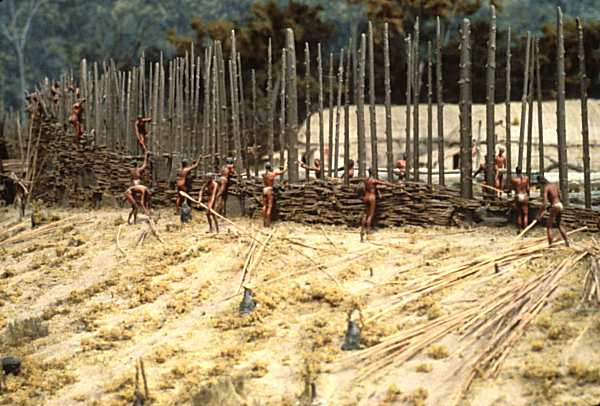
    Winter 1: coppice trees, 2: maple sugaring, 3: fix palisade, 4: hunt deer, 5: tell an old story, 6: smoke meat, 7: hunt bears, 8: collect antlers, 9: fix snowshoes, 10: sharpen an axe, 11: deal with fallen tree, 12: knock icicles off, 13: break up fighting dogs, 14: kids throw snowballs, 15: hit someone with sticks, 16: ritual to ward off evil, 17: watch dogs chase a rabbit, 18: repair a collapsed roof, 19: keep warm around a fire, 20: sickness

    You arrive at Peace Junction in the springtime.  Some children are picking flowers while a few adults are having an argument about a dog.

    Town sites are carefully chosen for a mix of defensibility and easy access to food sources.  Towns tend to move every few years to avoid depleting the local resources.  If the town is ever attacked (or if you're trying to sneak in) you'll probably want to know what surrounds the settlement.

    Surroundings (d8 thrice)
    1 marshy area, tall reeds, mud, bog, sand dune
    2 bluff, cliff, waterfall, boulders, scree
    3 densely-overgrown thicket, tall-grass, thorns
    4 cornfields, fishponds, gardens, livestock corral
    5 pond, lake, wide place in the river, bayou
    6 open meadow, clearing, pasture, fallow fields
    7 shallow water, sandy beach, gravel bar
    8 steeper slope, hillside, spire of rock, lookout

    Peace Junction is built on the shores of a lake.  To one side the land is densely overgrown with thorny vines.  To the other, the humans tend extensive cornfields.

    Somewhere nearby (a few miles off, up to about a day's walk) is something that affects life in this town.  It could be something they're aware of or that they're about to become aware of.  Roll twice and combine the results as best you can:

    Nearby (d10 twice)
    1 Bandits on a major Road to another settlement
    2 encampment of Outlaws, banished from the tribe
    3 gathering of a shunned Religious group
    4 Fort built/captured by the tribe’s enemy
    5 site of a Battle or a Massacre
    6 contested Hunting grounds
    7 Stolen property: boat, weapons, pigs
    8 Crossroads where travelers spend the night
    9 secret place where Medicinal herbs grow
    10 burned former site of this Town, now abandoned

    A few miles up the road is a group of bandits that prey on travelers between towns.  Recently they beat up a group traveling from Peace Junction and stole their muskets.

    The people in this town aren't just sitting around waiting for life to happen to them, they've got goals.  Roll twice for their current goals.  These probably aren't tied together, so they might have to pursue one at the expense of the other, depending what's going on in their area.

    Current Aims (d20 twice)
    1 Assert a claim to land used by another town.
    2 Regain leadership of the tribe.
    3 Steal from a powerful enemy some ways off.
    4 Seek vengeance for a murder.
    5 Make money in the employ of a rich neighbor.
    6 Gain access to powerful imperial trade goods.
    7 Seize control of a trail, pass, waterway.
    8 Root out witchcraft.
    9 Drive out an enemy and take their land.
    10 Move the town to a better food source.
    11 Profit from a great Opportunity.
    12 Avoid the danger of a great Opportunity.
    13 Hunt a creature: large, fearsome, good food.
    14 Make peace with a longstanding enemy.
    15 Recover something stolen from the town.
    16 Send someone far away to trade.
    17 Build a large house, boat, fortification.
    18 Investigate clues leading to a secret.
    19 Find a cure for someone who is deathly ill.
    20 Rescue their people who are taken captive.

    The people of Peace Junction want to open trade with someone far away.  They're also trying to avoid the danger of one of the opportunities driving this campaign.  (Maybe someone is trying to establish a utopian colony on their land, or maybe there's a migration passing through this country.)

    If you've never been to this town before, the authorities will have to figure out what to do with you.  This is not a land with tourists and sight-seers.  Roll once to see what the leaders decide:

    Leaders Desire to (d8)
    1 charge you a substantial Fee for traveling here.
    2 see the valuable Gifts you have brought them.
    3 have you Stay as a pawn for internal debates.
    4 Trade with you for corn, blankets, guns, iron.
    5 gain Information about military, opportunities.
    6 Rob you for the valuables you must carry.
    7 take you Captive as their people do.
    8 send you to visit a Higher Authority.

    Istansi towns are led by popular consensus.  When you arrive at Peace Junction, the people gather and question you about your own people: where you come from, what military strength your people have, how your guns work, and whether your people are likely to be a threat to the Istansi.

    This town has something special that makes it stand out from others in the region.  Roll twice to see what they have:

    They Have (d20 twice)
    1 an Elder knowledgeable in History
    2 Rumors of a near-by country, mostly true
    3 an Affable or Pugnacious leader
    4 secret Tunnels or a fortified Redoubt
    5 stockpile of Weapons, hidden or for threats
    6 speaker of another Language / unusual Captive
    7 preparations for a Feast, warm Hospitality
    8 Feud with a neighboring settlement
    9 body of a strange Creature
    10 fake Fire-Arms, skillfuly carved and painted
    11 Blacksmith (if near colonials), Flint-knapper
    12 hidden Caves w/art that tells an ancient tale
    13 plan to Rob or Kill certain visitors
    14 Wealth in gold, jade, furs, livestock
    15 many Captives taken in battle
    16 boats or livestock acquired from Neighbors
    17 renowned Healer / trade in Medicines
    18 Shrine or old Burial ground nearby
    19 Visitor from afar, come to trade, explore, treat
    20 folk-Magick known to only a few

    Peace Junction is renowned for their elder who knows the ancient history of this land, but they also have a form of folk magic that has been mostly forgotten these days.


    Roll up some random human town life for yourself:

    Click here for random results.
    spring
    spring
    summer
    summer
    fall
    fall
    winter
    winter
    surroundings
    surroundings
    surroundings
    nearby
    nearby
    aims
    aims
    leaders desire to
    town has
    town has

    Tuesday, January 15, 2019

    Getting a feel for different species of people

    I've written a little about the biology of the four species of people, but that's not an easy place to jump in.  In this post, I'm not going to talk about how their bodies work or what they make their homes out of.

    Let's talk about what these people feel like.

    We'll start with the most stereotypical views, what outsiders think of each species.  Afterwards, we'll look at variations, and how to adapt them for your own campaign.

    Humans


    Humans are the most like adventurers.  They're rowdy, bold, and hungry: hungry for knowledge and money and power.  They're noisy, with barking dogs and a fearsome battle cry.  Humans come to town and there's gonna be a brawl or a party, or maybe a mix of both.

    For an outsider's perspective on humans, think pirates and nomads and outlaws, roving teams of deadly hunters, ragged fearsome bands carving out their survival in the post-apocalyptic wilderness.

    a wedding haka


    (Read about the people of the Ashen Council, or how to roll up your own human town.)


    Giants


    Giants are fur-trapping mountain men, pensive loners.  They're quiet and brooding, wandering the land fishing and watching the stars, remembering the stories passed down from their grandmothers' grandmothers.

    Giants would rather leave you alone.  But if you harm a giant, they will never forget, and they will bring vengeance down upon you, and their descendants will tell the tale for generations.

    For a giant, think of an old prospector, a ranger in the woods, a self-reliant hobo riding the rails with stories to tell and a keen glint in their eye.

    a Mongolian herder


    (Read about their great annual gatherings, or how they trade the stars.)


    Colonials


    Colonials are a bit like you and me, something like modern day people.  They're city folk, a product of a civilized world.  Colonials are suited for comfortable houses full of manufactured goods, social organizations with books full of rules, and mixed drinks with too many ingredients.

    Take away their coffee and their indoor plumbing and they're pretty much lost.  The end of the world has been especially hard on the colonials.  They're not really the wilderness survival type.

    But despite all their weaknesses in this dark age, colonials are rich.  In their few remaining cities, the remnant of empire has amazing gadgets and powerful weapons, libraries full of knowledge and vaults full of artifacts of the old world.

    Imagine law-abiding clergymen and diligent chemists, by-the-book naval officers and studious accountants, ordinary folk who distressingly find themselves carrying a gun these days.

    Aurangzeb, Mughal emperor


    (Read about colonial alchemy, or the last remnant of their empire.)


    Goblins


    Goblins are the backwoods clan you don't want to stumble across.  Get on their good side and they're known for their hospitality.  They'll feed you some kind of meat and give you weird stuff to smoke and ask all manner of nosy questions about what your kind of people do for fun and how shoes are supposed to work and why you're not married yet.

    But most folks are not on their good side.  Goblins are the reason you don't go too far into the woods.  They're sharp teeth and haunting calls.  They're not afraid of outsiders; they lure them in just to get a fresh meal.  They've got strange medicines and hexes and hoodoo.

    Goblins are curious about the world, yet they're sure they know how it really all works.  They're eager for news even though they're sure it's all some conspiracy they're glad to be avoiding by staying at home.

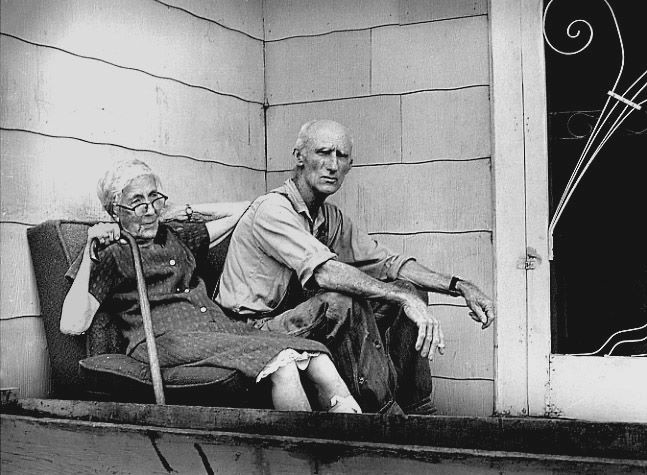
    porch sitting


    (Read what goblins think of writing, or how they ambush prey.)


    Now that you know what's typical, it's time to make some changes for your own setting.  For each of these species, you could choose two attributes from the table below.
    1. They're overly _____, almost absurdly so.
    2. They're not really as _____ as people say.


    Traits (d8)humanselvesgiantsgoblins
    1bravepolitevengefulsuspicious
    2noisylegalisticquietcurious
    3aggressiveeloquentobservantfond of complaining in solidarity
    4boastfulritualisticpensivegood at reading people
    5adventurousarrogantpracticalloyal
    6heroicschemingdourskittish
    7celebratorysecretivefond of appealing to historyproudly unrefined
    8casually violentmeticulouspedanticexcitable


    typical traits
    Humans are overly...
    Humans aren't all that...
    Elves are overly...
    Elves aren't all that...
    Giants are overly...
    Giants aren't all that...
    Goblins are overly...
    Goblins aren't all that...


    Player-characters are the protagonists of a roleplaying game, so if anyone's going to be an unusual example of their species, it's probably them.  You could use the traits above as a guideline, but don't let them be a straitjacket.  Feel free to portray your character (PC or NPC) however you like.

    (Edit: This post originally used the term "elves" to refer to what I'm calling "colonials".  The name never really fit well.)

    Saturday, October 20, 2018

    Towns of the human folk

    Humans are one of the more dangerous and capable species you might find in the wilderness.  Here are some tables to find out what a human settlement is like.


    First you need to know what kind of humans these are.  If you don't know the tribe they're from, roll up a new one.

    Signs of settlement


    Human activity isn't confined to town.  As you approach the settlement (within about a mile or less) you're likely to come across signs of its presence.

    Signs of settlement (d6)
    1smokeThin columns of smoke can be seen in the distance.
    2trailsA narrow trail, trampled by years of use, leads to the town.
    3gathered plantsTrees have been cut down, branches gathered, reeds cut, sod cut from the ground.
    4burned areasIntentionally-set fire has swept through this area in the last few months, clearing away undergrowth.
    5soundsSounds can be heard from the town while it is still out of view: people talking, dogs barking, singing, chopping down trees.
    6challengeThey notice you first and send someone out to you.

    Attitude towards outsiders


    Humans aren't usually friendly to outsiders who show up unannounced.  Roll to see how they respond to your visit.

    Attitude (d10)
    1ambushThey ambush intruders, attempting to kill them.
    2-3hostileOutsiders are driven away by a loud and ferocious show of arms.
    4-5waryThe leaders want to speak with outsiders and encourage them to leave as soon as possible.
    6-7tradeThey try hard to sell things to anyone who visits: something they produce or trade for.
    8theftOutsiders are robbed (possibly after being invited to spend the night) then thrown out.
    9-10invitingVisitors are invited to stay in the leader's home.

    The town itself


    The traditional houses and food of this tribe may suggest a certain kind of location, or you can roll randomly on the table below.  Even if the other people of their tribe typically live a certain way, the people of this settlement might have a different kind of home or way of getting food, especially if they've picked them up from a neighboring tribe.

    Site (d12)
    1-3on the shore or on the banks of a stream/river
    4-6on the sloping side of a hill
    7-9at the highest point around
    10-11on a small isle in a lake
    12on stilts over water

    Most towns are fortified in some way for defense.  (Add 3 to the roll if this is a farming town, subtract 3 if these people live in very simple/temporary houses.)  If the result can't possibly work with this site or their type of houses, roll again.

    Fortifications (d20)
    ≤2well hidden amongst the trees
    3-5no attempt at fortification
    6-7simple fence
    8-11sturdy wooden palisade
    12-16ditch (roll again to see what's behind the ditch), filled with (d4) 1-2: nothing, 3, sharp wooden spikes, 4, water
    17-18raised earthworks around the town, with a (d6) 1-2 palisade on top, 3-4 steep stone outer face, 5-6 palisade and stone face
    ≥19town is built on a raised earthen mound (roll again to see how the mound is defended)


    Roll up a random human town of your own:


    random human town
    signs
    attitude
    site
    fortifications

    Tuesday, September 18, 2018

    Inner workings of a human tribe

    In the previous post on human tribes, I talked about their food source, boats, houses, and a few other things, mostly visible when you first meet them.  This post is about how the tribe actually functions.


    Leadership


    Some tribes aren't organized at all, being just a handy way to describe the culture of the local humans.  Each settlement in a such a tribe governs itself independently.

    Chiefs rule some human tribes, kings that come from the upper class of the people.  Their towns send some kind of tribute, food, laborers, or warriors.  Chiefs tend to inherit their position or seize it through war.

    Many tribes are more democratic, decisions being made by a council of delegates or by a popular assembly of as many as can gather.

    Tribal Leadership (d10)
    1-3no central leadershipEach town is independent. There is no tribal leadership. Roll again to see how towns are typically governed.
    4-5chiefA high-ranking person rules the tribe, receiving tribute/labor/warriors from the various towns. The position is likely inherited or seized in conflict.
    6-7council of chiefsA council of the most important high-caste people makes decisions for the tribe.
    8-9assemblyEach family/clan/town sends a representative to speak at the ruling assembly.
    10popular consensusA large portion of the people gather together in one place to argue and come to decisions.

    Some tribes use a mix of these, with a chief who chooses the clans to be represented, or a popular assembly that elects a council, or a pair of chiefs with different areas of responsibility, etc.

    Men and Women


    Of all the talking species, humans have the most rigid gender roles.  They tend to divide up tasks and areas of expertise into men's things and women's things.

    (Goblins have gender roles but are more flexible on them, giants are too independent to worry about such things, and elves are basically all the same gender, biologically, so they don't really understand the concept.)

    Most tribes follow the gender roles handed down to them by their ancestors (so related tribes tend to follow the same rules) or they've adopted the practices of their neighbors.

    (d10)menwomen
    1-2warfare, hunting, woodcarvingfarming, weaving, settling disputes
    3-4dealings with outsidersdealings within the tribe
    5animals, stone and metal working, settling disputesplants, water and settlement rights, death rituals
    6farming, constructionfishing, hunting
    7only men eat potatoes, salmon, turkeysonly women eat corn, wild rice, deer
    8warding off dangerous creaturesinterpreting dreams and signs
    9trade, searching for thingsmaking and using fire, keeping the history of the people
    10roll again, but switch the results

    Religion


    The Starving Time broke many people's understanding of the world, forcing them to resort to new ways of thinking.  New religious movements have cropped up (all with something to say about the apocalypse of our parents' day) and they've been spreading across the land.

    I'll be doing a post about how human religions work later on (and how to roll up a random religion of your own) but for now let's look at how this tribe relates to religious practice.

    Religion (d6)
    1-2Holding to tradition in the face of all these strange new religions. Some have secretly converted.
    3Enthusiastic converts to a new religious movement. A few are quietly keeping to the old ways.
    4Most of the (d4) 1: men, 2: women, 3: youths, 4: common people; have joined a new religion while the rest follow the old ways.
    5Most people have fallen away from their ancestors' religion and are eager to listen to preaching.
    6Deeply divided between two different faiths.

    Roll up a random tribe's workings with the table below.  (Sorry, I still haven't figured out how to get it to work on mobile.)  I've copied over the entries from the first post in this series, head back there for more explanation about what they mean.

    random human tribe
    reputation
    what they lost
    food
    boats
    captives
    leadership
    men and women
    religion

    Coming up: who the tribe's rivals and allies are, and how they came to be that way.

    Wednesday, August 29, 2018

    The forbidden country of the Ashen Council

    While the surviving elves huddle along the coast, rumors of an inland power grow.  Coastal tribes speak of the fearsome Isquentaga, the people of the Ashen Council.

    (Viktor Titov)


    Closed kingdoms (like 1800s Tibet or Tokugawa Japan) can make for some great adventures.  They're full of challenges:
    • It's hard to get past the appointed guardians.
    • At strong settlements they try to kill you or throw you out.
    • At weak settlements they close their doors and want nothing to do with you.
    But they're also full of opportunities:
    • They have things no one else has ever seen.
    • You have things they've never seen.
    • If it's hard to get goods through, people might pay a lot more for them.
    • If you get the approval of the leaders of a closed country, you can operate in a place your enemies can't easily reach.
    In a way, a closed country is something like a giant dungeon, full of treasure and danger.

    (Frank Victoria)


    They say the Isquentaga are a mighty human confederacy, jealous guardians of their place in the high country.  All trade from the far north passes through their hands.  Copper, silver, and furs come down, iron, cloth, and guns go up.  It is unlikely that they allow guns to go any further inland.  Likewise, the most powerful things of the high country are not likely to come down any further.

    All trade with the Isquentaga is done at a few places of meeting, each one controlled by a different clan.  They only trade with a few outside agents, some humans and some giants.  It may be that none of the elves have yet attempted to open trade with the Isquentaga; such an attempt would probably be rebuffed.

    Choose three widespread rumors about the people of the Ashen Council.  One is false, but deliberately spread by them.  One is more or less accurate.  One is a heavily-distorted version of the truth.

    Rumors (d8)
    1They hang their enemies' bodies from trees to mark their territory.
    2They eat the flesh of fallen enemies.
    3They pay great bounties for elven captives.
    4They drive sick animals into enemy territory to infect others.
    5They sharpen their teeth into points.
    6They kill anyone who strays into their land, with no exceptions.
    7Anyone who they allow to trade with them is marked with a sign.
    8Those who trade must kowtow as a sign of submission, and never look directly at them.


    The Isquentaga are a dangerous adversary to have, but they guard many secrets and treasures.  They have knowledge of the striding behemoths and of the sunken cities.  A word from the ashen council can raise an army or grant a fortune.  But reaching the ashen council will be a most perilous journey.

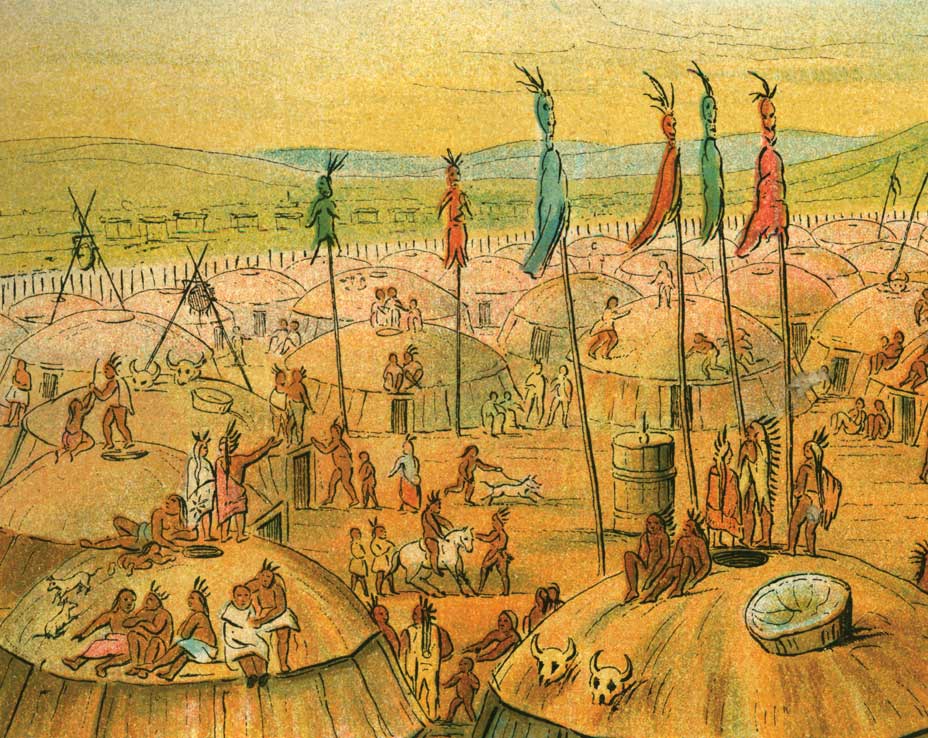
    (George Catlin)


    And they're not just sitting around, waiting for you to approach.  The council is doing things.  They've got big plans in the works, and they don't really care what you think of them.  Choose two looming plans from the table below:

    Secret Plans (d8)
    1They've heard of a new invention or discovery and they'll stop at nothing to get it.
    2There's a weakened group nearby; the Isquentaga plan to swiftly overwhelm them and offer a deal: obey and receive aid, or be destroyed.
    3They've acquired something of great power or value, and they intend to use it.
    4One of their clans has been trading away secrets and treasures that they swore to keep hidden, so the council is planning retribution.
    5They've been quietly purchasing cannons and capturing experts in elven fortifications, preparing to build fortresses guarding the mountain passes.
    6They're weaker than they let on, afraid of a rising power in the lowlands.  A careful alliance could be to their advantage.
    7The clans of the Isquentaga are all ready to turn on each other in a desperate bid to seize power.
    8A far greater threat looms on the far side of their lands.  They're considering a migration to get out of the way, taking whatever land they need.

    If you don't know who lives nearby, consider rolling up a random human tribe or a giantish rendezvous.

    Saturday, August 11, 2018

    Great kingdoms long ago

    Before the apocalypse, before the elven ships ever came across the sea, there was a human civilization that rose and fell, leaving traces to this very day.

    Mississippian mound-builder society


    Decide what they say about this society, if anyone still tells stories about it.

    What was it like? (d6)
    1A peaceful utopia on a lake that fell to betrayal.
    2A maritime society based on an island that sank beneath the waves.
    3Five cities that warred and traded, with high kings and legendary craftsmen.
    4A mighty empire whose god-king ruled with an iron fist, whose capital was consumed by the forest.
    5-6There was no ancient lost society. The height of human civilization is yet to come. (Stop rolling here.)

    Inca procession (Ned Seidler)


    How long ago did it fall? The older it is, the less remains of it today.

    When did it fall? (d6)
    1-2Over a thousand years ago. Only one culture still remembers it. A few ruins and artifacts survive.
    3-5A few centuries ago. Early elven explorers heard legends about it. Artifacts and stories are handed down in families with a veneer of myth.
    6During the apocalypse. Some elders alive today were part of it. Leaders appeal to the old society as a source of legitimacy. Treaties from those days are still invoked. Sites are still known and many artifacts still in use.

    Easter Island statues (Fernando Baptista)

    Choose 1-3 remnants of the old civilization.

    What signs are left? (d6)
    1-2great stone statues of people or animals
    3-4golden amulets, breastplates, wands, figurines
    5-6earthen mounds as holy places, fortifications, burial sites of ancient kings
    7-8animal figures across the landscape, cut from turf or earth
    9-10hidden knowledge passed down by a few

    Scythian golden ornaments (Ariadne Galleries)


    In my own version of the setting, there are two ancient societies:
    • One religion among the humans originated in one of the five cities that fell over a thousand years ago, in the interior of the continent.  Heavily-worn, cryptic stone statues and odd bits of goldwork remain.
    • One human tribe is all that remains of a mighty kingdom that fell a hundred years ago, a generation or two before the apocalypse.  The elves have heard legends of it, but don't believe they're true.  The kingdom left earthen holy burial mounds with treasures inside.  Their descendants appeal to the memory of the old kingdom all the time, keeping up the royal lineage, the old religion, and its complex taboos and laws.

    Try rolling up your own:

    great civilizations of old
    What was it like?
    When did it fall?
    What signs are left?