Showing posts with label giants. Show all posts

Friday, August 12, 2022

Giants, the Wandering People

A giant's life has always been a lonely one, even before the Starving Time.  They wander the land alone, checking their traps, watching the stars, and telling tales of old to those they meet along the way.  What other peoples have forgotten, the lonely giants remember.
Appearance

Giants are a large primate, something like a gorilla or sasquatch.  They are the tallest of the four peoples by only a little, hunched over as they walk, but they are the strongest by far.  Their thick fur comes in colors from charcoal black to russet brown to pale grey.

Roleplaying

Giants (ogolon O-go-lone, as they call themselves) are incredibly strong, able to carry heavier loads and break through tougher obstacles than anyone else.  Their slow speed works against them in a fight, but this is offset by the protection afforded by their thick hide.  While giants have traditionally not used many ranged weapons, they eagerly make use of elven firearms as much as they can, even carrying smaller sorts of cannons on occasion.

When playing a giant, here are some tips to make them feel even more giantish:

  • Appeal to history for justification.  Invoke ancient alliances in a call to war, bring goods to trade that were sung about in the olden days, recite a poem from your grandmother's grandmother when making peace.
  • Look and listen, then ponder your words before you speak.

Giants have deep memories, remembering details from ancient tales that others have forgotten.  Some are skilled enough in memory to recite hours-long epic poems or to recall the words of conversations they had many years before.  (The elves think some of the giants can read elven holy scriptures, but in fact the giants simply listened and memorized the entire book.)

Lifestyle

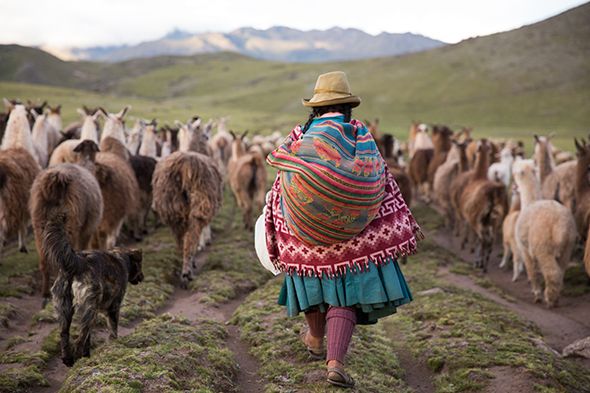
Giants wander the land alone most of the year, favoring colder, higher, and drier places than other people.  They make elaborate traps to catch birds, fish, and land creatures alike, and they don't mind if the meat has gotten a bit old before they eat it.  Some giants do more fishing instead, or gathering wild plants, while others tend to herds of livestock: llamas, alpacas, and yaks, mostly.

While giants mostly wander alone, they do belong to an ancestral house that governs the vast territory where they roam.  Should a giant be killed, the vengeance of their house will be slow, but it will be remembered for generations.

A giantish ancestral house is a physical structure, but it's thought of as something like a person, the embodiment of their kinship group, capable of owning property and bestowing honors and titles.  A few people stay at the house all the time, generally elders who are too old to roam the land, members of the first rank, and perhaps some warriors for defense.

The members of a house are divided into ranks (typically four per house), showing their prestige and role in governance of the house.  Giants inherit a place in the house one rank lower than their most prestigious parent.  The members of a rank may invite someone from the rank below to join them, in recognition of their skills or service to the house.

Each spring the house hosts a gathering.  Everyone returns home from their lonely wandering for a few days of trade, mating, gossip, and making plans for the year ahead.

Like the other indigenous peoples of the North, giants mostly used stone and copper tools until the strangers came from across the sea.  Elven trader introduced the giants to firearms and kettles, but they also destroyed many trade networks, either by outcompeting them with industrialized products or by brute conquest.  Many of the giantish houses fell into debt, trading away everything to the elves just to survive.  As a result, giants can now be found as laborers around most elven settlements, working for mere pennies, if they're paid at all.

The houses that still stand tend to follow the old ways, telling tales and doing dances for the star gods.  Some have been converted to the elven ancestor-worship religion instead.

Other People

To the giants:

  • Humans are rowdy and sometimes troublesome neighbors, but they make many good products for trade, and in the end they usually remember to treat giants with respect.
  • Goblins have an irritating tendency to break into giantish traps for the meat inside, but where they're not competing for food, giants and goblins can get along well enough for trade.
  • Elves are wealthy traders and skillful teachers of religion and science, but they're also the cruel tyrants everyone seems to owe money to, or the capricious conquerors who kill people and take their land.

Because they get along with the other peoples well enough, giants tend to be the best traders and diplomats.

Inspiration

Giants in this setting are inspired mostly by the North American fur trade.  They're the lonely mountain men who wandered the west trapping for furs, coming together for an annual rendezvous.  They're also the indigenous tribes who pushed across the frontier to follow the trade companies, sometimes benefiting from access to trade goods, sometimes suffering from the destruction of the old trade networks and the new indebtedness to the companies.

Their aesthetics are a mix of Siberian and Pueblo, with architecture particularly inspired by the Japanese shinmei-zukuri style.  The sounds of the giantish language are inspired mostly by Hopi and Inuktitut.

Saturday, June 25, 2022

Giants and their House-Corporations

Giants always come back to their House.  As trappers and herders, giants spend most of the year on their own, only seeing others every once in a while.  But each spring, they come back to their ancestral home.

The House is like a corporation, thought of as a person that can own property.  It is a physical structure, but also a kin-group and a territory.  The house is a symbol of the lineage that gathers there and is governed by its highest-ranking members.  (Most of the time, only those of the first rank live at the house, sustained by tribute from lower-ranking giants.) 

Each House has a sigil, marked at the house and at the boundaries of its land.  The name of the house describes the appearance of its sign using specialized terminology, names like Lazy Deer, Diamond Walking Snake, or Smoke Over Turkey.

Membership comes with rights to gain food from the land on your appointed circuit.  Roll twice to see what kind of harvest rights are available:

Harvest Rights (d10)
1-3 Gathering, diving, beach-combing (d10) 1: clams/mussels, 2: walnuts, 3: acorns, 4: snails, 5: mushrooms, 6: eggs, 7: persimmons/huckleberries, 8: crab apples, 9: carrots/dandelions, 10: seals/walruses
4-5 Trapping, snares, bait, pit traps with stakes (d10) 1-2: jackrabbits, 3: geese, 4: otters, 5: beaver, 6: ducks, 7: squirrels, 8: turkeys, 9: raccoons, 10: goblins
6-7 Fishing with stone weirs, basket traps, spears (d10) 1-2: trout, 3-4: salmon, 5-6: crawdads, 7: bass, 8: eel, 9: herring, 10: river shrimp
8-9 Grazing herd animals for meat, cheese, wool (d10) 1-2: llamas, 3-4: alpacas, 5-6: bactrian camels, 7-8: yaks, 9-10: colonial longhorn cattle
10 Driving stampedes off cliffs, through narrow defiles (d10) 1-3: buffalo, 4-6: caribou, 7-8: bighorn sheep, 9-10: strange herd animals

taking the herd to good pastures

Wander about in search of food, but do not wander too far.  Each house governs a territory 20 to 100 miles across (30-160 km), enough room for hundreds to find food.

Border (d20)
1-3 Sea, large river, lake
4-6 Waterfall, rapids, cliff
7-9 Swamp, salt marsh
10-12 Ridgeline, desert
13-14 edge of the Forest
15-16 low range of Hills
17-19 Rock, standing stone
20 remnant of a lost Civilization

For each border, roll to see what the relations with the neighbors across that border are like.

Neighbors (d20)
1-3 long friendship
4-6 wary truce
7-9 enemies
10-12 paying tribute
13-14 peaceful trade
15-16 died/emigrated
17-20 shaky alliance against new enemy

stalking buffalo while wearing animal disguises

Near the house are a few places important to the people here:

Nearby Site (d6)
1 ancient Tree, alone on a grassy hill
2 deep Sinkhole with water, a cenote
3 natural Pillar of stone, a kigilyakh
4 large Cavern, difficult to reach
5 long-abandoned House
6 Ruin of an old kingdom

Roll to see the significance of each site.

Importance (d6)
1 Shamanist rituals take place there
2 forgotten Treasure hidden there
3 great Battle was fought there long ago
4 place of meeting Enemies under truce
5 Healing is said to happen there
6 new Religious movement gathers

The house itself is in a defensive position, used as a refuge in times of war.

Site (d6)
1-2 high on a Pinnacle, steep steps cut in rock
3-4 raised earthen Mound, riddled with ancient passageways
5-6 steep-sided Hill, only one shallow approach

But the house is also meant to be a gathering place for its hundreds of people.

(d6) Around Structure
1 stone wall 5 feet high (1.5 m) stone/adobe walls with no gates, only ladders
2 steep-banked stream raised high up on massive wooden pillars
3 hidden triplines and pit traps circular stone wall, open-air courtyard
4 many large wooden spikes roofed pavilion, open on all sides
5 hilltop sentries, signal fires fenced-in garden with fruit trees
6 wide circle of standing stones mission once built by the Colonials

The house itself has a few features to make life easier for the indolent first-rank members, or to support the annual gathering.

At the House (d8)
1 Lodge for the reclusive first-ranking members
2 open space for Games or the Moonlit Play
3 Cellar for storage of food, ice, or valuables
4 Granary or Treasure House up on stilts
5 cistern/cenote full of Drinking Water
6 lookout Tower, occupied at all times
7 Workshop for carving, flintknapping, weaving
8 Racks for stretching hides, drying fish/tobacco

a time for serious debate

Whether they're at the house or out on their rounds, the people of this House have been debating serious matters for the year ahead.

Topics of Debate (d12)
1 Fear that the War shall be reignited.
2 Whether the Prophecy be true.
3 Violent dispute with neighboring people.
4 Strange Travelers in these lands.
5 New religion in the lower ranks of the house.
6 Too many people; must establish a new House.
7 A great Deed to restore their dwindling glory.
8 Access to colonial arms, food, trade.
9 Vengeance for an ancient Crime against them.
10 Role in a greater Alliance of houses.
11 Risk of pursuing a great Opportunity.
12 A leader who cannot be trusted.

Let's roll up a random House, Dead Broken Fence:

  • People here gather persimmons and drive bighorn sheep into narrow places where they can be hunted.
  • Long friendship with those who live beyond the marsh.
  • Shaky alliance with those who live over the hills, allied against a new enemy.
  • A new religious movement among the people gathers in secret at a nearby abandoned House.
  • Meetings under truce are conducted at the standing stone.
  • Sentries keep watch from hilltops near the house.
  • The house itself is raised on mighty wooden pillars atop a steep-sided hill.
  • At the house there is a separate lodge for the first rank, a cistern for collecting rainwater, and a place for stretching and drying hides.
  • People debate whether the House has grown too large and shall have to split off a new House.

Roll up your own giantish House:

Click here for a random House.
food to harvest


border relations


nearby sites


site of the house
around the house
structure of the house
features at the house


matter for debate

Monday, February 15, 2021

Cattle Brands as Heraldry

Heraldic coats of arms are a fun way to distinguish powerful families, but they're best for a European setting.  If you're looking for interesting symbols for a non-European setting, there are plenty of other sources you could look at, from Japanese mon to Central Asian tamgha.

For an American setting, I decided to look at cattle brands.

The giants of the Northern Lands belong to houses: kinship societies centered around a family meeting-place.  Each house is named for its sign, carved on trees and painted on rocks throughout its territory. 

Base

Start with a Base sign.  Here are a few of the more common ones:

Bear
Sasa
Boat
Noyik
Branch
Tavti
Cloud
Movta
Fence
Lavta
Hut
Shahya
Shoe
Masvo
Sled
Laami
Turkey
Tuyik

(If you're interested, the names underneath are in the language of the giants of the Inner Sea.  Vowels are like in Spanish, h is pronounced even after a vowel, and doubled vowels are sustained twice as long.)

Modifier

Then add at least one Modifier.  A standing sign has a single leg with a foot on each side.  A walking sign has a pair of feet splayed out at the bottom.  If they're facing the same way, it's running

Standing Hand
Solyo Sang
Walking Turkey
Lo Vath Tuyik
Running Hand
Vindva Sang

Flying signs have a pair of wings at the top:

Flying Spear
Saata Toxu
Flying Shoe
Saata Masvo

A sign can have a bar across the top:

Bar Hand
Dol Sang
Bar Turkey
Dol Tuyik

Broken signs are divided in half by a pair of parallel lines:

Broken Hand
Ontki Sang
Broken Shoe
Ontki Masvo

Signs can be enclosed by a diamond or a circle:

Diamond Turkey
Kusuk Tuyik
Circle Hand
Osu Sang

Turn a sign on its side and it's lazy; upside-down makes it crazy:

Lazy Turkey
Ugu Tuyik
Crazy Hand
Saya Sang

Signs can also be double, or you can have one by another, or one over another.

Double Hand
Anggaak Sang
Hand by Turkey
Sang do Tuyik
Turkey over Shoe
Tuyik so Masvo

Modifiers can even be combined:

Bar Standing Fence
Dol Solyo Lavta
  Broken Sled over Cloud
Ontki Laami so Movta
  Lazy Bar Trout by Walking Hill
Ugu Dol Lulut do Lo Vath Guth

Modifiers are applied in order, starting with the one closest to the base and working your way leftwards, so Lazy Bar Turkey starts with the sign for Turkey, then adds a Bar to make Bar Turkey, then rotates it sideways to make Lazy Bar Turkey.

Lazy Bar Turkey
Ugu Dol Tuyik
 Bar Lazy Turkey
Dol Ugu Tuyik

There's no strict upper bound to the number of modifiers you can use at once, but don't get too carried away.  This house, for example, would probably be ridiculed for their overly-complex sign: 

Lazy Running Standing Diamond Walking Net over Flying Running Lazy Standing Lazy Coat
Ugu Vindva Solyo Kusuk Lo Vath Tahya so Saata Vindva Ugu Solyo Ugu Lapu

(If you're playing a giant, I suggest you try something simpler for the sign of your own house.)

In our campaign over on Reddit, the party recently encounted the houses of Dead Spear and Spider by Crow, and they've heard of the abandoned ruin of the house of Flying Hand.  From the names alone, any giant would recognize their signs.

What kind of heraldry do they have in your game world?

Friday, July 10, 2020

The Moonlit Play

On nights when the moon is full, performers across the land dress up for the Moonlit Play.  In elaborate costumes they take on a variety of roles from animal star-gods to wandering folk figures to hidden people.  They act out stories through word, dance, and song: some passed down from their ancestors, some newly-invented.

This is one of the traditional religions of the Northern Lands, most commonly performed by giants and tree goblins.  Like most religions, it brings a community together, links you to your ancestors, and passes on hidden knowledge of the dangers of the world.

Kwakwaka'wakw winter dance


Tuesday, January 15, 2019

Getting a feel for different species of people

I've written a little about the biology of the four species of people, but that's not an easy place to jump in.  In this post, I'm not going to talk about how their bodies work or what they make their homes out of.

Let's talk about what these people feel like.

We'll start with the most stereotypical views, what outsiders think of each species.  Afterwards, we'll look at variations, and how to adapt them for your own campaign.

Humans


Humans are the most like adventurers.  They're rowdy, bold, and hungry: hungry for knowledge and money and power.  They're noisy, with barking dogs and a fearsome battle cry.  Humans come to town and there's gonna be a brawl or a party, or maybe a mix of both.

For an outsider's perspective on humans, think pirates and nomads and outlaws, roving teams of deadly hunters, ragged fearsome bands carving out their survival in the post-apocalyptic wilderness.

a wedding haka


(Read about the people of the Ashen Council, or how to roll up your own human town.)


Giants


Giants are fur-trapping mountain men, pensive loners.  They're quiet and brooding, wandering the land fishing and watching the stars, remembering the stories passed down from their grandmothers' grandmothers.

Giants would rather leave you alone.  But if you harm a giant, they will never forget, and they will bring vengeance down upon you, and their descendants will tell the tale for generations.

For a giant, think of an old prospector, a ranger in the woods, a self-reliant hobo riding the rails with stories to tell and a keen glint in their eye.

a Mongolian herder


(Read about their great annual gatherings, or how they trade the stars.)


Colonials


Colonials are a bit like you and me, something like modern day people.  They're city folk, a product of a civilized world.  Colonials are suited for comfortable houses full of manufactured goods, social organizations with books full of rules, and mixed drinks with too many ingredients.

Take away their coffee and their indoor plumbing and they're pretty much lost.  The end of the world has been especially hard on the colonials.  They're not really the wilderness survival type.

But despite all their weaknesses in this dark age, colonials are rich.  In their few remaining cities, the remnant of empire has amazing gadgets and powerful weapons, libraries full of knowledge and vaults full of artifacts of the old world.

Imagine law-abiding clergymen and diligent chemists, by-the-book naval officers and studious accountants, ordinary folk who distressingly find themselves carrying a gun these days.

Aurangzeb, Mughal emperor


(Read about colonial alchemy, or the last remnant of their empire.)


Goblins


Goblins are the backwoods clan you don't want to stumble across.  Get on their good side and they're known for their hospitality.  They'll feed you some kind of meat and give you weird stuff to smoke and ask all manner of nosy questions about what your kind of people do for fun and how shoes are supposed to work and why you're not married yet.

But most folks are not on their good side.  Goblins are the reason you don't go too far into the woods.  They're sharp teeth and haunting calls.  They're not afraid of outsiders; they lure them in just to get a fresh meal.  They've got strange medicines and hexes and hoodoo.

Goblins are curious about the world, yet they're sure they know how it really all works.  They're eager for news even though they're sure it's all some conspiracy they're glad to be avoiding by staying at home.

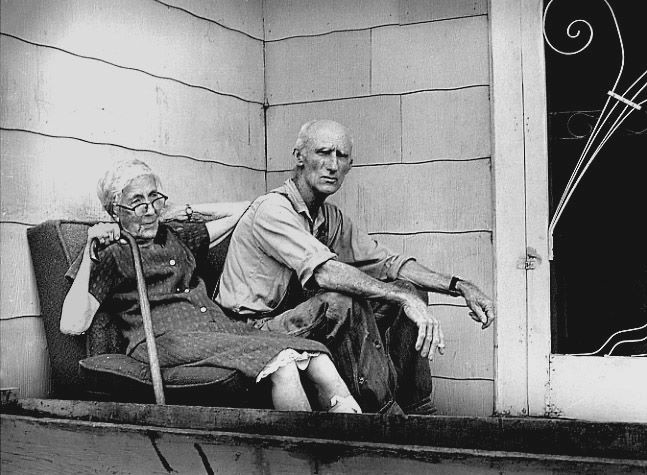
porch sitting


(Read what goblins think of writing, or how they ambush prey.)


Now that you know what's typical, it's time to make some changes for your own setting.  For each of these species, you could choose two attributes from the table below.
  1. They're overly _____, almost absurdly so.
  2. They're not really as _____ as people say.


Traits (d8)humanselvesgiantsgoblins
1bravepolitevengefulsuspicious
2noisylegalisticquietcurious
3aggressiveeloquentobservantfond of complaining in solidarity
4boastfulritualisticpensivegood at reading people
5adventurousarrogantpracticalloyal
6heroicschemingdourskittish
7celebratorysecretivefond of appealing to historyproudly unrefined
8casually violentmeticulouspedanticexcitable


typical traits
Humans are overly...
Humans aren't all that...
Elves are overly...
Elves aren't all that...
Giants are overly...
Giants aren't all that...
Goblins are overly...
Goblins aren't all that...


Player-characters are the protagonists of a roleplaying game, so if anyone's going to be an unusual example of their species, it's probably them.  You could use the traits above as a guideline, but don't let them be a straitjacket.  Feel free to portray your character (PC or NPC) however you like.

(Edit: This post originally used the term "elves" to refer to what I'm calling "colonials".  The name never really fit well.)