Showing posts with label mood. Show all posts

Saturday, July 9, 2022

Defining a setting in Four Images

Adding detail is easy; taking it away is hard.  There's a value in distilling something down to its simplest elements, stripping away all else to reveal the bones underneath.  One of the hardest posts on this blog to write was the very first one, where I tried to summarize the entire concept of this setting.  Like it says above, this is:

A 1700s post-apocalyptic hopeful frontier fantasy setting for roleplaying games.

I saw a post from The Theoretical GM where he distilled his entire setting down into four images, and I thought that made for a great challenge.  So here's Signs in the Wilderness in just four images:

I'm not sure if these images convey all the concepts I was hoping for, but here's what I wanted to get across: the era of muskets, ambush and skirmish warfare, contact between different kinds of people, a big world full of wilderness to explore, canoes and travel by water, religion, ruin, and a North American setting.

If you've got a setting of your own, I'd love to see what four images you'd pick out.  Drop a comment below or send me a message on Reddit.

Saturday, June 29, 2019

Magical deniability

Magic should be hidden.  It should lurk around the door, beyond the trees, in that little mahogany box under the floorboards.  Magic should be so secret that you're not quite sure it's really there...

...and then the door is thrown open, the stars rain down, and for a moment, the world is a truly magical place.


It's a hard feeling to capture.  Magicalness, almost by definition, can't be understood.  If you look at it too closely, it isn't magical anymore.  To paraphrase Arthur C. Clarke, "any sufficiently analyzed magic is indistinguishable from technology".

I've got a recipe for making magical moments.  It doesn't always work, and it probably won't work if you use it too much, but I thought I'd share it with you anyhow:
  1. Hide your magic in a mundane world.
  2. Show its effects, but explain them away.
  3. Reveal the magic.
  4. Take the magic away.
 

Sand in your shoes

First, you need a relatable, mundane world.  Magic is only special by comparison.  If you want to build to an amazing magical moment, you need to start with a mundane baseline.  This isn't a story about wizards flying around on dragons in space, this is a story about a guy who goes to the store and scrounges for change to buy some candy for his kid.

The details of your world don't have to be the same as ours, but they have to be relatable.  The players/readers/audience need to be able to imagine having their own everyday struggles in your world.  I'm not a fisherman or a turkey farmer, but I've had roughed-up hands from a hard day's work, and I know what a coop full of chickens smells like.

The more you focus on everyday struggles, the more wonderful magic will seem by comparison.  If your adventurers have struggled with mud and grime, and gotten scraped up sliding down a gravelly slope, and are tired and hungry, they'll be well-grounded in relatable details.

(This is part of why I'm so interested in outdoor survival in Signs in the Wilderness, and how it taps into your own experience in a visceral way.)

Deny everything

Next, you need plausible deniability.  If you reveal the magic too early, it won't feel magical; it'll jut feel like a dumb twist.  Imagine watching the first few minutes of a cop show, then having a wizard pop up out of nowhere.  It might be intriguing, but it won't actually feel magical.

You need to put signs of magic in your world, but explain them away.  This is laying the groundwork for the big reveal later, giving the players all the clues they need to realize the magic was there all along, but not enough clues to see the magic for what it is too early.

You need to call your magic something else.  And I don't mean you should just call it "sorcery" or "thaumaturgy" or "hexing" or whatever; the word "magic" isn't the problem.  You need to call it something that sounds non-magical.  Dress it up as a new scientific invention, or a weird drug.  Have psychologists explain how it's just a placebo effect.  Show that it's a hoax.

Throw open the door

Then there's the reveal.  For a moment, take the magic out of the box and let it shine.  Don't explain how it works, just show it.  Let the adventurers push the button and say the words and spin the dial.  Let the magic do something big that changes everything.

And give the protagonists a chance to triumph with the magic.

It's tempting as a GM to always throw obstacles in their way.  After all, that's most of your job, to explain why they haven't succeeded at their quest yet so they have something to do all day.

But for the big reveal, make it big, make it meaningful, and let the players have their chance at glory.  Combine the thrill of possible success with the wonder of seeing the veil torn asunder and magic revealed.

Get off the submarine

Then make them want the magic to go away.

Like a monster in a horror movie, magic loses its charm if you look at it too closely.  You can't tear it apart, see how it really works, and expect it to still feel magical.  If you really want the magic to feel like magic, you have to take it away.

But players don't like it when you take their fun, shiny toys away, and it's not fair anyhow, since you're the one with all the power.  So you have to make them want you to take it away.

There's a wonderful story to be told about how they all went into a magical world and had endless adventures, each more magical than the last, in an ever-increasing cascade of wonder.  I'm not the one to tell that story.  (I'm not sure if anyone is.)  I have no idea how to keep the magic coming, to keep escalating the wonders beyond imagination.

That world has to be hidden away again.  The door has to be closed.  The magic, once revealed, must be put away lest it lose its power.

Some reasons why they'll know the magic has to go away:
  • It's too dangerous for our world.  Keeping the door open will spill crazy, powerful beings into our world, so it has to be sealed up and locked away.
  • The magic needs our protection.  Magic is a beautiful realm or a tiny baby or a precious gem with a universe inside, and if we don't protect it, it will be destroyed.
  • It has to be consumed for a noble cause.  There's one great deed that must be done, and it will take all the magic we have.  The wizard will give his life, the children will be saved, and we'll all be big, damn heroes. 
 

Signs in the Wilderness 

In my own setting, there might be magic.  Lots of magic.  People certainly belive in magic, but most of what they believe to be magic isn't so.

Prophecies are widely believed in.  At the start of a Signs in the Wilderness campaign, you write up a prophecy that's circulating on the frontier.  (I'm partway done with a random prophecy generator, too, which has been loads of fun.)  Are prophecies real?  People certainly think so, but they're vague enough that it's hard to prove.  Then one prophecy comes perfectly true...

Newfangled inventions can do things people never dreamed of.  Guns, telescopes, steam engines, weather control devices, vaccines, hot air balloons — it all sounds a little magical.  But you keep telling everyone that it's just the wonder of modern science, and it's all easy to understand once you know where to look and how to do the math.  Then you open up the engine and see what's really inside...

Rumors of strange creatures abound.  It's a new world, both for the elves who came from the south, and for the locals who lived through a world-ending apocalypse.  There are all kinds of ordinary, understandable creatures that we just haven't seen yet.  You hear a rumor of mind-controlling bees, and they turn out to just be carriers for a disease that gives feverish dreams.  You hear about colossal alligators that can devour an ox in a single bite, but they turn out to just be a bit larger than regular alligators.  Then it turns out that jackalopes really can fly...

Most potential magic isn't actually magic in this setting.  I like to give each rumor one chance in five, so 80% of the rumors aren't true.  But that 20% is enough to keep you guessing, to keep you a bit superstitious.  You know that throwing salt over your shoulder to keep the devil away is just a silly backwards custom, but you do it anyway, because just maybe...

And that's where magic is, in the just maybes of the world.  It's a brief glimpse in the shadows and a rumor that might be true.  And if you keep looking at the just maybe long enough, magic might come to you.

Tuesday, January 15, 2019

Getting a feel for different species of people

I've written a little about the biology of the four species of people, but that's not an easy place to jump in.  In this post, I'm not going to talk about how their bodies work or what they make their homes out of.

Let's talk about what these people feel like.

We'll start with the most stereotypical views, what outsiders think of each species.  Afterwards, we'll look at variations, and how to adapt them for your own campaign.

Humans


Humans are the most like adventurers.  They're rowdy, bold, and hungry: hungry for knowledge and money and power.  They're noisy, with barking dogs and a fearsome battle cry.  Humans come to town and there's gonna be a brawl or a party, or maybe a mix of both.

For an outsider's perspective on humans, think pirates and nomads and outlaws, roving teams of deadly hunters, ragged fearsome bands carving out their survival in the post-apocalyptic wilderness.

a wedding haka


(Read about the people of the Ashen Council, or how to roll up your own human town.)


Giants


Giants are fur-trapping mountain men, pensive loners.  They're quiet and brooding, wandering the land fishing and watching the stars, remembering the stories passed down from their grandmothers' grandmothers.

Giants would rather leave you alone.  But if you harm a giant, they will never forget, and they will bring vengeance down upon you, and their descendants will tell the tale for generations.

For a giant, think of an old prospector, a ranger in the woods, a self-reliant hobo riding the rails with stories to tell and a keen glint in their eye.

a Mongolian herder


(Read about their great annual gatherings, or how they trade the stars.)


Colonials


Colonials are a bit like you and me, something like modern day people.  They're city folk, a product of a civilized world.  Colonials are suited for comfortable houses full of manufactured goods, social organizations with books full of rules, and mixed drinks with too many ingredients.

Take away their coffee and their indoor plumbing and they're pretty much lost.  The end of the world has been especially hard on the colonials.  They're not really the wilderness survival type.

But despite all their weaknesses in this dark age, colonials are rich.  In their few remaining cities, the remnant of empire has amazing gadgets and powerful weapons, libraries full of knowledge and vaults full of artifacts of the old world.

Imagine law-abiding clergymen and diligent chemists, by-the-book naval officers and studious accountants, ordinary folk who distressingly find themselves carrying a gun these days.

Aurangzeb, Mughal emperor


(Read about colonial alchemy, or the last remnant of their empire.)


Goblins


Goblins are the backwoods clan you don't want to stumble across.  Get on their good side and they're known for their hospitality.  They'll feed you some kind of meat and give you weird stuff to smoke and ask all manner of nosy questions about what your kind of people do for fun and how shoes are supposed to work and why you're not married yet.

But most folks are not on their good side.  Goblins are the reason you don't go too far into the woods.  They're sharp teeth and haunting calls.  They're not afraid of outsiders; they lure them in just to get a fresh meal.  They've got strange medicines and hexes and hoodoo.

Goblins are curious about the world, yet they're sure they know how it really all works.  They're eager for news even though they're sure it's all some conspiracy they're glad to be avoiding by staying at home.

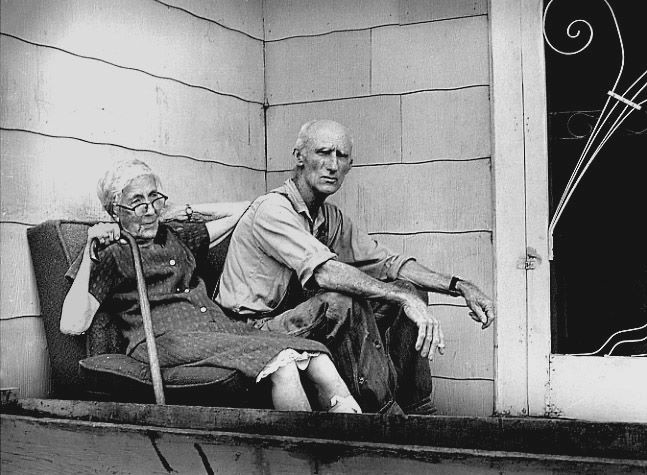
porch sitting


(Read what goblins think of writing, or how they ambush prey.)


Now that you know what's typical, it's time to make some changes for your own setting.  For each of these species, you could choose two attributes from the table below.
  1. They're overly _____, almost absurdly so.
  2. They're not really as _____ as people say.


Traits (d8)humanselvesgiantsgoblins
1bravepolitevengefulsuspicious
2noisylegalisticquietcurious
3aggressiveeloquentobservantfond of complaining in solidarity
4boastfulritualisticpensivegood at reading people
5adventurousarrogantpracticalloyal
6heroicschemingdourskittish
7celebratorysecretivefond of appealing to historyproudly unrefined
8casually violentmeticulouspedanticexcitable


typical traits
Humans are overly...
Humans aren't all that...
Elves are overly...
Elves aren't all that...
Giants are overly...
Giants aren't all that...
Goblins are overly...
Goblins aren't all that...


Player-characters are the protagonists of a roleplaying game, so if anyone's going to be an unusual example of their species, it's probably them.  You could use the traits above as a guideline, but don't let them be a straitjacket.  Feel free to portray your character (PC or NPC) however you like.

(Edit: This post originally used the term "elves" to refer to what I'm calling "colonials".  The name never really fit well.)

Monday, December 24, 2018

Post-apocalyptic 1700s

Some posts here are about the bright and hopeful future; this isn't one of those.  Signs in the Wilderness is a post-apocalyptic setting, and while it's been long enough that things are starting to look up, the terrible world after the fall is still everywhere.

When I think of these kinds of stories, movies like Mad Max, 12 Monkeys, or even Zombieland come to mind, all set around the modern day.  For this setting, I've been thinking about how the usual post-apocalyptic tropes can apply to an earlier era.

Reclaimed by nature


With so many people dead, the wilderness is full of ruins: forts and villages and mines that were once maintained by people, but have now fallen to the forest.  Abandoned sites have layers of history, even in the short time since the apocalypse.  You can see why they were built, how they fared in the end, how the forest has grown over them, and even who's been there since.

Overgrown Tomb, Steven Belledin


Ruins aren't clean, static places; they're as changing as the forest.  Rain gets in, flooding and rotting.  A wall becomes home to bees.  Tree goblins nest in the rafters.  A cellar holds a sleeping bear.  Floors crumble and rot through, stairs fall apart, and the site gradually fades away into the forest.

You'd have to be pretty desperate to try to make a living on scavenging from the ruins.  But most adventurers are desperate, in one way or another.

Raiders


Crops failed in the starving time.  Tens of thousands left home in search of a chance at survival, anything to eat, anything better than where their neighbors died.  When it's either you or them, someone dies and someone gets to eat for another day.

Those few who were better stocked with food found themselves the target of repeated attacks.  In many cases, the walls held and the raiders starved or moved on.  Others were not so lucky.

Over time, raiding and thieving became a way of life for many, an accepted means of supplementing your food supply in lean times.  Out away from more prosperous parts, it's still a desperate world, full of people who have no qualms about robbing a stranger to feed their kids.


Ambush at Lovewell Pond


Meeting someone on the road is a wary affair.  There's a decent chance they're here to rob you, or that you're here to rob them.  Keep your hand on your pistol and assume every encounter is a trap.

Everyday violence


This generation was raised by a broken and traumatized people.  Their parents watched people starve in the streets, buried piles of bodies when the plague came, and did things to survive that they're not proud of.  Brokenness begets brokenness, and their children learned hard lessons at a young age.

Rude words lead to a fistfight.  Slight someone's honor and you might face them in a duel.  Intrude on the quiet of a town and you might get a beating, but you might get hanged from the nearest tree.

Duel with Cudgels, Francisco de Goya


A party of adventurers is always in danger around other people.  They're perpetual outsiders who can be blamed for all ills, strangers with no one to avenge them.  To survive, they'll have to be ready for violence, which only makes isolated settlements even less likely to want them around.

Warlords


The cruel hand of fate didn't strike everyone evenly.  Anyone with a good source of food and some decent weapons might find themselves much better off than their neighbors.  That kind of power corrupts.  You end up with petty warlords, ruling over a valley or two by doling out survival to those who fight for them.

Loyalty to the warlord means you get to eat.  Defiance brings punitive raids.  You can't fight for long once someone's burned down your barn, and with it all your corn for the winter.

Powhatan, John Smith


These days, every government or power structure operates a bit like a warlord.  A company administrator hands out rations and beatings just as well as a tribal chief or an elected mayor.  Traditions and pieces of paper don't bring power the way food and guns do.

For up-and-coming adventurers, this means hard choices.  To get along, you're going to have to gain the favor of some bad people.  The company might pay well, but they might send you to burn down a whole village.  The council might keep you fed, but only as long as you bring them the heads of their rivals.  And what happens when you're powerful enough that you don't need some warlord's support?  How do you stay in charge without resorting to their cruelty?

Dirt and grime


Everything is broken and dirty.  Someone comes stumbling into the tavern?  You know they're covered in mud, soot, dust, blood, whatever.  Every inn is a grimy little place.  Every traveler looks a bit like the road they travel down.

Couple in a Tavern, Todeschini


But to make the griminess really stand out, a bit of contrast is in order.  The spirit glass hanging outside the city is actually kept clean and sparkling.  The boss takes a bath every night, and her guests eat a proper dinner from fine china.  The telescope is wrapped in a clean, white cloth.

If you want to look rich, look shiny.  Hot baths and clean clothes are a luxury few can afford.

Makeshift and repurposed


People are clever, especially when they don't have any better options.  Old things that can't be made anymore are too valuable to throw away, so they get repurposed and made into other things.

Every settlement has something from the old days that's been repurposed.  The inn used to be a grist mill.  That spearhead used to be a drainpipe.  The tank from the brewery is now a boat.  They tore apart the ship and built it into their fortifications.  That necklace is made of old doubloons.

Zuni blacksmith shop


Things have stories.  Treasure in this world comes with complications: competing claims, malfunctioning parts, and unexpected benefits.

Earth-that-was


After a great collapse, people tell stories about the world that came before.  The past is simplified and idealized, turned into a standard story to help you understand the way things are now.

Some people say it was a better time, venerating the ancestors and calling for a return to their way of life.  Some say it was a decadent age, swept away in a great cleansing of the world.

city of the Mound Builders


Many are in mourning for the old world.  Those few elders who lived in it wistfully think back on the days of their youth.  Their children and grandchildren who grew up in the new days speak of the old as a lost age of glory that will never be attained again.  Whole societies can go on for centuries mourning their golden age.

Relics from the olden days elicit mixed responses, from awe to disdain.


For this article, I've deliberately avoided mentioning some of the usual post-apocalyptic tropes about cars and ammunition.  I think you can still get across most of that concept in a world of muskets and canoes.

I've got a few ideas for posts I'm working on.  What would you like to see next?
  • how people are changed by the frontier
  • population dynamics of the elven hive
  • prophets and preachers of new religions
  • how humans are scary monsters
  • newfangled inventions

Saturday, November 17, 2018

Wilderness rules, a wishlist

I'm looking for a good set of wilderness travel rules.  The setting of Signs in the Wilderness is a wide, poorly-explored country, where settlements are rare and scattered.  Travel itself is the framework for adventure.

William Manly, Andy Thomas


So far I've been using homebrew, hacked-up versions of other games' rules.  For many years my usual group had some mix of AD&D 1e/2e rules, using whatever seemed to work well enough.  For the last game I ran, we used a homebrew set of PbtA-style moves for overland journeys, and it worked surprisingly well.  (Some rulesets, like the one from Avalon Hill's Outdoor Survival, I would be less likely to recommend.)

So what would a perfect set of wilderness travel rules look like?  They would:
  1. cover the most typical situations for this genre of adventure,
  2. yet be flexible or general enough to apply to unexpected situations as needed,
  3. and not take too much time, brainpower, or paper.
Tough Decision, Jim Killen


There's a long list of situations that I'd love to see covered.  I imagine a ruleset that handles all of them would turn out to be far too cumbersome, with page after page of tables, endless die rolls and modifiers, and no one would really know the rules that well.  But if I could have it my way, the rules would be great for:

Travel itself

Start with a day's travel:
  • How far do you get?
  • Do you get lost?
  • Do you get hurt/cold/sick/exhausted?  Does your morale drop?
  • How much food/water do you consume?
For each of those, a few conditions should matter:
  • How are you traveling (on foot, by canoe, etc.)?
  • What kind of terrain are you traveling through?
  • What's the weather like?  (Getting lost in fog, drinking lots of water in the hot sun, etc.)
  • How much are you carrying?
  • How sick/injured are you?

Dealing with obstacles

I'd like rules for obstacles to be general purpose, but there's one particular obstacle that seems to show up all the time in this genre: crossing a creek.  It presents a few particular dangers:
  • getting your powder wet
  • losing your gear and having to search downstream
  • being swept away yourself to be buffeted against rocks
  • getting soaked from head to toe in winter and dying of cold
I'd like to see the party struggle with the decision to cross now, as quickly as they can, or spend hours searching for a safer place to cross while losing valuable time.

There are other kinds of obstacles (portaging canoes, climbing a cliff, spelunking) so I'd enjoy seeing a general rule for crossing an obstacle to movement, but at the same time I appreciate having some of the consequences of danger spelled out for the GM.

Doing things along the way 

  • foraging for food/water
  • noticing things along the way: animal activity, smoke from distant campfires 
  • tracking, following a trail of footprints and other signs
  • trying to cover your own tracks as you go
  • setting an ambush, lying in wait
  • noticing an ambush before it's sprung on you
Again, terrain and weather matter.  It's easy to follow footprints in the snow, but if it starts snowing again they'll be covered up quickly.

Making camp

  • rest, recovering health/morale, based on how good the camp conditions are
  • who/what notices your encampment, based on how well concealed it is, fire, noise, etc.
  • keeping watch, looking out for danger at night

Lewis and Clark, Mort Kunstler


Some of what I'm looking for is rules: concrete ways to decide what happens, to give the hard decisions to the dice and the tables, not the GM.

The other part I'm looking for is inspiration: ideas and suggestions to help describe this genre of adventure.  When running a game, a list of possible results is often handy, not as a way to constrain what the GM does, but as suggestions and inspiration.

Tuesday, October 23, 2018

Kingdom come

This is a dark and fallen world, but there's a new day coming. The promised land is just around the bend; the new world we've been hoping for is here any day now.

A generation ago the world fell in darkness.  The starving time killed off most who lived, and their bodies lay upon the ground with no one to bury them.

People these days grew up hearing tales of the end of the world.  It's only natural that their view of the world involves change.  Most people believe the ultimate destination is coming, a new kingdom to be built on earth.  Most people think it's going to be better.  Some don't.

Through the trial to the glory


Pretty much everyone agrees that there's a step that has to happen first, some kind of trial or transformation.

Scientific and industrially-minded people think this is going to be an age of reason, a time when superstition and backwardness are banished and a glorious new age dawns upon the world.  Their faith sustains them as much as it does anyone else.  They're quite sure that education is the key, that all the backward tribes and hidebound bureaucrats will recognize the brilliance of the shining future they intend to build, if they're only willing to learn.


A common refrain is repentance, a call for the people to turn away from sinful ways to reach the better future.  A prophet among the humans near Lake Ataska teaches that repentance will reveal the way to the promised land, a bountiful place for those whose homeland has been lost.

Peaceable Kingdom of the Branch (Edward Hicks)


Old Orthodox elves are less optimistic.  They mourn the loss of the great temple in the old homeland and they refuse to accept that the Emperor himself (long may he reign) could be dead (though concede that no one has heard from him in quite some time).  They believe there will be still darker days ahead, but that in the darkest times the Emperor will be revealed and the temple will be restored and all will be well in the world again.

The New Ancestors movement has taken a darker turn.  These are elves who also mourn the loss of so many temples and the ancestral spirits enshrined within, but they've decided to replace the spirits with those of new elves.  For now it means they'll be capturing and killing elves, enshrining their spirits in makeshift houses, but they know the ancestors will see their faithful obedience and return to the shrines to protect the living once again.

The new kingdom


A typical message of the new era to come has two parts: a period of trial and a new way of things.

Trial (d4)
1repentanceThe people must give up their sinful ways.
2judgementEveryone will be judged for their deeds.
3warStrife and warfare will wash over the world.
4enlightenmentIgnorant and backward thinking must be replaced by knowledge and wisdom.

New way (d6)
1the promised landA new and bountiful land is promised to those who have wandered far from their old home.
2invulnerability in battleThough so many have fallen in battle with our enemies, this new way will surely bring victory if we are worthy.
3abundance and prosperityDirt-poor folks are glad to hear that a time is coming when there shall be no hunger, with a roof over every head.
4deliverance from evilBeaten-down people seek freedom from oppression and evildoers.
5peace among the nationsAfter so much war and strife, an era of peace is surely at hand.
6apocalypticThe dark days came to cleanse wickedness from the earth, and they will come again right soon.

Roll up your own message of things to come:
message of things to come
trial
new way

Saturday, October 6, 2018

"Colonial America" the way Lord of the Rings is "Medieval England"

Working on a brief description for this setting, a metaphor occured to me:
Signs in the Wilderness is to Colonial America as
Lord of the Rings is to Medieval England.

Like all metaphors, it breaks down if you look too closely, but let's see how far it goes.

Home that never was


Both settings are suffused with nostalgia for the olden days, but a gentler, kinder version that never quite existed.


The Shire is right out of the English countryside, an idyllic pastoral landscape of cups of tea and smoking pipes and horse-carts and a pint with the neighbors down at the village pub.  It's quaint and lovely.  But it's also imaginary, a nicely-chosen slice of Merrie Olde England to hearken back to.  The hobbits aren't serfs toiling for a local lord, no one's starving to death, and folks aren't heading off to the smokestacks of the industrial city looking for work.

In short, it's the kind of England Tolkien would have been most comfortable in.  And that's an excellent thing for a story.  Stories aren't just supposed to be good for the reader, but for the writer as well.  Write what you know is good advice; it's equally important to write what you love.

For me, the Shire doesn't feel like home.  Village lanes and horse-carts are like...lightsabers or rodents of unusual size: familiar, but things out of stories.  The Shire is full of foreign names like Eastfarthing, Bucklebury, and Willowbottom.


I'm from a different country, one with names like Poughquag and Conshohocken, Last Chance and Six Mile Run.  The idyllic past is a log cabin in the rainy woods, canoeing down an icy creek, hiking over red-leafed mountains, and thunderstorms on a muggy afternoon.  That's the world of stories from childhood, the slice of yore that never quite was.

A different age


Middle Earth is based on the high to late Middle Ages...more or less.  It's a time of swords and knights and shining citadels.  Gunpowder is just starting to show up, and it's likely to upset everything (if Saruman gets his way).  If you only get one picture in your head of the local technology level, think medieval.


Then again, the usual idea of medieval doesn't entirely line up with history.  Some parts of Middle Earth are a bit further along.  There's a clock in Bag End that would be at home in the 1800s along with Bilbo's waistcoat and handkerchiefs.

Other regions draw inspiration from an older age.  Rohan, in particular, seems closer to the Saxons and Goths of the Migration era.  The hall of Meduseld could be right out of the pages of Beowulf.

Likewise, I'm grounding Signs in the Wilderness in a particular era, more or less.  The core would be the 1700s, with flintlocks and telescopes, but its inspirations go as far forward as the mid 1800s (looking at steam engines and the Gold Rush) and as far back as the 1500s (with matchlocks, galleons, and so many unknown regions).


Doom and glory


Lord of the Rings is a story about impending danger.  There's a great evil in the world, something old and powerful that wants to blot out everything worth saving.  A slim hope is all that remains to try and thwart the onslaught of doom.  Success isn't really about making the world better, but simply keeping any of it alive.  Even if the heroes are victorious, the world will be scarred and battle-weary, leaving the survivors to rebuild.


It's no surprise that Tolkien would write this way.  As a man who served in the trenches of the Great War, he saw firsthand the devastation that England feared, a devastation that tore through Europe again while he was writing his book.  Lord of the Rings wasn't an allegory for the wars of the twentieth century, but those wars were so present in Tolkien's life that I imagine he could not have written a story entirely without them.

Such stories go back further.  A near-hopeless stand against impending doom — this is the legend of King Arthur, leader of Britain's last stand against the pagan invaders.  (Spoiler alert: the pagans won.)  I'd tell you more about what Arthur is about in British folklore, but Arthurian influence is so strong even to this day that I'm sure you're already familiar with the tale.

Over here in America, we're a different kind of people with a different kind of story.  Our tales are about bold individuals who worked hard to make a name for themselves.  They're about taking the raw world around you and molding it into greatness.  Paul Bunyan plowed the west with his great blue ox while Johnny Appleseed planted trees for food and cider all along the frontier.


But the best example of this peculiarly American mindset might be A Connecticut Yankee in King Arthur's Court.  Written by Mark Twain (whose place in our country's legends is assured), it's a story about an ordinary man who gets thrown back in time to Arthur's Britain.  Once there, he does what any American would: he rolls up his sleeves, dazzles the yokels, and through bravado, hard work, and good old American know-how, he whips that kingdom into shape and makes it an industrial marvel in the Dark Ages.

While Connecticut Yankee is absurdly chauvinistic and over the top, there's a kernel of truth buried in there.  We Americans have long believed that success is achieved through hard work and ingenuity, available to anyone willing to go out and make it happen.  It's the American Dream and it's all through the mentality of our country, for better or worse.

Signs in the Wilderness isn't about impending doom; it's about great opportunities for those willing to take them.  Success means building something better in the world.  Failure means someone else gets to the opportunity first.


Legacy of the past


Middle Earth is a decaying land, littered with ruins of a better age.  Statues of ancient kings stand taller than anything men can build today.  Old technology can do wondrous things that no one now can copy.  Magic and the elves are leaving the world, never to return.


England, like most of Europe, grew up in the shadow of Rome, mourning in the tragedy of its loss.  Medieval Europe saw itself as a world falling away from the wisdom of the elders, a world where classical authors were the unquestionable experts on every subject. 

There's an interesting Wikipedia article on the world record for the tallest building over time.  For nearly four thousand years mankind built nothing taller than the Great Pyramid of Giza.  That's the world of Middle Earth, too, a place where the statues of the Argonath were nearly two thousand years old by the time Frodo glimpsed them, statues that no one could build in those later days.

Skip ahead a bit in that article and you'll see where America grew up, a time when the record kept being broken (usually by Americans).


Both Tolkien's esteemed writing and my own (rather less esteemed) feature an older civilization that's been swept away.  His works conveyed a profound sense of loss and gave a chance to marvel at things long gone.  My hope is to convey a sense of new opportunity in the wake of destruction.

Signs in the Wilderness is a post-apocalyptic world, but its eyes are looking forward, not back.  It's been a generation or two since the Starving Time.  Those who grew up in the new days aren't standing around gawking at the past like their grandparents; they're moving on to build a better future for themselves in the new world.


I'm grateful to be living in such a prosperous age, and thankful that we have access to such great authors as Tolkien.  Hopefully you've read some of his works, firstly because they're excellent, and secondly (though distantly) so that my comparisons in this article might make sense to you.

I also hope this article doesn't come across as too pompous or pretentious.  Tolkien was a college professor who wrote a modern epic; I'm just some uneducated guy with a blog.  If I get even one millionth as many readers, I'll be happy.

Monday, August 20, 2018

Striving against the world


I find myself looking for a fight.  An uphill struggle, striving against a world opposed or indifferent to my goals — that's what I like in a roleplaying game.

(In this post, I'll be using a lot of shoulds and don'ts and unwarrantedly absolute statements.  These are really just for me.  As long as you're having fun, you're playing the right way.  If you want to play the way I do, read on.)


But in the midst of all the talk about how roleplaying games should work, it's easy to forget that the players and the GM are playing two different games.

As a player, I'd better be using my wits, paying attention, and coming up with good plans, lest I get all our characters killed.  For me as a player, this is war.  Whether it's a gunfight in the street, a court case over our colonial charter, or chasing cryptic clues to buried treasure, I want to strive as hard as I can.  Whatever the struggle we're facing, the world isn't going to play fair and it's going to hurt if we fail.

Hopefully it's not too gauche to quote my own article about another game I worked on:
[This game] is like climbing a mountain it's about a titanic struggle against a cold, hostile environment, striving to be the first to the top. It's about facing a challenge and working to overcome it. The greater the challenge, the more triumphant the victory.

As a player, I'd like to use every tool in my arsenal to achieve a triumphant victory (or at least manage a narrow escape).


As a GM, on the other hand, I can't do any of that.  Struggling with all my might against the world or against the players' plans isn't helpful.  Being in control of the world, the GM is no longer a reasonable adversary.  This leads to an important principle:

When you have creative control over the world, striving is meaningless.

If the players want to strive the way I do when I'm a player, there needs to be a dividing line.  On one side of the narrative boundary the players strive and contend for glory.  On the other side the GM manages a world for them to contend within.  Crossing the boundary in either direction ruins the game.
  • If the players control the world their achievements are made meaningless, like they've been playing with cheat mode turned on.
  • If the GM controls the players' characters, the players' achievements are also made meaningless, as their characters have become merely puppets for the director.


So what kind of game is the GM playing?  How can they be successful?  For me, it's twofold:
  • presenting a living world
  • making the adventure be worth the struggle
A living world is a tall order.  As much as I'd like to build my own creation and see its every detail, making a whole world is beyond any of our abilities.  Instead, I'd like to make enough of a world that it feels like there's always more to be seen.  Make enough agents and cities and forests for a first glance, then keep building under the spotlight of the players' gaze.

To make the world feel alive, it should act on its own, apart from any plans of the players.  If the party doesn't go down to the docks, the ship headed for the Summer Isles will still leave.  If the party never comes back to the old mission, goblins will probably move back in.  The world is full of its own comings and goings and generally pays little mind to the party unless they make it take notice.

Presenting this world well is also part of the measure of a GM.  An intricate clockwork realm entirely in your head is worth very little.  The best enjoyment in life is best shared.


All that worldbuilding is good, but I believe it's not sufficient.  Putting dangers and rewards in the world is necessary, so the players have something to strive for and struggle against, but just putting it there isn't quite enough.

The players need to know that the dangers are worthy of their skill, that the rewards are worth attaining.  In short, the players need to know that the adventure is worth the struggle.

To that end, it's my job as GM to give the players a hint of where the adventure lies, to tantalize them with treasure, to raise the stakes to make sure they know this is an adventure worthy of their efforts.


As a player, I think I'm probably somewhere in the old-school camp, poking at rocks, ambushing enemies, and expecting death around every corner.  As a GM, I'm probably in some muddled mix of narrative, story-game, simulation, whatever the kids these days are calling it.  Those of you better versed in theory, I'd appreciate your insights.

But as I said, this is all just about the kind of roleplaying game I like best.  If none of this sounds like fun to you, go find your fun and know you're doing it just as right as anyone else.

Wednesday, August 8, 2018

Misfits in the backwoods

The frontier's no place for sensible folk. Safety and comfort are back at home, where wiser people go about their lives. But out in the wilderness you find people who just...aren't quite normal.

Baron Ungern

When the party meets someone, choose one trait from the list below.
If they're even moderately important, or if the party wants something from them, choose two.
If that person keeps showing up, introduce a third trait that isn't obvious at first.

Personality (d12)
1stubbornThey almost never change their views.  They won't give up on a goal, but they also won't admit fault.  Loyal, dedicated, and unchanging.
2guilt-riddenGuilty and broken, full of self-hate for what they've done or how they've failed.  They try to keep their brokenness hidden.
3arrogantThinks everyone is beneath them.  They treat you as a fan and a supporter, or else an enemy or a nuisance.  No one is their equal.
4eager to pleaseOverly eager to please, they'll say whatever it takes to make an interaction go more smoothly.  They're always saying what they think you want to hear, or whatever lie avoids a difficult truth.  Inspiring words, but broken promises.
5inspiredThey have a grand vision for the future, a dream and the drive to pursue it.
6optimisticThey see the best in everything and everyone, even if it's unwarranted.  Always finding the silver lining in a difficult situation.  Won't acknowledge what's wrong.
7gung hoImpatient and eager to get down to work.  The time for thinking and talking is past; it's time for doing.
8penny-wiseFocused so much on the details that their larger goal suffers.  Always reorganizing the supplies or saving pennies from the budget, missing the big picture.  But with such focus, they're good at the details.
9burnedDeeply wounded by something in their past, they're always avoiding it.  It's something big: war, hunger, home, family, success, forgiveness, etc.
10unsettledAlways looking to pull up stakes and move on down the road, looking for a new opportunity or new surroundings.  Staying too long with the same job, same home, or same companions makes them uneasy.
11addictedDependent on a drug, they get irritable and shaky when they can't get it.  (fermented drinks from corn or potatoes, potent tobacco tea, complex distilled and flavored alcohol like rum and retsina, strange plants to smoke and chew)
12panickyBad under pressure.  Prone to panic, freeze up, or fall into despair when the going gets tough.

If you can't decide, roll for two random traits, then make them work together even if they seem contradictory.

Tisquantum

random personality
1
2


Let's try a few combinations for someone in charge of a trading post:
  • Gung ho and addicted.  They're working hard, putting up new buildings and making deals, but if there's no newt-leaf in the next shipment, someone's getting hurt.
  • Unsettled and guilt-ridden.  On the run from what they did back home.  They'll stay here for a time, but they'll leave the trading post behind soon enough.
  • Penny-wise and panicky.  They'll haggle over a single raccoon fur and make sure the shelves are dusted, but when war looms and goods become scarce, they'll fall into despair and panic.
  • Optimistic and inspired.  They see a town growing up here one day, a great meeting place, a shining beacon in the wilderness, and their vision is contagious.  Nothing fazes them: all setbacks are temporary, all progress leads surely to the goal.
Capt. James Cook


For a true monster, whether pitiful or villainous, take one of these traits to an extreme:
  • Burned.  They've seen hunger in their past and they'll do anything to avoid it again.  Hoarding supplies, never sharing a morsel or letting anyone in, they'll kill you for your rations at the first hint of scarcity.
  • Inspired.  Their great dream for the future is persuasive and all-encompassing.  A visionary cult leader, they've convinced so many others to dream the same future.  Everything that crosses their path is fodder for the goal.

Thursday, July 26, 2018

Tech after the apocalypse

This is a world of inventions and contraptions, a world where technology marches ever onwards. The apocalypse destroyed the old world, but so much of its knowledge survived. Here in the ruins, new things are invented all the time.

There are two (somewhat contradictory) things to know about technology:
  • The finest things come from the Old Country before the fall.
  • The best things are being invented now.

Old Finery


The old elven empire was a land of millions of people in the early stages of an industrial revolution.  They had the finest silversmiths and gemcutters, the most precise instruments, and wealth—so much wealth, almost beyond imagining.

(astronomical clock of Prague, Jay8085)


When the people of the North first saw elven ships come sailing across the seas, they saw a great opportunity.  Wealth had come to them, in forms they never imagined, and they were determined to get some of it for themselves.

(Spanish galleon)


Today, after the end of the old world, elven finery from the lost homeland is highly treasured.  Old things are repaired and reworked many times over, so the ivory handle of that knife might have been part of a mantlepiece once, and the hands on that clock have been soldered back together a few times.

Elven technology usually seems overcomplicated, with too many moving parts prone to failure.  And with the industrial base of the empire gone, every moving part has to be made by hand.  The toys of the old world will eventually break down for the last time.


Modern Invention


(David Bushnell's submarine Turtle)
But let's forget about the past with its cramped cities and hidebound ways.  This is a new world, vast and full of opportunity.  People today are moving on, taking apart the fancy doodads of the olden days and making them into useful things, profitable inventions to hunt and fish and till the land.

In Finnish mythology, the Sampo is a many-sided mill that makes all the things you need in life, crafted by the gods and fought over on earth.  Wondrous treasures like this are common in fantasy, given by (or stolen from) divine and legendary beings: Excalibur is given by the lady of the lake, Perseus got his winged sandals from Athena, Sigurd stole his ring from Fafnir's hoard.

Taking after American stories, Signs in the Wilderness is a place where powerful things are created by mortals, not taken from the gods.  New contraptions and devices are being invented all the time and will surely change the world.  To put it another way...

(Benjamin Franklin, by Benjamin West)

In America, the Sampo is invented.

Thursday, July 12, 2018

Inspirational music

Here's some music I find inspirational for Signs in the Wilderness:

Music (d10)artistmood/idea
1Game of Thrones themePatty Gurdyadventurous hurdy-gurdy
2A Kazakh MelodyAbigail Washburn and the Sparrow Quartetpeaceful farmers in a bountiful country
3Wondrous LoveBear McCrearyheartfelt evening hymn
4Två KonungabarnMyrkurmournful fiddle in an unknown land
5Nassau ShoresBear McCrearypirates putting in to harbor
6II. Largo from Vivaldi's "Winter"Yo-Yo Mahopeful journey
7Vive Le Regiment SaintongeMiddlesex County Volunteers Fifes and Drums1700s military march
8Leaving EdenCarolina Chocolate Dropshope in rough days
9Strange ThingsAbigail Washburn and the Sparrow Quarteteerie modern folk song
10Black Powder Is HereKevin Kinerready for a fight

Falls on the Genesee.  (u/ilikecheetos42)


Music helps establish the mood of an adventure, letting you feel the world start to take shape around you.  I've never actually used music during a game, but it's been helpful beforehand to get everyone together.

What music inspires you for writing or playing an RPG?

Wednesday, July 4, 2018

A bright American future

Go north, young man, and grow up with the country.

A generation ago a great cataclysm struck the world.  It swept away lives and cities, tearing down civilizations, making room for something new to grow.  This is a post-apocalyptic setting, but a hopeful one.

The world that remains is poor and undeveloped, but there's a fundamental optimism, an unbridled enthusiasm for great things to come.  The people of today are going to build a new world in the ashes of the old.

This sort of optimism is common in American history, an unwavering faith in the bounties of tomorrow.  Fairy tales in the Old World talk of trying to escape your station by marrying a prince; American tales tell you to get out there and carve that path for yourself, whether it's chopping down trees or rounding up cattle.

Frederick Turner (in his 1893 Frontier Thesis) posited that American culture only emerged from its hide-bound, aristocratic predecessors as a result of the frontier experience, that life in a harsh, thinly-populated wilderness made Americans individualistic, optimistic, and egalitarian.  (And violent, but that deserves a post of its own.)  Historians have debated the validity of the Frontier Thesis ever since, but in this setting, it's true.  The old world died in the apocalypse and a new world rose in its place.
Voyaging to a new land.  (Exploratorium)

Signs in the Wilderness is about great opportunities, not looming threats.  There's a bountiful land to (re)settle, gold to be discovered, good news to be preached.  Stories are driven by opportunities for success, not by some dark lord who wants to end the world (again).

That doesn't make this world a safe place, mind you.  Try blazing a path through the mountains and you might just leave your frozen corpse out in the snow.  Find gold in the hills and you'll have every swindler and ne'er-do-well in the land at your door.  Opportunity calls to the hopeful, crooks and pioneers alike.

Prophets and prognosticators tell of the great things to come, visionaries dream of a bright tomorrow, a future that belongs to those who build it.