Showing posts with label goblins. Show all posts

Thursday, September 8, 2022

Talking Knots

In the old forests where the tree-goblins once lived, their voices might be rare today, but they still speak through the Talking Knots.  All the peoples of the North use ropes and cords, but only goblins use them to carry messages.  Strands of cord in different colors are tied into knots, each one with its own meaning.

an Andean quipu, the inspiration for Talking Knots

These days there are few people left who can read the knots, fewer still who can tie them.  It's an ancient art, passed down from elder to apprentice over the generations, but like so many things it was nearly lost during the Starving Time.

Traces of talking-knot culture persist.  It's common for pregnant women to wear a bracelet with the "life" knot repeated around it.  Hunters often wear a necklace with the complex knot for a type of prey, though they usually don't know which knot goes with which animal, or even that they're representative at all.

A few villages still have one of the old bundles of knot-cords, taken out for village ceremonies, even if they have forgotten how to read it.

Talking knots aren't a full writing system, but a partial one.  There are particular knots for clan names, common animals, some things in the natural world.  A few knots show directions or other descriptors, but without grammar to join words together, a strand of knots is more like a list than a sentence.  And because the set of words is limited, sometimes you have to resort to kennings or other wordplay to try to describe something.  There's no sign for "skunk", for example, but if you find the knot for "weasel" tied to several of the knot for "stink", you can guess what it means.

Goblins who know the knots emphasize that these are definitely not that dangerous elven writing in any way.  No, the talking knots are just a wholesome, traditional art for sharing stories among the people.

There are many different technical terms, of course, but the basics are as follows (in the Middlesea language):

  • ňúica NOO-ee-kah "knot"
  • tàirai TAH-ee-rah-ee "strand of knots on a cord"
  • tocó toe-KO "bundle of strands tied together at one end"
  • tocotómi toe-ko-TOE-mee "one who can read knots"
(Ok, the ň in ňúica is actually not an /n/ sound, it's a nasalized dental click /ǀ̃/.  The accented vowels are actually pitch accents: á is high stress, à is low stress, so the syllable in a word like ňúica go high-low-low.)

    Roll up a random (bundle) to find in your own adventures:

    Location (d6)
    1 in an abandoned village
    2 in trade from a wandering giant
    3 private religious items of a village
    4 kept by an elven academic society (though they do not understand what it is)
    5 carried by a goblin who can read it
    6 merely an impression left behind in clay/mud

    Purpose (d6)
    1mnemonic for telling an epic tale
    2an accounting of valuable goods
    3warning about dangerous enemies or witchcraft
    4letter to a loved one
    5secret call to arms
    6location of a hidden refuge

    Difficult to Read (d10)
    1-2uses a few unusual knots, need to find someone who knows them
    3-4has gotten all tangled together
    5-6part of it is missing
    7-8colors have faded, some ambiguities
    9-10strands from two bundles are joined together

    Click here for random results.
    location
    purpose
    difficulty

    Saturday, August 13, 2022

    Goblins, the Tree People

    Deep in the forest live the goblins, the reclusive people of the trees.  They lie in wait to ambush their prey, making calls to lure them in.  Goblins are the reason outsiders fear the woods, but they fear outsiders in turn, only occasionally venturing out to investigate the dangerous world around.

    Appearance

    Tree-goblins (nuruí noo-roo-EE as they call themselves) are a type of small primate, looking something like lemurs or raccoons.  Their hands and feet are well adapted for gripping branches, but they're also ready for a brief sprint on the ground.  Like a flying squirrel, a nuruí has a flap of skin that's revealed when they spread out their arms and legs, allowing them to glide through the air.  Their fur is usually striped, spotted, or mottled in some way, providing useful camoflage in the forest.

    Roleplaying

    Nuruí are the smallest and weakest of the four peoples.  They avoid extended combat at all costs, preferring to rely on surprise and rapid movement.  Tree-goblins can remain vigilant and perfectly motionless for hours, waiting for the right time to silently glide down or burst out of hiding in a flurry of teeth and claws.  Their fights are won in moments, or else they sprint away and bound up into the trees to return to safety.  Goblins are fast, but they tire quickly.

    To act like a tree-goblin, remember these two rules:

    • Go see for yourself.  When they say there's an enemy over the hill or some tasty soup in the pot or a trap full of spikes, give it a try yourself so you can learn what it's like.
    • Show while you tell.  When you tell about something, bring a little piece of it along for everyone to experience: a souvenir from the enemy camp, some meat out of the pot, a sharp spike from the trap.

    Tree-goblins are particularly good at imitating sounds, like animal calls from the forest where they live.  Some are even good at imitating the accent and voice of other kinds of people.

    Lifestyle

    Goblin homes are in hard-to-reach places, to keep them safe from predators.  Typically they build nests high up in the trees, made like woven baskets or rope hammocks.  Where trees aren't a good option, goblins sometimes make their homes in caves and clefts in the rock of high cliffs.

    Their homes are near each other, forming a village of a dozen or so families.  Each village works together to shape the land around to discourage intruders and to make ambush points for prey.  Paths in the forest near a goblin village are no accident, but are deliberately constructed to lead you where they want you to go.

    Each village belongs to a clan, a network of kinfolk that spans the entire continent.  Clans aren't geographically based (there's no country of the Red Tooth people).  There's no one in charge of a clan, but since they all see each other as kin, word gets around.  An enemy of one village is an enemy of the whole clan.

    Tree-goblins make very few tools compared to the other peoples.  Their technology focuses on forest chemistry: making pigments, medicines, glues, hallucinogens, etc.  They make some pottery and rope for their own use, but they also trade with the giants for these.

    Other People

    Here's how the goblins see outsiders:

    • Giants are good to have nearby.  They make traps to catch prey and they don't check them too often, so if you're very careful you can get yourself a meal out of a giant's trap.  Giants also make good traders, showing up with a backpack full of goods and trinkets from the world around.
    • Elven settlements are dangerous but they have some of the most interesting treasures.  Their ruins tend to have bits of metal and glass that you can trade to the giants, but it's their inhabited settlements that have a wonderful variety of food and drink to take home for the whole village.
    • Humans are the worst neighbors to have.  They hunt most of the same prey as we do, leaving nothing for us to eat.  Humans also have dogs and bows, making it hard to hide from them and hard to stay safe up in the trees.

    Outsiders are the reason to venture out of the forest on occasion, but they're also the reason to stay home most of the time.

    Inspiration

    Tree-goblins are inspired (in feel more than material culture) by the insular rural life of the northern Appalachians, wary of encroaching modernity and longing for the old days when they could live in peace without all this fuss and bother.  The signs they paint at their villages are based on Pennsylvania Dutch hex signs.

    The language of the tree-goblins gets sound inspiration from the Arawakan and Cariban languages of South America, but its grammar is entirely different.

    Friday, July 10, 2020

    The Moonlit Play

    On nights when the moon is full, performers across the land dress up for the Moonlit Play.  In elaborate costumes they take on a variety of roles from animal star-gods to wandering folk figures to hidden people.  They act out stories through word, dance, and song: some passed down from their ancestors, some newly-invented.

    This is one of the traditional religions of the Northern Lands, most commonly performed by giants and tree goblins.  Like most religions, it brings a community together, links you to your ancestors, and passes on hidden knowledge of the dangers of the world.

    Kwakwaka'wakw winter dance


    Sunday, June 21, 2020

    Down in the Roots

    The smallest of the four peoples are the goblins who live in the trees.  For their appearance, think of lemurs and raccoons.  They're ambush hunters who imitate animal calls, lie in wait, then leap down in a burst of teeth and claws.

    Their activity takes them all throughout the forest and occasionally into lands beyond, but the heart of goblin life is the tree.  Up in a tree is safety, family, and home.  It's where children are raised and it's where you rest at night.

    Danger lies below.


    Tuesday, January 15, 2019

    Getting a feel for different species of people

    I've written a little about the biology of the four species of people, but that's not an easy place to jump in.  In this post, I'm not going to talk about how their bodies work or what they make their homes out of.

    Let's talk about what these people feel like.

    We'll start with the most stereotypical views, what outsiders think of each species.  Afterwards, we'll look at variations, and how to adapt them for your own campaign.

    Humans


    Humans are the most like adventurers.  They're rowdy, bold, and hungry: hungry for knowledge and money and power.  They're noisy, with barking dogs and a fearsome battle cry.  Humans come to town and there's gonna be a brawl or a party, or maybe a mix of both.

    For an outsider's perspective on humans, think pirates and nomads and outlaws, roving teams of deadly hunters, ragged fearsome bands carving out their survival in the post-apocalyptic wilderness.

    a wedding haka


    (Read about the people of the Ashen Council, or how to roll up your own human town.)


    Giants


    Giants are fur-trapping mountain men, pensive loners.  They're quiet and brooding, wandering the land fishing and watching the stars, remembering the stories passed down from their grandmothers' grandmothers.

    Giants would rather leave you alone.  But if you harm a giant, they will never forget, and they will bring vengeance down upon you, and their descendants will tell the tale for generations.

    For a giant, think of an old prospector, a ranger in the woods, a self-reliant hobo riding the rails with stories to tell and a keen glint in their eye.

    a Mongolian herder


    (Read about their great annual gatherings, or how they trade the stars.)


    Colonials


    Colonials are a bit like you and me, something like modern day people.  They're city folk, a product of a civilized world.  Colonials are suited for comfortable houses full of manufactured goods, social organizations with books full of rules, and mixed drinks with too many ingredients.

    Take away their coffee and their indoor plumbing and they're pretty much lost.  The end of the world has been especially hard on the colonials.  They're not really the wilderness survival type.

    But despite all their weaknesses in this dark age, colonials are rich.  In their few remaining cities, the remnant of empire has amazing gadgets and powerful weapons, libraries full of knowledge and vaults full of artifacts of the old world.

    Imagine law-abiding clergymen and diligent chemists, by-the-book naval officers and studious accountants, ordinary folk who distressingly find themselves carrying a gun these days.

    Aurangzeb, Mughal emperor


    (Read about colonial alchemy, or the last remnant of their empire.)


    Goblins


    Goblins are the backwoods clan you don't want to stumble across.  Get on their good side and they're known for their hospitality.  They'll feed you some kind of meat and give you weird stuff to smoke and ask all manner of nosy questions about what your kind of people do for fun and how shoes are supposed to work and why you're not married yet.

    But most folks are not on their good side.  Goblins are the reason you don't go too far into the woods.  They're sharp teeth and haunting calls.  They're not afraid of outsiders; they lure them in just to get a fresh meal.  They've got strange medicines and hexes and hoodoo.

    Goblins are curious about the world, yet they're sure they know how it really all works.  They're eager for news even though they're sure it's all some conspiracy they're glad to be avoiding by staying at home.

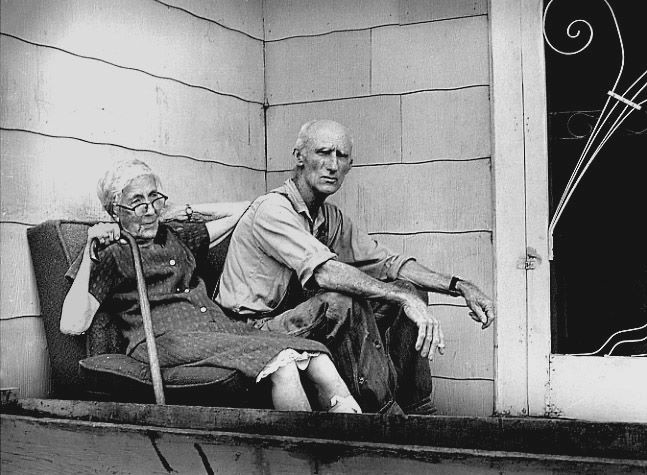
    porch sitting


    (Read what goblins think of writing, or how they ambush prey.)


    Now that you know what's typical, it's time to make some changes for your own setting.  For each of these species, you could choose two attributes from the table below.
    1. They're overly _____, almost absurdly so.
    2. They're not really as _____ as people say.


    Traits (d8)humanselvesgiantsgoblins
    1bravepolitevengefulsuspicious
    2noisylegalisticquietcurious
    3aggressiveeloquentobservantfond of complaining in solidarity
    4boastfulritualisticpensivegood at reading people
    5adventurousarrogantpracticalloyal
    6heroicschemingdourskittish
    7celebratorysecretivefond of appealing to historyproudly unrefined
    8casually violentmeticulouspedanticexcitable


    typical traits
    Humans are overly...
    Humans aren't all that...
    Elves are overly...
    Elves aren't all that...
    Giants are overly...
    Giants aren't all that...
    Goblins are overly...
    Goblins aren't all that...


    Player-characters are the protagonists of a roleplaying game, so if anyone's going to be an unusual example of their species, it's probably them.  You could use the traits above as a guideline, but don't let them be a straitjacket.  Feel free to portray your character (PC or NPC) however you like.

    (Edit: This post originally used the term "elves" to refer to what I'm calling "colonials".  The name never really fit well.)

    Sunday, October 21, 2018

    Memory transference

    When the elves first showed up in the North, they brought many wondrous inventions with them, but one of the strangest was their power of memory transference.

    It's a learned magic, a skill taught to every elven child.  With this power, one person can touch an object and imbue it with a memory or a thought.  Another who knows the skill can recognize the tell-tale markings on the object and retrieve the memory into their own mind.  It's best done using a wand or a brush of some kind, but simple thoughts can even be conveyed with nothing but your fingertips.


    You and I know this power as writing.  For us it's entirely unremarkable, but to an illiterate society, writing is magic.

    An incident from the 1620s might illustrate this better.  One missionary sent a note to another asking for a fresh canoe, and the Hurons traveling with him were amazed that it worked:
    They said that that little paper had spoken to my brother and had told him all the words I had uttered to them here, and that we were greater than all mankind.  They told the story to all, and were filled with astonishment and admiration at this mystery.
    They weren't fools, just people confronted with a radical new technology.  Theirs was a world where the spoken word was the only way to convey thoughts.  Reading someone's thoughts from a piece of paper was tantamount to reading their mind from far away.

    handwriting in the Cherokee writing system


    In Signs in the Wilderness a similar discovery of writing is underway.  Humans, giants, and tree goblins got on just fine without it for all the thousands of years they've lived in the North.  Now elves have shown up and brought writing with them.

    Giants are completely unimpressed.  They believe (like the ancient Gauls) that writing corrupts the mind, robbing you of your powers of memory.  To a degree, they're right.  No one who relies on the crutch of writing can remember the copious amounts of verse that an oral storyteller can recite.

    Humans are in awe of the power of writing, but they don't have any widespread theories about it yet, other than considering it some kind of elven magic.

    Goblins, however, know exactly what writing is.

    Trapped spirits of the written word


    Tree goblins have experts (shamans) who go into trances and dreams to contact the spirits and interact with them.  They understand that writing holds memories and can speak messages to those who listen.

    When you come across a piece of writing, the prudent thing to do is to take it to a shaman.  With their skills, they can contact the spirit in the writing and find out what it knows: not just the message it was tasked with delivering, but other things the spirit has seen and heard.

    For this reason, goblins are wary around writing, as they know the spirit trapped in the writing might be listening to every word they say.

    Destroying a piece of writing in the right way can release the spirit inside.  If it's a good spirit (or at least a harmless one) a shaman would prefer to release it so it doesn't become angry and hurt people.  But if it's already vengeful and evil, the shaman will probably bury the written material far from home to keep the spirit from getting out and causing trouble.

    Truth and superstition


    This is probably all just superstition.  Writing probably works just like it does in our own world, with no spirits or memory magic involved.

    But there's a chance that the goblins are right, that writing really does trap a spirit that remembers what you tell it.

    Personally, I like to have about a 20% chance of truth to these kinds of beliefs.  That's low enough that it's probably false, but high enough that you can't discount it entirely.

    If you're not sure about the nature of writing, roll to see what's really going on:

    trapped spirits of the written word
    the truth

    Thursday, July 12, 2018

    Killing and eating people, with a bit of trade on the side


    Goblins, giants, and humans have lived alongside each other for tens of thousands of years.  Dealing with each other isn't just something they talk about; it's part of their deep culture, the stories and practices passed on for generations without anyone knowing why.  Whole civilizations have evolved and fallen in this multi-species environment.  These species have learned how to truly coexist: not to live in peace, but to simply survive in the face of such competition.

    Humans and Goblins


    Humans and goblins are direct competitors.  They both hunt for the same game and live in similar environments.  If they're living near each other, someone's getting hurt.
    (New Zealand's All Blacks rugby team)

    It starts with threats: humans shout and bare their teeth, the goblins whistle and imitate human voices, both sides continuing until one backs down.  Usually someone does, moving their families to better grounds, away from the threat.  Humans are good at looking scary, so goblins are usually the first to leave.

    But if both sides are desperate or angry enough, it escalates.  Goblins steal and eat the humans' dogs, the humans set fire to the forest where the goblins live, the goblins murder some humans, the humans murder some goblins, and eventually only one side is left in the area, chewing on the remains of the other.
    (World Rainforest Movement)

    Natural boundaries help stabilize the relationship; good rivers make good neighbors.  With hissing goblins on one side and shouting humans on the other, neither side will risk a crossing.

    Some areas are only suited well for one or the other.  Humans don't usually live in the deepest forest where goblins like to dwell high in the trees.  Goblins don't often cross expanses of water (since they don't swim well and don't build boats) so islands off shore are usually occupied by humans.
    (Steve Rawlings)

    Thousands of years of learning have led to some natural aversion.  Goblins don't like dogs.  Even if they don't know why, it still keeps them from danger.  Humans have learned to be wary of noises in the woods.  The sound of a baby crying or someone calling for help is probably a trick, made by creatures that can imitate sounds to lure in prey.

    Goblins and Giants


    Goblins and giants aren't in quite as direct of competition.  Goblins hunt for fresh meat; giants like theirs a bit old.  Goblins ambush prey in woods where they can hide; giants set their traps in open lanes where animals travel.

    Being nomadic, giants tend to have a wider range of people they trade with, making them natural merchants.  Goblins want things they can't make themselves, like ropes, bags, and ornaments, and they can offer dead animals in return.  Trade is common between these two species.

    Giantish traps, however, have caused something of an evolutionary arms race.  After all these millenia, goblins have learned two things:
    1. Traps are dangerous.
    2. Traps may contain food.
    Goblins that can steal meat from traps without getting caught themselves are more likely to survive in lean times, so their trap-defeating knowledge is likely to spread.  But giants who construct traps that goblins can't steal from will be more likely to have food for themselves, so their trap-constructing knowledge is likely to spread.

    Giants and Humans


    Long ago (or so they say) humans used to hunt giants, skinning and eating them.  The giants swore they would get their revenge, but the humans forgot the threats and kept hunting.  Then one day, the surviving giants came down from the hills and wiped out whole tribes of humans, killing until no humans would dare hunt them again.  Now the two peoples live in peace.

    Whether the story is true or not, it illustrates an important point: peace is a safe strategy between humans and giants.  If a giant kills a human, the humans could hunt down the giant, but then the giant's descendants might come back decades later to avenge their ancestor.  Humans are good at making strong, temporary teams.  Giants are good at remembering and holding a grudge.
    Where are all the men?  (The Godfather)

    The safest way is peace with a bit of forgiveness.  Giants and humans both have a healthy respect for each other, tinged with fear.  Humans tell their children stories about the fearsome yet wise people who dwell in the highlands.  Giants tell of the fearsome yet brave people down in the valley.  Both come together to trade.

    There's another solution to these interactions: wars of extermination.  In some parts of the North, humans and giants fell into a cycle of vendettas that could only be broken with overwhelming force.  There are isolated pockets of humans in the wilderness who have learned to kill any giants who come near and have done so for generations.  Likewise, there are giants out there who have learned to kill humans who drift into their land.


    Overall, everyone has learned to be a little wary when dealing with people of other species.  After so many long generations side by side, everyone has learned to tread softly but carry a big stick.

    Then about a hundred years ago, the elves showed up, with no experience dealing with other intelligent species.

    Saturday, June 30, 2018

    Ambush hunters in the trees

    Continuing the series of intelligent primates, this next species lives up in the trees of the deep forest. Like the giants, this species is also missing a few human features:
    Lemur leaping with young.  (Eden)
    • No endurance.  This species is great in bursts of activity, but they tire easily.  They can outrun anyone in a 20-yard dash, but run out of steam before they reach 200 yards.
    • No throwing things.  They don't have the right kind of arms, but it goes further than that...
    • No tool sense.  Unlike humans, these people don't incorporate tools mentally as extensions of their own body.
      (Ravendark Creations)
    Real-world humans aren't the only species to use tools, though we are especially good at it.  Some of our tool skill is probably due to our intelligence and manual dexterity, but some of it might be helped by our psychology.

    When you pick up a tool you've never used before (a pair of tongs, for example) you're focused on how the tool feels in your hand, how to operate the tongs themselves.  Once it feels comfortable, you start using the tongs to manipulate other objects.  (Try asking a person with tongs to touch something; see if they touch it with the tongs or with their fingers.)

    This tree-dwelling species has some manual dexterity, but not the mindset to manipulate things with tools.  For them, using a tool on an object is like...cutting a piece of paper with a pair of scissors tied to the end of a pair of pool cues.  You might be able to do it, but why?

    Some of their features are more helpful:
    Flying squirrel.
    • Gliding from tree to tree, using skin that stretches from arm to leg.  This lets them move through the forest canopy very quietly while following prey below.
    • Sharp teeth and claws.  When they decide to strike, they come down from above and strike fast.
    • Imitating sounds.  Some humans are pretty good at making the sound of a dove or a turkey.  These people of the woods are the best mimics, luring in prey with their own call.
    • Patience, allowing them to spend long periods of time waiting quietly for an opportunity to arise.
    Climbing trees, leaping and gliding, they look somewhat like lemurs or flying squirrels.  They're small and fairly weak, relying on surprise and a burst of aggression to win in a fight.  Once the struggle is over, they retreat to their nests high in the branches.  These people are well suited to a life of ambush hunting in the forest.

    (I'm using the terms "person" and "people" for any of the four intelligent, most relatable species of this setting.)


    We've been calling these tree goblins, though it's admittedly an ill-fitting name.  Having an English name is usually a helpful starting point, but in this case the name might be more of a hindrance.

    What would you call them?