Saturday, August 13, 2022

Goblins, the Tree People

Deep in the forest live the goblins, the reclusive people of the trees.  They lie in wait to ambush their prey, making calls to lure them in.  Goblins are the reason outsiders fear the woods, but they fear outsiders in turn, only occasionally venturing out to investigate the dangerous world around.

Appearance

Tree-goblins (nuruí noo-roo-EE as they call themselves) are a type of small primate, looking something like lemurs or raccoons.  Their hands and feet are well adapted for gripping branches, but they're also ready for a brief sprint on the ground.  Like a flying squirrel, a nuruí has a flap of skin that's revealed when they spread out their arms and legs, allowing them to glide through the air.  Their fur is usually striped, spotted, or mottled in some way, providing useful camoflage in the forest.

Roleplaying

Nuruí are the smallest and weakest of the four peoples.  They avoid extended combat at all costs, preferring to rely on surprise and rapid movement.  Tree-goblins can remain vigilant and perfectly motionless for hours, waiting for the right time to silently glide down or burst out of hiding in a flurry of teeth and claws.  Their fights are won in moments, or else they sprint away and bound up into the trees to return to safety.  Goblins are fast, but they tire quickly.

To act like a tree-goblin, remember these two rules:

  • Go see for yourself.  When they say there's an enemy over the hill or some tasty soup in the pot or a trap full of spikes, give it a try yourself so you can learn what it's like.
  • Show while you tell.  When you tell about something, bring a little piece of it along for everyone to experience: a souvenir from the enemy camp, some meat out of the pot, a sharp spike from the trap.

Tree-goblins are particularly good at imitating sounds, like animal calls from the forest where they live.  Some are even good at imitating the accent and voice of other kinds of people.

Lifestyle

Goblin homes are in hard-to-reach places, to keep them safe from predators.  Typically they build nests high up in the trees, made like woven baskets or rope hammocks.  Where trees aren't a good option, goblins sometimes make their homes in caves and clefts in the rock of high cliffs.

Their homes are near each other, forming a village of a dozen or so families.  Each village works together to shape the land around to discourage intruders and to make ambush points for prey.  Paths in the forest near a goblin village are no accident, but are deliberately constructed to lead you where they want you to go.

Each village belongs to a clan, a network of kinfolk that spans the entire continent.  Clans aren't geographically based (there's no country of the Red Tooth people).  There's no one in charge of a clan, but since they all see each other as kin, word gets around.  An enemy of one village is an enemy of the whole clan.

Tree-goblins make very few tools compared to the other peoples.  Their technology focuses on forest chemistry: making pigments, medicines, glues, hallucinogens, etc.  They make some pottery and rope for their own use, but they also trade with the giants for these.

Other People

Here's how the goblins see outsiders:

  • Giants are good to have nearby.  They make traps to catch prey and they don't check them too often, so if you're very careful you can get yourself a meal out of a giant's trap.  Giants also make good traders, showing up with a backpack full of goods and trinkets from the world around.
  • Elven settlements are dangerous but they have some of the most interesting treasures.  Their ruins tend to have bits of metal and glass that you can trade to the giants, but it's their inhabited settlements that have a wonderful variety of food and drink to take home for the whole village.
  • Humans are the worst neighbors to have.  They hunt most of the same prey as we do, leaving nothing for us to eat.  Humans also have dogs and bows, making it hard to hide from them and hard to stay safe up in the trees.

Outsiders are the reason to venture out of the forest on occasion, but they're also the reason to stay home most of the time.

Inspiration

Tree-goblins are inspired (in feel more than material culture) by the insular rural life of the northern Appalachians, wary of encroaching modernity and longing for the old days when they could live in peace without all this fuss and bother.  The signs they paint at their villages are based on Pennsylvania Dutch hex signs.

The language of the tree-goblins gets sound inspiration from the Arawakan and Cariban languages of South America, but its grammar is entirely different.

Friday, August 12, 2022

Giants, the Wandering People

A giant's life has always been a lonely one, even before the Starving Time.  They wander the land alone, checking their traps, watching the stars, and telling tales of old to those they meet along the way.  What other peoples have forgotten, the lonely giants remember.

Appearance

Giants are a large primate, something like a gorilla or sasquatch.  They are the tallest of the four peoples by only a little, hunched over as they walk, but they are the strongest by far.  Their thick fur comes in colors from charcoal black to russet brown to pale grey.

Roleplaying

Giants (ogolon O-go-lone, as they call themselves) are incredibly strong, able to carry heavier loads and break through tougher obstacles than anyone else.  Their slow speed works against them in a fight, but this is offset by the protection afforded by their thick hide.  While giants have traditionally not used many ranged weapons, they eagerly make use of elven firearms as much as they can, even carrying smaller sorts of cannons on occasion.

When playing a giant, here are some tips to make them feel even more giantish:

  • Appeal to history for justification.  Invoke ancient alliances in a call to war, bring goods to trade that were sung about in the olden days, recite a poem from your grandmother's grandmother when making peace.
  • Look and listen, then ponder your words before you speak.

Giants have deep memories, remembering details from ancient tales that others have forgotten.  Some are skilled enough in memory to recite hours-long epic poems or to recall the words of conversations they had many years before.  (The elves think some of the giants can read elven holy scriptures, but in fact the giants simply listened and memorized the entire book.)

Lifestyle

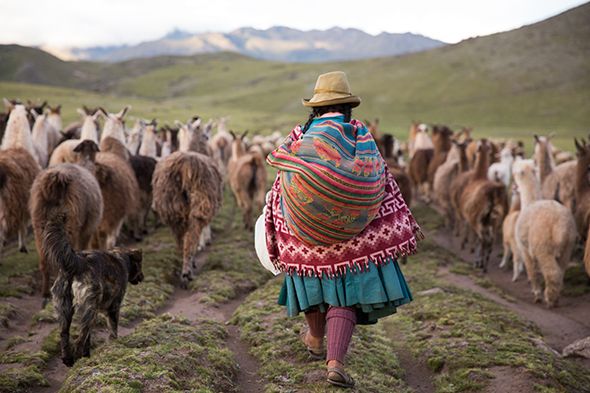
Giants wander the land alone most of the year, favoring colder, higher, and drier places than other people.  They make elaborate traps to catch birds, fish, and land creatures alike, and they don't mind if the meat has gotten a bit old before they eat it.  Some giants do more fishing instead, or gathering wild plants, while others tend to herds of livestock: llamas, alpacas, and yaks, mostly.

While giants mostly wander alone, they do belong to an ancestral house that governs the vast territory where they roam.  Should a giant be killed, the vengeance of their house will be slow, but it will be remembered for generations.

A giantish ancestral house is a physical structure, but it's thought of as something like a person, the embodiment of their kinship group, capable of owning property and bestowing honors and titles.  A few people stay at the house all the time, generally elders who are too old to roam the land, members of the first rank, and perhaps some warriors for defense.

The members of a house are divided into ranks (typically four per house), showing their prestige and role in governance of the house.  Giants inherit a place in the house one rank lower than their most prestigious parent.  The members of a rank may invite someone from the rank below to join them, in recognition of their skills or service to the house.

Each spring the house hosts a gathering.  Everyone returns home from their lonely wandering for a few days of trade, mating, gossip, and making plans for the year ahead.

Like the other indigenous peoples of the North, giants mostly used stone and copper tools until the strangers came from across the sea.  Elven trader introduced the giants to firearms and kettles, but they also destroyed many trade networks, either by outcompeting them with industrialized products or by brute conquest.  Many of the giantish houses fell into debt, trading away everything to the elves just to survive.  As a result, giants can now be found as laborers around most elven settlements, working for mere pennies, if they're paid at all.

The houses that still stand tend to follow the old ways, telling tales and doing dances for the star gods.  Some have been converted to the elven ancestor-worship religion instead.

Other People

To the giants:

  • Humans are rowdy and sometimes troublesome neighbors, but they make many good products for trade, and in the end they usually remember to treat giants with respect.
  • Goblins have an irritating tendency to break into giantish traps for the meat inside, but where they're not competing for food, giants and goblins can get along well enough for trade.
  • Elves are wealthy traders and skillful teachers of religion and science, but they're also the cruel tyrants everyone seems to owe money to, or the capricious conquerors who kill people and take their land.

Because they get along with the other peoples well enough, giants tend to be the best traders and diplomats.

Inspiration

Giants in this setting are inspired mostly by the North American fur trade.  They're the lonely mountain men who wandered the west trapping for furs, coming together for an annual rendezvous.  They're also the indigenous tribes who pushed across the frontier to follow the trade companies, sometimes benefiting from access to trade goods, sometimes suffering from the destruction of the old trade networks and the new indebtedness to the companies.

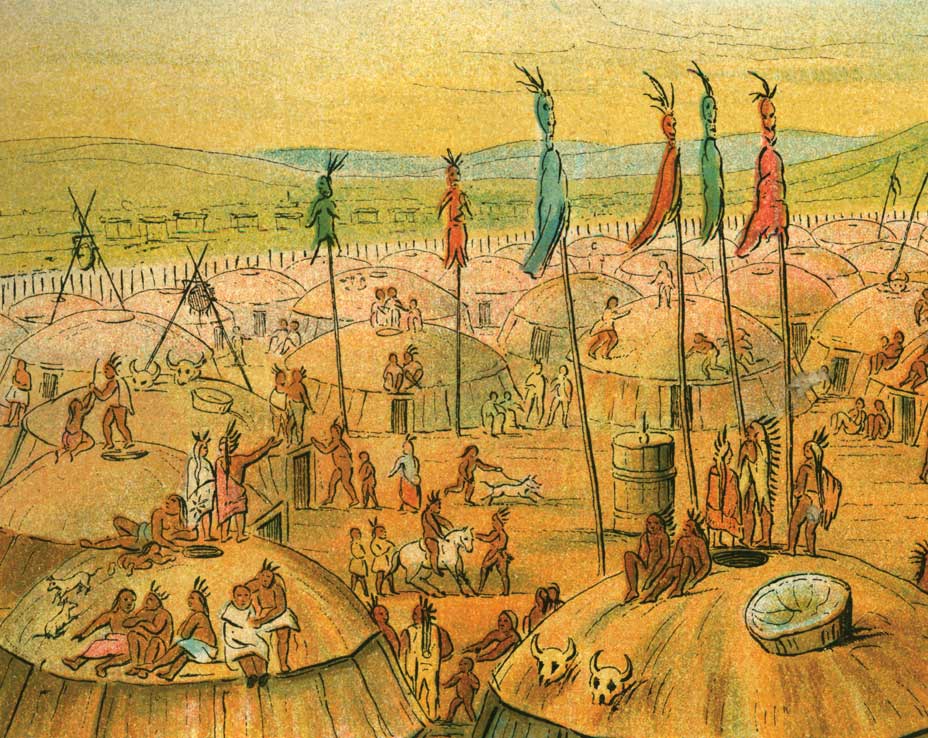
Their aesthetics are a mix of Siberian and Pueblo, with architecture particularly inspired by the Japanese shinmei-zukuri style.  The sounds of the giantish language are inspired mostly by Hopi and Inuktitut.

Saturday, August 6, 2022

Elves, the City People

Elves are the city-dwellers, the colonial conquerors from beyond the ocean sea.  They came a century ago in their great ships and established outposts of empire here in the North.  Now the empire is gone, but a few colonies remain, citadels of power and wealth.

Appearance

Elves (cazandi cah-ZAHN-dee in their own tongue) are primates from a hot and dry continent.  They are taller and thinner than humans, with long spindly limbs and digits.  Outsiders cannot recognize any distinctions of gender among them.  Their skin tends toward dark, earthy shades of gray and brown, but their eye colors are brilliant gem tones.

Roleplaying

Playing as a cazand one must be careful.  Elves are weaker and more easily injured than most people, and are unskilled at running and throwing.  But what they lack in physical prowess they make up for in wealth and connections.  An elven character starts with more money, access to more technology, and membership in the organizations of colonial society.

If you're looking for some roleplaying tips, here's how I like to make a character feel more cazandi:

  • Always be polite, especially when being cruel.
  • When in doubt, do it by the book and the ancestors wrote a book for everything. 

An elven adventuring party likely has a name, an emblem, elected officers, and written bylaws, with specific provisions for what happens if a member dies and the proper ritual for inducting a new member into the group.

    Lifestyle

    Elves are a eusocial species: only a few of them, the Mothers and Fathers, actually reproduce.  Each city is like a vast extended family, all descended from the city's lineage of Mothers.

    Within the city, each cazand is part of several different overlapping societies: a guild or company where they make their living, a fraternal order where they share a morning meal, a temple maintenance society where they work together for the upkeep of one of the city's shrines, an alumni association for the cohort of schoolmates they were raised with, and so on.

    They subsist mostly on bread and vegetable products, but they do also eat fish and a few types of meat.  Elves are the only people capable of digesting milk as adults, so they keep livestock for dairy products.

    Technologically, they're at the level of muskets, telescopes, and joint stock corporations.  Most elves can read and write.

    Their cities are usually on the coast or on rivers, as they use ships for most of their commerce.  They have some draft animals to pull wagons (oxen, donkeys, and even a few surviving elephants) but they do not generally ride animals.  In the cities you might run across an elf with a tally bird, a sort of domesticated parrot that can count and do basic arithmetic.

    In extreme conditions of drought or heat, elves can go into hibernation, seeming nearly dead until conditions improve and they wake again.

    Other People

    The typical elven view of the other species of people is deeply racist and condescending:

    • Giants are like some kind of intelligent livestock.  Strong and useful, and even possible to educate if you're patient.  Occasionally giants have been known to revolt, for some reason.
    • Humans are fearsome enemies, preventing the colonies from making full use of the countryside.  They're treacherous and primitive, but sometimes you have to make concessions to keep the peace.
    • Goblins are vermin at best, deadly threats to travelers at worst.  The forests cannot be trusted, full of goblin ambushers ready to attack with teeth and claws.

    Those kinds of views are common in the cities where cazandi only deal with other cazandi.  But out on the frontier where the Four Peoples meet, you learn to get along or you find yourself getting in trouble.

    Inspiration

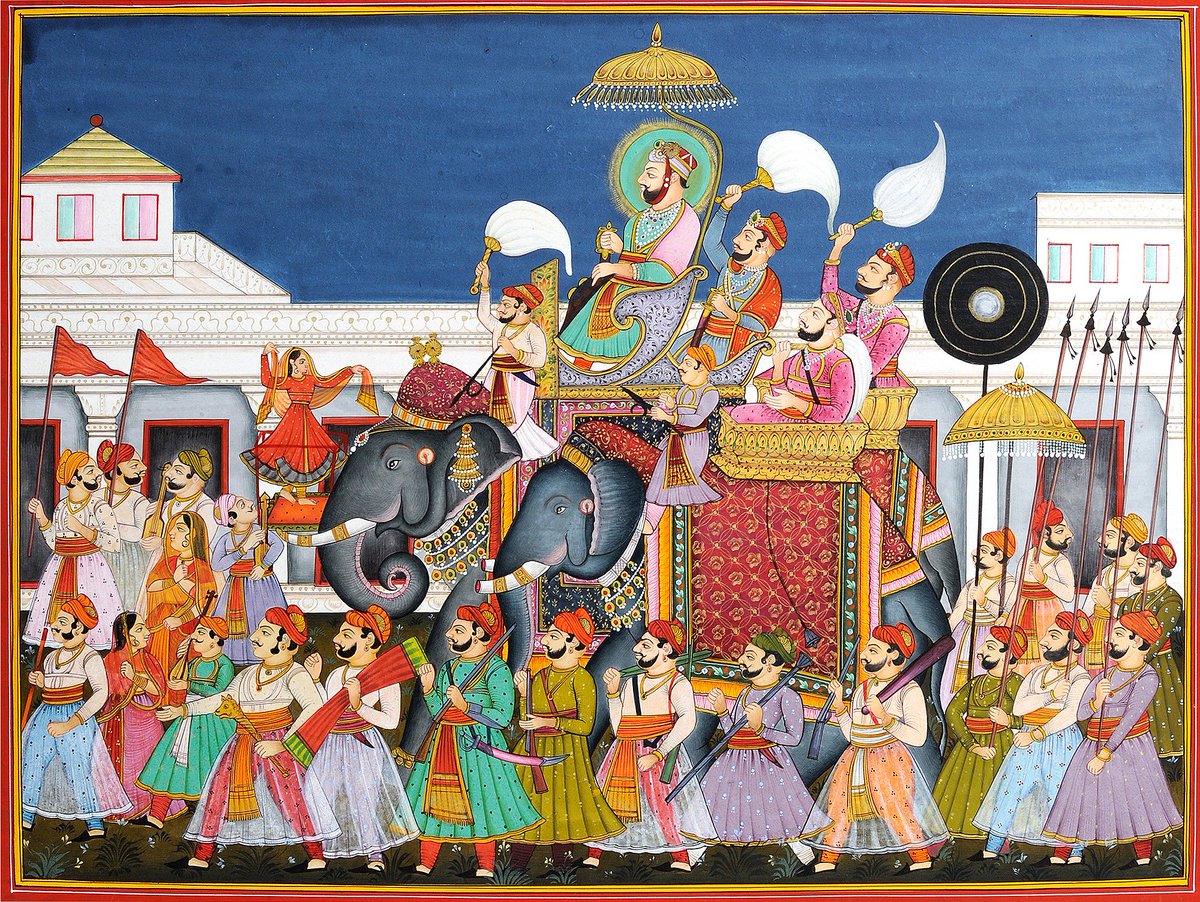
    Elves in this setting take the role of the European colonial powers in the New World.  As such, I've styled them after a mix of some of Old World aesthetics: Mughal architecture and textiles, Mediterranean galleons and xebecs, English hats and coats, etc.

    Their language is meant to sound vaguely Romance without being from anywhere specific, like it's wearing the coat of Catalan or Old French, but underneath it's something entirely different.
    Thursday, August 4, 2022

    The Naming of a Fictional Science

    If you want magical items that feel scientific, you need a branch of science for them to belong to.  You're not going to fool anyone into thinking a weather control device is scientific unless you've got a university degree in physiodetics or a couple of textbooks in geophotodynamics or some other fictional branch of science.

    And a fictional branch of science needs a proper name.

    Roll for a Prefix and a Suffix.  You might need to add an -o- between them to make it sound right: hydr- + -sophy = hydrosophy.

    If you roll a 19 or 20 for the suffix, the name becomes longer.  Roll again for both, but keep the prefix you already rolled at the beginning: geomechanoscopy, phylochemidetics, etc.

    New Science (d20)
    1 aer- “air” -(c)ism / -(t)ics
    2 aether- “space” -analysis “investigation”
    3 astr- “star” -detics “categorization”
    4 chemi(c)- “substance” -dynamics “power”
    5 erg- “work” -geny “origin”
    6 geo- “earth” -gnosy “knowledge”
    7 helio- “sun” -history “inquiry”
    8 hydr- “water” -istry “practice”
    9 magnet- “magnet” -logy “science”
    10 mechan- “machine” -mancy “divination”
    11 metall- “metal” -matics “information”
    12 morph- “form” -metry “measure”
    13 natur- “nature” -morphy “form”
    14 opt- “sight” -nomy “rules”
    15 phot- “light” -physics “nature”
    16 phyl- “category” -scopy “viewing”
    17 physio- “nature” -sophy “wisdom”
    18 prot- “first” -urgy “work”
    19 rheo- “flow” Roll again for both and add the prefix you already rolled.
    20 tele- “distance”

    Some of these are already scientific disciplines, of course: astronomy, metallurgy, telescopy, etc.  But if you stumble across an obscure name that happens to be in use in the real world, feel free to redefine it for your own use.

    Click here for random results.
    new science

    Wednesday, August 3, 2022

    Life in a Human Town

    Every town you find has a life of its own.  Sometimes it's about the small things that add flavor to the story, but sometimes the town brings its own new trouble to the game.  (And trouble usually means adventure.)

    Humans are a community-oriented species that typically get most of their food from farming, supplemented by extensive hunting and gathering from the land around.  The average human tribe grows corn, hunts deer in the woods, and catches fish in the streams and lakes.

    Let's roll up an example town as we go along.  This is Peace Junction, a town of the Istansi tribe, known for their copperworking and wooden plank houses.

    When you arrive, everyday life is happening.  Roll twice (for the current season):

    Goings-On (d20 twice)
    Spring 1: plant corn, 2: build a new house, 3: harvest birch bark, 4: make a canoe, 5: town dance, 6: head to a bigger town for work, 7: prepare gardens, 8: pick ferns, 9: feed fish to dogs, 10: collect seaweed, 11: old folks reminisce, 12: clean muskets, 13: plant potatoes, 14: argue, 15: tend wounded dog’s paw, 16: fix nets, 17: news from a crier, 18: pick flowers, 19: chase away a snake, 20: air out bedding
    Summer 1: wedding, 2: barn raising, 3: pick berries, 4: dig potatoes, 5: gather oysters, 6: huckster, 7: smoking fish, 8: fish at dawn/dusk, 9: gather eggs, 10: leaky canoe, 11: visit relatives, 12: sharpen knives, 13: hunt rabbits, 14: cook fish over a fire, 15: row and call loudly in unison, 16: kids skip stones on a pond, 17: wash clothes, 18: bathe, 19: haul water, 20: lounge in the heat
    Fall 1: corn-husking bee, 2: pick pumpkins, 3: harvest festival, 4: hunt turkeys, 5: grind cornmeal, 6: afternoon fishing, 7: gather firewood, 8: hang up food in the rafters, 9: render fish oil, 10: hunt deer, 11: footrace, 12: archery practice, 13: examine a pig, 14: trim logs, 15: pick wild rice, 16: funeral rites, 17: skin a deer, 18: make corn beer, 19: boil acorns, 20: smoke fish
    Winter 1: coppice trees, 2: maple sugaring, 3: fix palisade, 4: hunt deer, 5: tell an old story, 6: smoke meat, 7: hunt bears, 8: collect antlers, 9: fix snowshoes, 10: sharpen an axe, 11: deal with fallen tree, 12: knock icicles off, 13: break up fighting dogs, 14: kids throw snowballs, 15: hit someone with sticks, 16: ritual to ward off evil, 17: watch dogs chase a rabbit, 18: repair a collapsed roof, 19: keep warm around a fire, 20: sickness

    You arrive at Peace Junction in the springtime.  Some children are picking flowers while a few adults are having an argument about a dog.

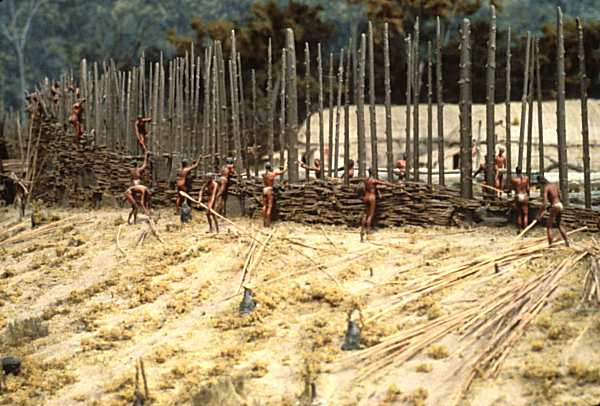
    Town sites are carefully chosen for a mix of defensibility and easy access to food sources.  Towns tend to move every few years to avoid depleting the local resources.  If the town is ever attacked (or if you're trying to sneak in) you'll probably want to know what surrounds the settlement.

    Surroundings (d8 thrice)
    1 marshy area, tall reeds, mud, bog, sand dune
    2 bluff, cliff, waterfall, boulders, scree
    3 densely-overgrown thicket, tall-grass, thorns
    4 cornfields, fishponds, gardens, livestock corral
    5 pond, lake, wide place in the river, bayou
    6 open meadow, clearing, pasture, fallow fields
    7 shallow water, sandy beach, gravel bar
    8 steeper slope, hillside, spire of rock, lookout

    Peace Junction is built on the shores of a lake.  To one side the land is densely overgrown with thorny vines.  To the other, the humans tend extensive cornfields.

    Somewhere nearby (a few miles off, up to about a day's walk) is something that affects life in this town.  It could be something they're aware of or that they're about to become aware of.  Roll twice and combine the results as best you can:

    Nearby (d10 twice)
    1 Bandits on a major Road to another settlement
    2 encampment of Outlaws, banished from the tribe
    3 gathering of a shunned Religious group
    4 Fort built/captured by the tribe’s enemy
    5 site of a Battle or a Massacre
    6 contested Hunting grounds
    7 Stolen property: boat, weapons, pigs
    8 Crossroads where travelers spend the night
    9 secret place where Medicinal herbs grow
    10 burned former site of this Town, now abandoned

    A few miles up the road is a group of bandits that prey on travelers between towns.  Recently they beat up a group traveling from Peace Junction and stole their muskets.

    The people in this town aren't just sitting around waiting for life to happen to them, they've got goals.  Roll twice for their current goals.  These probably aren't tied together, so they might have to pursue one at the expense of the other, depending what's going on in their area.

    Current Aims (d20 twice)
    1 Assert a claim to land used by another town.
    2 Regain leadership of the tribe.
    3 Steal from a powerful enemy some ways off.
    4 Seek vengeance for a murder.
    5 Make money in the employ of a rich neighbor.
    6 Gain access to powerful imperial trade goods.
    7 Seize control of a trail, pass, waterway.
    8 Root out witchcraft.
    9 Drive out an enemy and take their land.
    10 Move the town to a better food source.
    11 Profit from a great Opportunity.
    12 Avoid the danger of a great Opportunity.
    13 Hunt a creature: large, fearsome, good food.
    14 Make peace with a longstanding enemy.
    15 Recover something stolen from the town.
    16 Send someone far away to trade.
    17 Build a large house, boat, fortification.
    18 Investigate clues leading to a secret.
    19 Find a cure for someone who is deathly ill.
    20 Rescue their people who are taken captive.

    The people of Peace Junction want to open trade with someone far away.  They're also trying to avoid the danger of one of the opportunities driving this campaign.  (Maybe someone is trying to establish a utopian colony on their land, or maybe there's a migration passing through this country.)

    If you've never been to this town before, the authorities will have to figure out what to do with you.  This is not a land with tourists and sight-seers.  Roll once to see what the leaders decide:

    Leaders Desire to (d8)
    1 charge you a substantial Fee for traveling here.
    2 see the valuable Gifts you have brought them.
    3 have you Stay as a pawn for internal debates.
    4 Trade with you for corn, blankets, guns, iron.
    5 gain Information about military, opportunities.
    6 Rob you for the valuables you must carry.
    7 take you Captive as their people do.
    8 send you to visit a Higher Authority.

    Istansi towns are led by popular consensus.  When you arrive at Peace Junction, the people gather and question you about your own people: where you come from, what military strength your people have, how your guns work, and whether your people are likely to be a threat to the Istansi.

    This town has something special that makes it stand out from others in the region.  Roll twice to see what they have:

    They Have (d20 twice)
    1 an Elder knowledgeable in History
    2 Rumors of a near-by country, mostly true
    3 an Affable or Pugnacious leader
    4 secret Tunnels or a fortified Redoubt
    5 stockpile of Weapons, hidden or for threats
    6 speaker of another Language / unusual Captive
    7 preparations for a Feast, warm Hospitality
    8 Feud with a neighboring settlement
    9 body of a strange Creature
    10 fake Fire-Arms, skillfuly carved and painted
    11 Blacksmith (if near colonials), Flint-knapper
    12 hidden Caves w/art that tells an ancient tale
    13 plan to Rob or Kill certain visitors
    14 Wealth in gold, jade, furs, livestock
    15 many Captives taken in battle
    16 boats or livestock acquired from Neighbors
    17 renowned Healer / trade in Medicines
    18 Shrine or old Burial ground nearby
    19 Visitor from afar, come to trade, explore, treat
    20 folk-Magick known to only a few

    Peace Junction is renowned for their elder who knows the ancient history of this land, but they also have a form of folk magic that has been mostly forgotten these days.


    Roll up some random human town life for yourself:

    Click here for random results.
    spring
    spring
    summer
    summer
    fall
    fall
    winter
    winter
    surroundings
    surroundings
    surroundings
    nearby
    nearby
    aims
    aims
    leaders desire to
    town has
    town has

    Saturday, July 9, 2022

    Defining a setting in Four Images

    Adding detail is easy; taking it away is hard.  There's a value in distilling something down to its simplest elements, stripping away all else to reveal the bones underneath.  One of the hardest posts on this blog to write was the very first one, where I tried to summarize the entire concept of this setting.  Like it says above, this is:

    A 1700s post-apocalyptic hopeful frontier fantasy setting for roleplaying games.

    I saw a post from The Theoretical GM where he distilled his entire setting down into four images, and I thought that made for a great challenge.  So here's Signs in the Wilderness in just four images:

    I'm not sure if these images convey all the concepts I was hoping for, but here's what I wanted to get across: the era of muskets, ambush and skirmish warfare, contact between different kinds of people, a big world full of wilderness to explore, canoes and travel by water, religion, ruin, and a North American setting.

    If you've got a setting of your own, I'd love to see what four images you'd pick out.  Drop a comment below or send me a message on Reddit.

    The Great Mountain

    When rolling up a random country, sometimes you find a wonder of the world.  These are singular places, not found anywhere else.  There are many mountains in the Northern Lands, but only one is the Mountain.

    Citlaltépetl

    To the humans it is Asanamaqua "noble mountain" or Nontomaqua "thunder mountain".  The giants call it Yaxokuy "ancient mother" or Yotoyasa "smoke mountain".  To the tree-goblins it is Taocabáya "the one that reaches highest".

    Shiprock

    The great mountain can be seen on the horizon from afar (from at least 50 miles / 80 km away), looking like a cloud at first, far higher than any mountain should be.

    (If you'd like to use the great Mountain in your own game, roll everything up first before introducing it, as some of the rolls may influence how you present the mountain earlier on.)

    Chimborazo

    As you approach the mountain, you find three things:

    Approach (d10 thrice)
    1Mountaintop is always wreathed in clouds.
    2Black smoke, ash falls within 100 miles (160 km).
    3Thriving society worships the mountain as a capricious god.
    4Ancient lava tunnels with lost relics, strange bones.
    5Lush & verdant landscape, strange plants found only here.
    6Geysers & hot mineral springs, believed to heal.
    7Locals forbid outsiders to set foot on the mountain.
    8Pilgrims from an unknown land come to holy mountain.
    9Symbol of the mountain on houses, boats, tattoos.
    10Dying people come here to ascend into heaven.

    Let's roll up our own version of the great Nontomaqua.

    • A thriving society lives in this land, worshiping the mountain as a capricious god.
    • There are geysers and hot springs nearby, said to have healing patterns.
    • Black smoke billows forth from the mountain, and ash sometimes falls on the land.

    Climbing the mountain is an arduous task, requiring mountaineering expertise and equipment.  A climb is going to take several days at least, possibly much longer.  Use whatever mountaineering rules your system provides.

    On your way up you find several things.  Roll on this table, but each time you roll, add +1 for each roll you've already done, then keep going until you hit End.  For example, your first roll is +0, then your next roll is +1, then a roll at +2, and so on until you get an entry that says End.

    Ascent (d10 +1 for each roll so far)
    1Offerings left for the god of the mountain.
    2Outlaws/lepers banished to live in caves.
    3An annual climb to offer sacrifices on the mountain.
    4Caverns and tunnels, plants with very deep roots.
    5Sheer cliffs, hard to find a safe climbing route.
    6Perpetual fog, fearsome plant/animal life.
    7Cyclopean Monument of a lost kingdom.
    8A garden of Rest and Sustenance among the clouds.
    9Scrawny & gnarled trees as you reach the treeline.
    10Loose rocks, scree, prone to landslides/avalanches.
    11Signs of hidden/lost people living within the mountain.
    12Enormous birds, heart-eating condors, nests.
    13Saddle where a lesser peak meets this mountain.
    14Remnant of an ancient bridge/steps/road.
    15Perilous overhangs, chimneys, high winds.
    16The air is hard to breathe from here on up.
    17Tiny flowers that bring healing and true sight.
    18Something that fell from the Heavens (this table should be ready soon).
    19Wise teacher of unexpected age/species. (End)
    20Ancient & Terrible being beneath the ice. (End)
    21+The mountain reaches into the lower tier of the Heavens. (End)

    On our example Nontomaqua, here's what we find on the way up:

    • People on an annual climb to offer sacrifices on the mountain.
    • A place of perpetual fog, with dangerous animal/plant life.
    • Loose rocks and scree, prone to landslides.
    • Sheer cliffs, hard to find a safe climbing route.
    • A cyclopean monument of a lost civilization.
    • The air is thin and hard to breathe from here on up.
    • A saddle where a lesser peak meets this mountain.
    • A place of perilous overhangs, chimneys, and high winds.
    • At the peak: a wise teacher of an unexpected age and/or species.

    But before we figure out what all this means, we need to understand the secret of the mountain.  Roll twice and combine them, even if the results feel strange together.  Maybe one caused the other, or one is the guardian of the other, or one is the true form of the other.

    Secret (d6)
    1A mighty god of storms and ice inhabits the mountain, misunderstood by the people below.
    2This volcano is soon to erupt, threatening all. Religions tell of a time when the world was once destroyed in fire, many ages ago.
    3It is a petrified remnant, the stump of an ancient tree of inconceivable size. A seed of this tree remains, hidden on or beneath the earth.
    4Spirits of the ancient dead dwell on the mountaintop and bid you join them, whispering in dreams.
    5When a planetary conjunction occurs above, the peak draws near the heavens and the very stars.
    6Its heart is a fallen tool of a colossal being of myth who shaped the young land long ago: the bag where they kept soil, the axe they used to carve canyons, a ball from a great game of the gods.

    For our example mountain, the secret involves:

    • At the moment of a rare planetary conjunction above, the mountaintop draws near to the heavens and the very stars.
    • This volcano is soon to erupt, threatening everyone.

    Both of these are events that happen at a moment in time, so let's say they happen at the same time.  At the moment of a rare planetary conjunction directly overhead, the mountain will erupt and cause a time of great darkness, but some strange and transcendant event will occur, connecting the peak to the heavens above.

    I think this would make a great end to a campaign: astronomers predicting a rare conjunction, a prophet proclaiming that the planetary alignment will end the world, divine forces of heavenly beings at work, and everything comes to a head atop the tallest mountain in the world.

    Taniquetil

    I'm deliberately leaving the strangest things of the mountain a little bit underspecified.  In a roleplaying game, I think it's the small things that need the most contrained guidance from the rules: how much you can carry, what happens when you try to stab someone, how often you need food.  The larger you go, the more open the guidance needs to be, until the rules are just a spark for your own imagination.  At least that's what works for me.

    No random roller today (my code doesn't support an escalating sequence yet), so you'll have to grab some dice and try it for yourself.