Showing posts with label the four peoples. Show all posts

Monday, August 15, 2022

Humans, the People of the Valley

All along the creeks and the lake-shores live the humans, farming and hunting where the water and the woods meet.  Humans are a proud people, bold and eager for fame.  Whenever you hear shouts and the barking of dogs, get ready it's either time for a feast or time for a fight.

Appearance

Humans (called yaskan yah-skahn in their own tongue) are taller than goblins, shorter than giants and elves, and quite strong for their size.  They are mostly hairless except for the hair on their heads, which grows very long and is the object of much attention and vanity.

Unlike other species, humans have a very poor sense of smell, having to rely on the senses of their dogs instead.

Roleplaying

The yaskan are the only people with enough strength and accuracy to use throwing weapons.  While they do make their own (such as spears) a human is never unarmed as long as they can find a rock or a heavy stick to throw.

When playing a human character, here are some tips to make them feel more human:

  • Show your value.  Before a fight, make a show of your strength and ferocity.  When trading, show off the superior qualities of your trade goods.  In a social gathering, tell a boastful tale of your accomplishments.
  • If you're not sure what to do, improvise.  Humans are famous for jury-rigging a solution out of whatever tools they have at hand.  If anyone's going to use something the wrong way and make it work, it's a human.

If you're going to have the indigenous humans in your roleplaying game, I've got some other guidelines you might want to consider:

  • Being poor doesn't mean you deserve it.  You can make all the right choices and still lose.
  • Everyone is active in the world; no one's just sitting around waiting to be discovered.

These guidelines apply to all three of the indigenous peoples, but I'm mentioning them here for human characters because the real history is all about humans, and some of those humans got about the shortest end of the stick ever offered in this universe.

Lifestyle

Humans mostly live near lakes and small waterways, preferably in lightly-forested or grassy areas.  You won't find many humans in areas that are too dry, too cold, too overgrown, or too waterlogged.  Living near the water, humans use canoes or other small boats to get around.  On land they travel by foot, by dogsled, or by travois.

Their preferred weapons are guns (when they can get them) or bows (when they cannot).  In close quarters the humans often use iron throwing axes and wooden war clubs.

Humans are divided up into tribes, identifiable to outsiders by their tattoos, clothing, and hairstyles.  Outsiders who don't know any better tend to judge humans by their tribe, bringing retribution on everyone.  To themselves, the primary unit of human governance is the town.

Their usual food is heavy in corn, fish, and potatoes.  Human food is known for being smokier and greasier than other people like.

Other People

These days, the yaskan often find themselves at war with their neighbors.  Times are tough and resources are scarce.

  • The elves are a dangerous and wealthy foe.  Individual elves are weak and fare poorly in the wilderness, but a whole regiment of elves can kill and loot as they please.  Humans have gone deeply into debt buying the guns and powder they need to fight the cities of the elves.
  • Most human tribes have a healthy respect for the giants, telling folktales of the terrible vengeance of the giants in days long gone by.  When a giant wanders through a human town today, they're respected as a trader and storyteller.
  • Goblins are the reason humans don't like to go deep into the woods.  You hear the cry of a child or the patter of distant conversation, but it's all a ruse, and a dozen goblins land on you with teeth and claws.

Most human tribes are struggling to reclaim what they lost during the Starving Time, seeing their lands encroached on further and further each year.

Inspiration

Humans in this setting fill the historical role of organized indigenous people responding to colonialism: the Iroquois League, the stratified societies of the Pacific Northwest, the Lakota moving onto the plains, people trying to rebuild a life after the decimation of warfare and disease.

Their aesthetics are mostly inspired by the indigenous people of the eastern woodlands of the US, with some Maori influence thrown in.  Their language borrows its sounds mostly from Algonquian tongues (because that's what all the placenames were in where I grew up) but a few consonant clusters are taken from Iroquoian languages.  (As much as I'd like to, I won't try to make my players pronounce Salishan-inspired names.)

Saturday, August 13, 2022

Goblins, the Tree People

Deep in the forest live the goblins, the reclusive people of the trees.  They lie in wait to ambush their prey, making calls to lure them in.  Goblins are the reason outsiders fear the woods, but they fear outsiders in turn, only occasionally venturing out to investigate the dangerous world around.

Appearance

Tree-goblins (nuruí noo-roo-EE as they call themselves) are a type of small primate, looking something like lemurs or raccoons.  Their hands and feet are well adapted for gripping branches, but they're also ready for a brief sprint on the ground.  Like a flying squirrel, a nuruí has a flap of skin that's revealed when they spread out their arms and legs, allowing them to glide through the air.  Their fur is usually striped, spotted, or mottled in some way, providing useful camoflage in the forest.

Roleplaying

Nuruí are the smallest and weakest of the four peoples.  They avoid extended combat at all costs, preferring to rely on surprise and rapid movement.  Tree-goblins can remain vigilant and perfectly motionless for hours, waiting for the right time to silently glide down or burst out of hiding in a flurry of teeth and claws.  Their fights are won in moments, or else they sprint away and bound up into the trees to return to safety.  Goblins are fast, but they tire quickly.

To act like a tree-goblin, remember these two rules:

  • Go see for yourself.  When they say there's an enemy over the hill or some tasty soup in the pot or a trap full of spikes, give it a try yourself so you can learn what it's like.
  • Show while you tell.  When you tell about something, bring a little piece of it along for everyone to experience: a souvenir from the enemy camp, some meat out of the pot, a sharp spike from the trap.

Tree-goblins are particularly good at imitating sounds, like animal calls from the forest where they live.  Some are even good at imitating the accent and voice of other kinds of people.

Lifestyle

Goblin homes are in hard-to-reach places, to keep them safe from predators.  Typically they build nests high up in the trees, made like woven baskets or rope hammocks.  Where trees aren't a good option, goblins sometimes make their homes in caves and clefts in the rock of high cliffs.

Their homes are near each other, forming a village of a dozen or so families.  Each village works together to shape the land around to discourage intruders and to make ambush points for prey.  Paths in the forest near a goblin village are no accident, but are deliberately constructed to lead you where they want you to go.

Each village belongs to a clan, a network of kinfolk that spans the entire continent.  Clans aren't geographically based (there's no country of the Red Tooth people).  There's no one in charge of a clan, but since they all see each other as kin, word gets around.  An enemy of one village is an enemy of the whole clan.

Tree-goblins make very few tools compared to the other peoples.  Their technology focuses on forest chemistry: making pigments, medicines, glues, hallucinogens, etc.  They make some pottery and rope for their own use, but they also trade with the giants for these.

Other People

Here's how the goblins see outsiders:

  • Giants are good to have nearby.  They make traps to catch prey and they don't check them too often, so if you're very careful you can get yourself a meal out of a giant's trap.  Giants also make good traders, showing up with a backpack full of goods and trinkets from the world around.
  • Elven settlements are dangerous but they have some of the most interesting treasures.  Their ruins tend to have bits of metal and glass that you can trade to the giants, but it's their inhabited settlements that have a wonderful variety of food and drink to take home for the whole village.
  • Humans are the worst neighbors to have.  They hunt most of the same prey as we do, leaving nothing for us to eat.  Humans also have dogs and bows, making it hard to hide from them and hard to stay safe up in the trees.

Outsiders are the reason to venture out of the forest on occasion, but they're also the reason to stay home most of the time.

Inspiration

Tree-goblins are inspired (in feel more than material culture) by the insular rural life of the northern Appalachians, wary of encroaching modernity and longing for the old days when they could live in peace without all this fuss and bother.  The signs they paint at their villages are based on Pennsylvania Dutch hex signs.

The language of the tree-goblins gets sound inspiration from the Arawakan and Cariban languages of South America, but its grammar is entirely different.

Friday, August 12, 2022

Giants, the Wandering People

A giant's life has always been a lonely one, even before the Starving Time.  They wander the land alone, checking their traps, watching the stars, and telling tales of old to those they meet along the way.  What other peoples have forgotten, the lonely giants remember.

Appearance

Giants are a large primate, something like a gorilla or sasquatch.  They are the tallest of the four peoples by only a little, hunched over as they walk, but they are the strongest by far.  Their thick fur comes in colors from charcoal black to russet brown to pale grey.

Roleplaying

Giants (ogolon O-go-lone, as they call themselves) are incredibly strong, able to carry heavier loads and break through tougher obstacles than anyone else.  Their slow speed works against them in a fight, but this is offset by the protection afforded by their thick hide.  While giants have traditionally not used many ranged weapons, they eagerly make use of elven firearms as much as they can, even carrying smaller sorts of cannons on occasion.

When playing a giant, here are some tips to make them feel even more giantish:

  • Appeal to history for justification.  Invoke ancient alliances in a call to war, bring goods to trade that were sung about in the olden days, recite a poem from your grandmother's grandmother when making peace.
  • Look and listen, then ponder your words before you speak.

Giants have deep memories, remembering details from ancient tales that others have forgotten.  Some are skilled enough in memory to recite hours-long epic poems or to recall the words of conversations they had many years before.  (The elves think some of the giants can read elven holy scriptures, but in fact the giants simply listened and memorized the entire book.)

Lifestyle

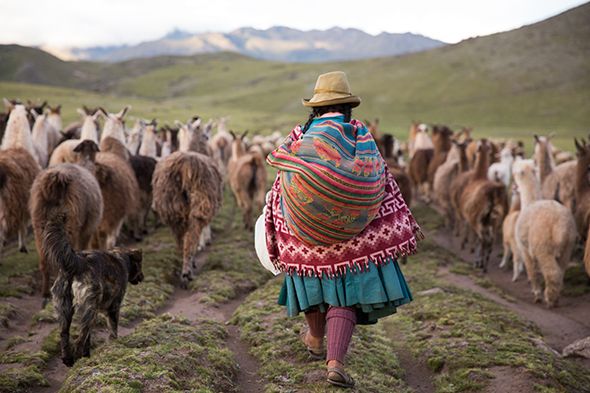
Giants wander the land alone most of the year, favoring colder, higher, and drier places than other people.  They make elaborate traps to catch birds, fish, and land creatures alike, and they don't mind if the meat has gotten a bit old before they eat it.  Some giants do more fishing instead, or gathering wild plants, while others tend to herds of livestock: llamas, alpacas, and yaks, mostly.

While giants mostly wander alone, they do belong to an ancestral house that governs the vast territory where they roam.  Should a giant be killed, the vengeance of their house will be slow, but it will be remembered for generations.

A giantish ancestral house is a physical structure, but it's thought of as something like a person, the embodiment of their kinship group, capable of owning property and bestowing honors and titles.  A few people stay at the house all the time, generally elders who are too old to roam the land, members of the first rank, and perhaps some warriors for defense.

The members of a house are divided into ranks (typically four per house), showing their prestige and role in governance of the house.  Giants inherit a place in the house one rank lower than their most prestigious parent.  The members of a rank may invite someone from the rank below to join them, in recognition of their skills or service to the house.

Each spring the house hosts a gathering.  Everyone returns home from their lonely wandering for a few days of trade, mating, gossip, and making plans for the year ahead.

Like the other indigenous peoples of the North, giants mostly used stone and copper tools until the strangers came from across the sea.  Elven trader introduced the giants to firearms and kettles, but they also destroyed many trade networks, either by outcompeting them with industrialized products or by brute conquest.  Many of the giantish houses fell into debt, trading away everything to the elves just to survive.  As a result, giants can now be found as laborers around most elven settlements, working for mere pennies, if they're paid at all.

The houses that still stand tend to follow the old ways, telling tales and doing dances for the star gods.  Some have been converted to the elven ancestor-worship religion instead.

Other People

To the giants:

  • Humans are rowdy and sometimes troublesome neighbors, but they make many good products for trade, and in the end they usually remember to treat giants with respect.
  • Goblins have an irritating tendency to break into giantish traps for the meat inside, but where they're not competing for food, giants and goblins can get along well enough for trade.
  • Elves are wealthy traders and skillful teachers of religion and science, but they're also the cruel tyrants everyone seems to owe money to, or the capricious conquerors who kill people and take their land.

Because they get along with the other peoples well enough, giants tend to be the best traders and diplomats.

Inspiration

Giants in this setting are inspired mostly by the North American fur trade.  They're the lonely mountain men who wandered the west trapping for furs, coming together for an annual rendezvous.  They're also the indigenous tribes who pushed across the frontier to follow the trade companies, sometimes benefiting from access to trade goods, sometimes suffering from the destruction of the old trade networks and the new indebtedness to the companies.

Their aesthetics are a mix of Siberian and Pueblo, with architecture particularly inspired by the Japanese shinmei-zukuri style.  The sounds of the giantish language are inspired mostly by Hopi and Inuktitut.

Saturday, August 6, 2022

Elves, the City People

Elves are the city-dwellers, the colonial conquerors from beyond the ocean sea.  They came a century ago in their great ships and established outposts of empire here in the North.  Now the empire is gone, but a few colonies remain, citadels of power and wealth.

Appearance

Elves (cazandi cah-ZAHN-dee in their own tongue) are primates from a hot and dry continent.  They are taller and thinner than humans, with long spindly limbs and digits.  Outsiders cannot recognize any distinctions of gender among them.  Their skin tends toward dark, earthy shades of gray and brown, but their eye colors are brilliant gem tones.

Roleplaying

Playing as a cazand one must be careful.  Elves are weaker and more easily injured than most people, and are unskilled at running and throwing.  But what they lack in physical prowess they make up for in wealth and connections.  An elven character starts with more money, access to more technology, and membership in the organizations of colonial society.

If you're looking for some roleplaying tips, here's how I like to make a character feel more cazandi:

  • Always be polite, especially when being cruel.
  • When in doubt, do it by the book and the ancestors wrote a book for everything. 

An elven adventuring party likely has a name, an emblem, elected officers, and written bylaws, with specific provisions for what happens if a member dies and the proper ritual for inducting a new member into the group.

    Lifestyle

    Elves are a eusocial species: only a few of them, the Mothers and Fathers, actually reproduce.  Each city is like a vast extended family, all descended from the city's lineage of Mothers.

    Within the city, each cazand is part of several different overlapping societies: a guild or company where they make their living, a fraternal order where they share a morning meal, a temple maintenance society where they work together for the upkeep of one of the city's shrines, an alumni association for the cohort of schoolmates they were raised with, and so on.

    They subsist mostly on bread and vegetable products, but they do also eat fish and a few types of meat.  Elves are the only people capable of digesting milk as adults, so they keep livestock for dairy products.

    Technologically, they're at the level of muskets, telescopes, and joint stock corporations.  Most elves can read and write.

    Their cities are usually on the coast or on rivers, as they use ships for most of their commerce.  They have some draft animals to pull wagons (oxen, donkeys, and even a few surviving elephants) but they do not generally ride animals.  In the cities you might run across an elf with a tally bird, a sort of domesticated parrot that can count and do basic arithmetic.

    In extreme conditions of drought or heat, elves can go into hibernation, seeming nearly dead until conditions improve and they wake again.

    Other People

    The typical elven view of the other species of people is deeply racist and condescending:

    • Giants are like some kind of intelligent livestock.  Strong and useful, and even possible to educate if you're patient.  Occasionally giants have been known to revolt, for some reason.
    • Humans are fearsome enemies, preventing the colonies from making full use of the countryside.  They're treacherous and primitive, but sometimes you have to make concessions to keep the peace.
    • Goblins are vermin at best, deadly threats to travelers at worst.  The forests cannot be trusted, full of goblin ambushers ready to attack with teeth and claws.

    Those kinds of views are common in the cities where cazandi only deal with other cazandi.  But out on the frontier where the Four Peoples meet, you learn to get along or you find yourself getting in trouble.

    Inspiration

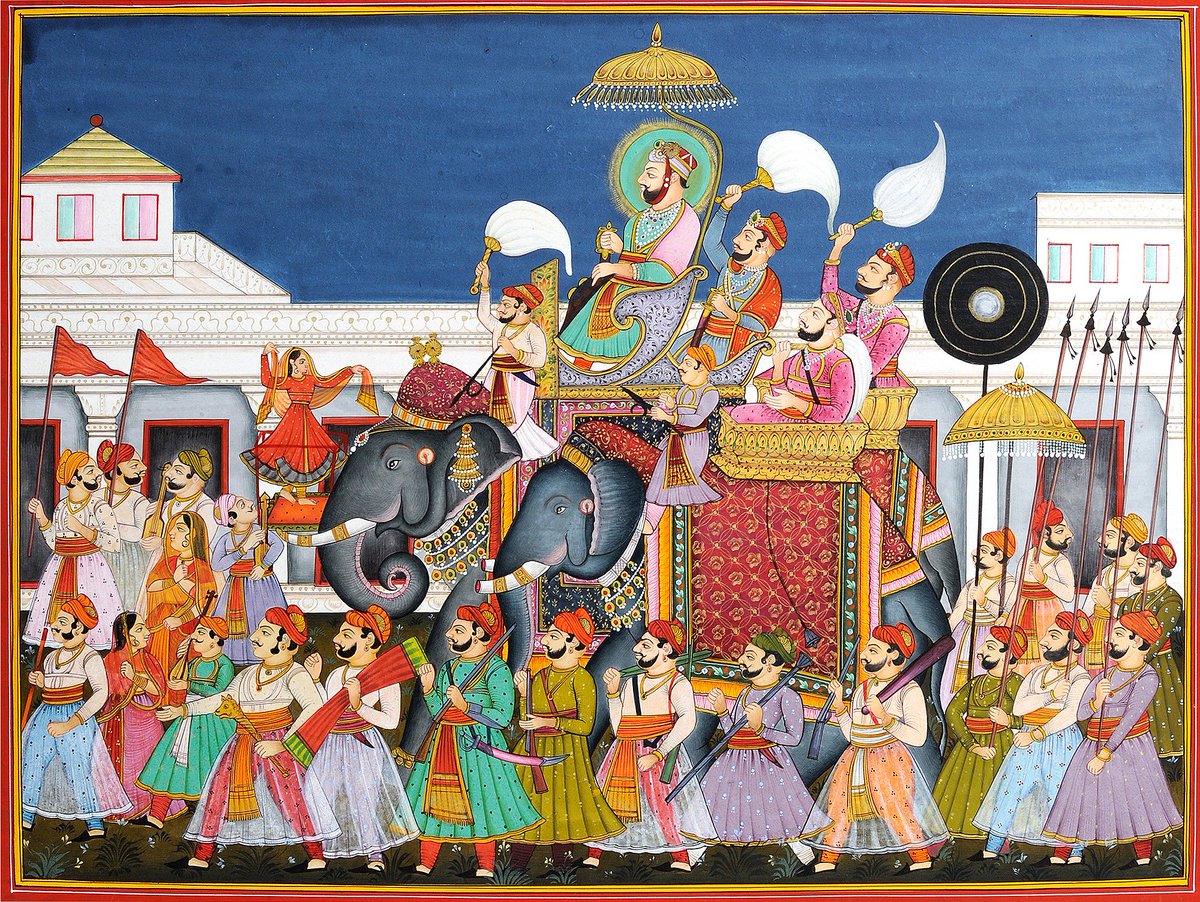
    Elves in this setting take the role of the European colonial powers in the New World.  As such, I've styled them after a mix of some of Old World aesthetics: Mughal architecture and textiles, Mediterranean galleons and xebecs, English hats and coats, etc.

    Their language is meant to sound vaguely Romance without being from anywhere specific, like it's wearing the coat of Catalan or Old French, but underneath it's something entirely different.