Showing posts with label settlements. Show all posts

Wednesday, August 3, 2022

Life in a Human Town

Every town you find has a life of its own.  Sometimes it's about the small things that add flavor to the story, but sometimes the town brings its own new trouble to the game.  (And trouble usually means adventure.)

Humans are a community-oriented species that typically get most of their food from farming, supplemented by extensive hunting and gathering from the land around.  The average human tribe grows corn, hunts deer in the woods, and catches fish in the streams and lakes.

Let's roll up an example town as we go along.  This is Peace Junction, a town of the Istansi tribe, known for their copperworking and wooden plank houses.

When you arrive, everyday life is happening.  Roll twice (for the current season):

Goings-On (d20 twice)
Spring 1: plant corn, 2: build a new house, 3: harvest birch bark, 4: make a canoe, 5: town dance, 6: head to a bigger town for work, 7: prepare gardens, 8: pick ferns, 9: feed fish to dogs, 10: collect seaweed, 11: old folks reminisce, 12: clean muskets, 13: plant potatoes, 14: argue, 15: tend wounded dog’s paw, 16: fix nets, 17: news from a crier, 18: pick flowers, 19: chase away a snake, 20: air out bedding
Summer 1: wedding, 2: barn raising, 3: pick berries, 4: dig potatoes, 5: gather oysters, 6: huckster, 7: smoking fish, 8: fish at dawn/dusk, 9: gather eggs, 10: leaky canoe, 11: visit relatives, 12: sharpen knives, 13: hunt rabbits, 14: cook fish over a fire, 15: row and call loudly in unison, 16: kids skip stones on a pond, 17: wash clothes, 18: bathe, 19: haul water, 20: lounge in the heat
Fall 1: corn-husking bee, 2: pick pumpkins, 3: harvest festival, 4: hunt turkeys, 5: grind cornmeal, 6: afternoon fishing, 7: gather firewood, 8: hang up food in the rafters, 9: render fish oil, 10: hunt deer, 11: footrace, 12: archery practice, 13: examine a pig, 14: trim logs, 15: pick wild rice, 16: funeral rites, 17: skin a deer, 18: make corn beer, 19: boil acorns, 20: smoke fish
Winter 1: coppice trees, 2: maple sugaring, 3: fix palisade, 4: hunt deer, 5: tell an old story, 6: smoke meat, 7: hunt bears, 8: collect antlers, 9: fix snowshoes, 10: sharpen an axe, 11: deal with fallen tree, 12: knock icicles off, 13: break up fighting dogs, 14: kids throw snowballs, 15: hit someone with sticks, 16: ritual to ward off evil, 17: watch dogs chase a rabbit, 18: repair a collapsed roof, 19: keep warm around a fire, 20: sickness

You arrive at Peace Junction in the springtime.  Some children are picking flowers while a few adults are having an argument about a dog.

Town sites are carefully chosen for a mix of defensibility and easy access to food sources.  Towns tend to move every few years to avoid depleting the local resources.  If the town is ever attacked (or if you're trying to sneak in) you'll probably want to know what surrounds the settlement.

Surroundings (d8 thrice)
1 marshy area, tall reeds, mud, bog, sand dune
2 bluff, cliff, waterfall, boulders, scree
3 densely-overgrown thicket, tall-grass, thorns
4 cornfields, fishponds, gardens, livestock corral
5 pond, lake, wide place in the river, bayou
6 open meadow, clearing, pasture, fallow fields
7 shallow water, sandy beach, gravel bar
8 steeper slope, hillside, spire of rock, lookout

Peace Junction is built on the shores of a lake.  To one side the land is densely overgrown with thorny vines.  To the other, the humans tend extensive cornfields.

Somewhere nearby (a few miles off, up to about a day's walk) is something that affects life in this town.  It could be something they're aware of or that they're about to become aware of.  Roll twice and combine the results as best you can:

Nearby (d10 twice)
1 Bandits on a major Road to another settlement
2 encampment of Outlaws, banished from the tribe
3 gathering of a shunned Religious group
4 Fort built/captured by the tribe’s enemy
5 site of a Battle or a Massacre
6 contested Hunting grounds
7 Stolen property: boat, weapons, pigs
8 Crossroads where travelers spend the night
9 secret place where Medicinal herbs grow
10 burned former site of this Town, now abandoned

A few miles up the road is a group of bandits that prey on travelers between towns.  Recently they beat up a group traveling from Peace Junction and stole their muskets.

The people in this town aren't just sitting around waiting for life to happen to them, they've got goals.  Roll twice for their current goals.  These probably aren't tied together, so they might have to pursue one at the expense of the other, depending what's going on in their area.

Current Aims (d20 twice)
1 Assert a claim to land used by another town.
2 Regain leadership of the tribe.
3 Steal from a powerful enemy some ways off.
4 Seek vengeance for a murder.
5 Make money in the employ of a rich neighbor.
6 Gain access to powerful imperial trade goods.
7 Seize control of a trail, pass, waterway.
8 Root out witchcraft.
9 Drive out an enemy and take their land.
10 Move the town to a better food source.
11 Profit from a great Opportunity.
12 Avoid the danger of a great Opportunity.
13 Hunt a creature: large, fearsome, good food.
14 Make peace with a longstanding enemy.
15 Recover something stolen from the town.
16 Send someone far away to trade.
17 Build a large house, boat, fortification.
18 Investigate clues leading to a secret.
19 Find a cure for someone who is deathly ill.
20 Rescue their people who are taken captive.

The people of Peace Junction want to open trade with someone far away.  They're also trying to avoid the danger of one of the opportunities driving this campaign.  (Maybe someone is trying to establish a utopian colony on their land, or maybe there's a migration passing through this country.)
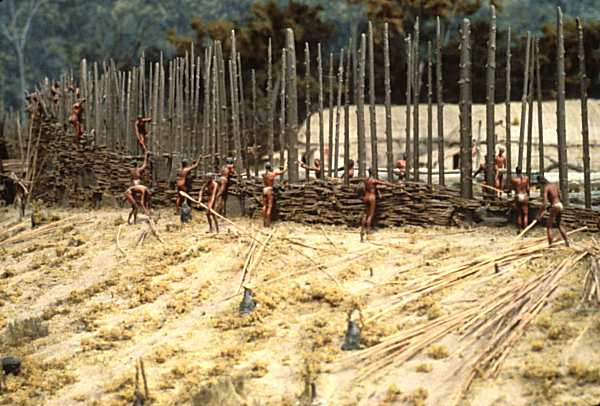
If you've never been to this town before, the authorities will have to figure out what to do with you.  This is not a land with tourists and sight-seers.  Roll once to see what the leaders decide:

Leaders Desire to (d8)
1 charge you a substantial Fee for traveling here.
2 see the valuable Gifts you have brought them.
3 have you Stay as a pawn for internal debates.
4 Trade with you for corn, blankets, guns, iron.
5 gain Information about military, opportunities.
6 Rob you for the valuables you must carry.
7 take you Captive as their people do.
8 send you to visit a Higher Authority.

Istansi towns are led by popular consensus.  When you arrive at Peace Junction, the people gather and question you about your own people: where you come from, what military strength your people have, how your guns work, and whether your people are likely to be a threat to the Istansi.
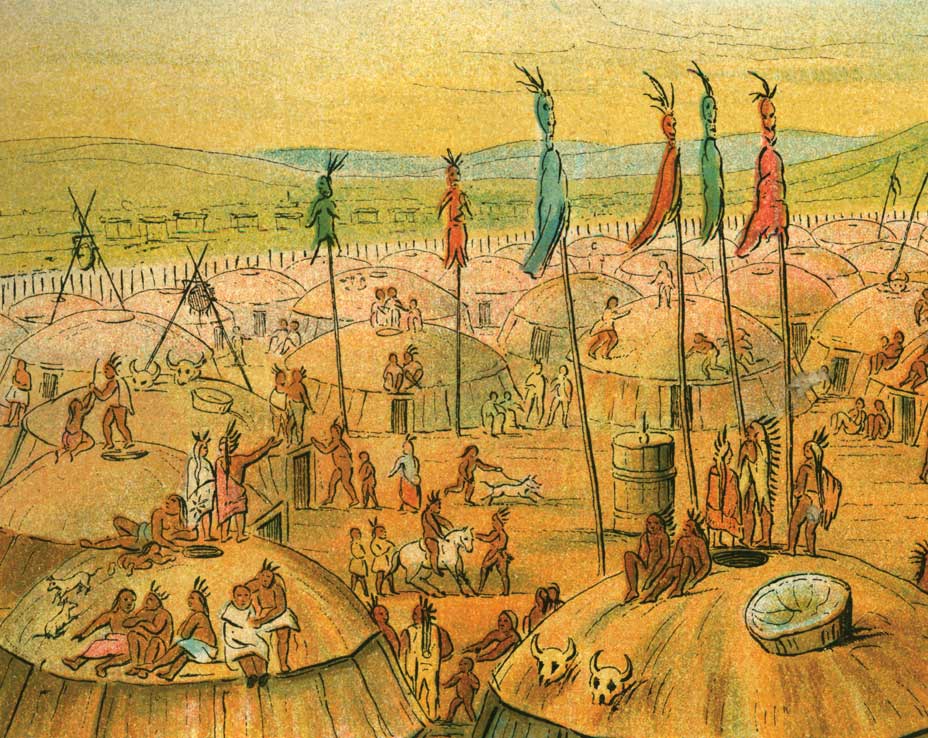
This town has something special that makes it stand out from others in the region.  Roll twice to see what they have:

They Have (d20 twice)
1 an Elder knowledgeable in History
2 Rumors of a near-by country, mostly true
3 an Affable or Pugnacious leader
4 secret Tunnels or a fortified Redoubt
5 stockpile of Weapons, hidden or for threats
6 speaker of another Language / unusual Captive
7 preparations for a Feast, warm Hospitality
8 Feud with a neighboring settlement
9 body of a strange Creature
10 fake Fire-Arms, skillfuly carved and painted
11 Blacksmith (if near colonials), Flint-knapper
12 hidden Caves w/art that tells an ancient tale
13 plan to Rob or Kill certain visitors
14 Wealth in gold, jade, furs, livestock
15 many Captives taken in battle
16 boats or livestock acquired from Neighbors
17 renowned Healer / trade in Medicines
18 Shrine or old Burial ground nearby
19 Visitor from afar, come to trade, explore, treat
20 folk-Magick known to only a few

Peace Junction is renowned for their elder who knows the ancient history of this land, but they also have a form of folk magic that has been mostly forgotten these days.


Roll up some random human town life for yourself:

Click here for random results.
spring
spring
summer
summer
fall
fall
winter
winter
surroundings
surroundings
surroundings
nearby
nearby
aims
aims
leaders desire to
town has
town has

Saturday, June 25, 2022

Random Map: Inhabitants

Randomly-generated countries need people to live in them!  Last time we looked at rolling up a country, terrain was the focus.  Today, let's see who lives there.

First I'll roll up some random terrain from that table as we go through an example country:

  • Ridges run northeast-southwest that can easily be walked along.
  • Deep ravines run between the ridges with cascading streams.
  • The sea is to the east, a rocky coast with waterfalls and few safe landings.

There are four species of people in Signs in the Wilderness: the Colonial city-people who tend to live by the sea, the roaming Giants who can eke out a living in more marginal terrain, the Humans who farm and hunt best in lightly wooded valleys with lakes, and the tree-dwelling Goblins who prefer swamps and thick forests.

Roll three times to see which peoples have the most effect on this country:

Locals (d20)
1-3colonials
4-9giants
10-13goblins
14-20humans

For our example country I got giants, humans, and humans.  If you get the same result twice, that's fine.

Terrain makes a difference to these people: goblins thrive in swamps but don't do much with island chains, for example.  For each people result you got, check to see what their modifier is in this land:

Modifier+1 for each of-1 for each of
colonialswarm coast, harbor, rivers near the seafar north, inland, no easy way to sea
giantshighlands, ponds, open countrythick woods, swamps, far south
goblinsdense forests, swamps, cliffsopen country, islands, deserts
humanslakes, wide valleys, semi-woodedrugged mts., swamps, deserts

Looking at the modifiers for giants, I have to make some decisions about what this country is like.  I think I'd like it to be densely forested (a -1 for giants) but I'd also like the ridges to be easily walkable because they're thinly forested up near the treeline (which seems like highlands, a +1 for giants).  Net, that's a +0 for giants.

For the humans in this land, they get a -1 due to the ruggedness of the ridges and ravines, and I don't think any of their other modifiers apply.

From this point on, each of the four peoples has their own table.  If one of your results was Humans, roll on the Humans table plus their modifier, and so on for whichever other peoples you got.

Humans (2d6 + modifier)
≤2humans once lived here, Tales of nomads skilled in folk magick, natural phenomena ascribed to human powers
3few scattered towns warring over resources, Meager Remnant of a once-great tribe
4-5a struggling Tribe among many Ruins
6rival Towns on brink of war, forbidden zone
7ancient ruin, strife with newly-arrived Tribe
8thinly-settled Hunting grounds newly taken by a strong tribe, many burned towns
9Tribe of neighboring country recently invaded
10-11Trade center, many other towns, roads
12Forbidden kingdom, outsiders put to death, trade via trusted intermediaries
13+Nation whose Power extends to other lands, collecting tribute and tolls, raiding to seize captives and suppress enemies

Because we got humans twice up above, I'm rolling twice here on the Humans table, both times applying their -1 modifier due to the terrain.

  • The first result is 5: a struggling Tribe among many Ruins.  Those ruins might be from other people about to be rolled up, or they might be from other people that used to live here.  Maybe they're from an older civilization that once inhabited this land.
  • Next, an 8: thinly-settled Hunting grounds newly taken by a strong tribe, many burned towns.  There's conflict in this land already.  Not sure if the burned towns belong to the struggling tribe or if they're someone else's, maybe a tribe that was entirely driven out?
Colonials (2d6 + modifier)
≤1stories of an Expedition that came through, artifacts, possibly survivors
2-4imperial Guns & trade goods, no colonials
5forgotten town of religious exiles, ruins of a fort/mine
6trading post of a Company
7Fort, abandoned settlements
8two of: trading post, fort, mission
9-10largely controlled by a far-off Company: resource settlements, trading posts, old fort
11-12several settlements among many ruins
13+one of the chief surviving Colonies and its outlying settlements/forts/&c.

Today's example country doesn't have any significant colonial presence, but as you can see from the table, colonial influence can range anywhere from mere stories of an earlier explorer to a major colonial city.

Giants (2d6 + modifier)
≤2giants are gone, landforms said to be built by them, Tales of wanderers
3a Mission abandoned by the colonials, now run by the descendants of its students
4-5scattered trappers, fishers, herders, traders
6many wandering Traders
7perilous ruins of a dead House
8two Rival houses, contested border
9three houses: Weak, Strong, and Ruined
10-11a Mighty ruling house, several smaller ones
12+a powerful Alliance of three great houses

The giants in this country have two rival houses with a contested border between them.  I think that's enough groups here to cause plenty of interesting conflict with shifting alliances: two rival Houses, a strong Tribe, and a struggling Tribe whose towns were burned down.

Goblins (2d6 + modifier)
≤1goblins once lived here, forbidden woods, Tales that confuse them with ghosts
2-5one powerful village in a Secluded region
6-8three main Villages compete for hunting grounds, prey on livestock of others
9-12Populous, good hunting grounds, outsiders fear this land, a few giantish traders
13+interspersed villages of three major Clans, people travel from far away to study, trade, visit renowned hermits

Each of these tables has a result for mere stories and legends, for a country that doesn't really know who those people are, but remembers bits and pieces.  Tales of goblins from long ago tend to confuse them with ghosts or other strange beings that come from forbidden woods in the night and prey on settlements.

Legends of humans tend to see them as some kind of magicians who control things like the weather.  A country that hasn't seen humans since long before the apocalypse might ascribe a cold north wind to hidden humans up in the passes.

Distorted memories of giants lead to stories of them shaping the land, saying this hill was raised by the giants, or this canyon was carved by them.

Go here to roll up some terrain, then roll to see who lives there.  (The random roller here doesn't properly take the modifiers into account.)

Click here for random inhabitants.
1
2
3

Giants and their House-Corporations

Giants always come back to their House.  As trappers and herders, giants spend most of the year on their own, only seeing others every once in a while.  But each spring, they come back to their ancestral home.

The House is like a corporation, thought of as a person that can own property.  It is a physical structure, but also a kin-group and a territory.  The house is a symbol of the lineage that gathers there and is governed by its highest-ranking members.  (Most of the time, only those of the first rank live at the house, sustained by tribute from lower-ranking giants.) 

Each House has a sigil, marked at the house and at the boundaries of its land.  The name of the house describes the appearance of its sign using specialized terminology, names like Lazy Deer, Diamond Walking Snake, or Smoke Over Turkey.

Membership comes with rights to gain food from the land on your appointed circuit.  Roll twice to see what kind of harvest rights are available:

Harvest Rights (d10)
1-3 Gathering, diving, beach-combing (d10) 1: clams/mussels, 2: walnuts, 3: acorns, 4: snails, 5: mushrooms, 6: eggs, 7: persimmons/huckleberries, 8: crab apples, 9: carrots/dandelions, 10: seals/walruses
4-5 Trapping, snares, bait, pit traps with stakes (d10) 1-2: jackrabbits, 3: geese, 4: otters, 5: beaver, 6: ducks, 7: squirrels, 8: turkeys, 9: raccoons, 10: goblins
6-7 Fishing with stone weirs, basket traps, spears (d10) 1-2: trout, 3-4: salmon, 5-6: crawdads, 7: bass, 8: eel, 9: herring, 10: river shrimp
8-9 Grazing herd animals for meat, cheese, wool (d10) 1-2: llamas, 3-4: alpacas, 5-6: bactrian camels, 7-8: yaks, 9-10: colonial longhorn cattle
10 Driving stampedes off cliffs, through narrow defiles (d10) 1-3: buffalo, 4-6: caribou, 7-8: bighorn sheep, 9-10: strange herd animals

taking the herd to good pastures

Wander about in search of food, but do not wander too far.  Each house governs a territory 20 to 100 miles across (30-160 km), enough room for hundreds to find food.

Border (d20)
1-3 Sea, large river, lake
4-6 Waterfall, rapids, cliff
7-9 Swamp, salt marsh
10-12 Ridgeline, desert
13-14 edge of the Forest
15-16 low range of Hills
17-19 Rock, standing stone
20 remnant of a lost Civilization

For each border, roll to see what the relations with the neighbors across that border are like.

Neighbors (d20)
1-3 long friendship
4-6 wary truce
7-9 enemies
10-12 paying tribute
13-14 peaceful trade
15-16 died/emigrated
17-20 shaky alliance against new enemy

stalking buffalo while wearing animal disguises

Near the house are a few places important to the people here:

Nearby Site (d6)
1 ancient Tree, alone on a grassy hill
2 deep Sinkhole with water, a cenote
3 natural Pillar of stone, a kigilyakh
4 large Cavern, difficult to reach
5 long-abandoned House
6 Ruin of an old kingdom

Roll to see the significance of each site.

Importance (d6)
1 Shamanist rituals take place there
2 forgotten Treasure hidden there
3 great Battle was fought there long ago
4 place of meeting Enemies under truce
5 Healing is said to happen there
6 new Religious movement gathers

The house itself is in a defensive position, used as a refuge in times of war.

Site (d6)
1-2 high on a Pinnacle, steep steps cut in rock
3-4 raised earthen Mound, riddled with ancient passageways
5-6 steep-sided Hill, only one shallow approach

But the house is also meant to be a gathering place for its hundreds of people.

(d6) Around Structure
1 stone wall 5 feet high (1.5 m) stone/adobe walls with no gates, only ladders
2 steep-banked stream raised high up on massive wooden pillars
3 hidden triplines and pit traps circular stone wall, open-air courtyard
4 many large wooden spikes roofed pavilion, open on all sides
5 hilltop sentries, signal fires fenced-in garden with fruit trees
6 wide circle of standing stones mission once built by the Colonials

The house itself has a few features to make life easier for the indolent first-rank members, or to support the annual gathering.

At the House (d8)
1 Lodge for the reclusive first-ranking members
2 open space for Games or the Moonlit Play
3 Cellar for storage of food, ice, or valuables
4 Granary or Treasure House up on stilts
5 cistern/cenote full of Drinking Water
6 lookout Tower, occupied at all times
7 Workshop for carving, flintknapping, weaving
8 Racks for stretching hides, drying fish/tobacco

a time for serious debate

Whether they're at the house or out on their rounds, the people of this House have been debating serious matters for the year ahead.

Topics of Debate (d12)
1 Fear that the War shall be reignited.
2 Whether the Prophecy be true.
3 Violent dispute with neighboring people.
4 Strange Travelers in these lands.
5 New religion in the lower ranks of the house.
6 Too many people; must establish a new House.
7 A great Deed to restore their dwindling glory.
8 Access to colonial arms, food, trade.
9 Vengeance for an ancient Crime against them.
10 Role in a greater Alliance of houses.
11 Risk of pursuing a great Opportunity.
12 A leader who cannot be trusted.

Let's roll up a random House, Dead Broken Fence:

  • People here gather persimmons and drive bighorn sheep into narrow places where they can be hunted.
  • Long friendship with those who live beyond the marsh.
  • Shaky alliance with those who live over the hills, allied against a new enemy.
  • A new religious movement among the people gathers in secret at a nearby abandoned House.
  • Meetings under truce are conducted at the standing stone.
  • Sentries keep watch from hilltops near the house.
  • The house itself is raised on mighty wooden pillars atop a steep-sided hill.
  • At the house there is a separate lodge for the first rank, a cistern for collecting rainwater, and a place for stretching and drying hides.
  • People debate whether the House has grown too large and shall have to split off a new House.

Roll up your own giantish House:

Click here for a random House.
food to harvest


border relations


nearby sites


site of the house
around the house
structure of the house
features at the house


matter for debate

Sunday, November 1, 2020

Tavern generator

Taverns and inns are the heart of the community in the Northern Lands, a place for lodging and drink, where news is told, letters are received, and new ventures are begun. 

In fantasy roleplaying games taverns are a traditional gathering place and springboard for adventure.  This, I think, has less to do with anything medieval (where taverns were yet to develop) and has everything to do with one salient example from literature Tolkien's Prancing Pony.  While taverns may not have been especially medieval, they were certainly a feature of colonial America, and thus they're entirely appropriate for Signs in the Wilderness.

We'll start with the name. Roll 1d6 and 2d12.

Name (d6)

1-2: X and X 3-4: Color X 5-6: Adj. Inn


X (d12) Color (d12) Adj. (d12) Inn (d12)
1 Anchor Red Wayside Tavern
2
3 Fish Blue City
4 Key
5 Fiddle Old Publick Inn
6 Lobster Shoreside
7 Lion White Stone
8 Goat Admiral's
9 Eagle Green Shepherd's House
10 Hook Black Governor's
11 Gong Great Wayfarer's
12 Hen Golden Seafarer's Alehouse

I rolled up two example taverns: (2, 5, 3) gives us the Fiddle and Fish.  (6, 8, 3) is the Admiral's Tavern.

Roll 3d20 for what you find at this tavern.

Features (d20 thrice)
1-2 folks down on their luck, eager for work
3-4 a wretched hovel: cold draft and leaky roof
5-6 reading a newspaper aloud: news of trouble or a great opportunity
7-8 fearful of strangers due to recent trouble
9 militia drills outside, smell of gunfire
10 work for someone tough, brave, and discreet
11 influential people discussing a grave threat
12 a party to celebrate a safe return from afar
13 military recruitment drive
14 hiring for a job seemingly proper and official
15 a letter for you or someone where you are traveling to
16 crowded, smoky, no room to stay tonight
17 a peddler showing their wares
18 song and storytelling
19 an unwanted inspector or tax collector
20 people of an unexpected species

The Fiddle and Fish (3, 12, 15) is a wretched little place: cold in the winter and leaky when it rains, but it's the best this frontier town has to offer.  Tonight there's a bit of celebration going on, as one of the townsfolk has safely returned from a long journey.  There's a letter waiting for you at the tavern -- did someone back home know you'd be passing through here?

The Admiral's Tavern (9, 11, 6) has an atmosphere of grave concern.  Outside the militia has been performing drills all day, and the smell of gunpowder pervades.  Someone here is reading the latest newspaper aloud for their neighbors: an article about recent trouble.  Influential people from this town are gathered at one table, discussing a threat to the community.

Food and drink are obvious, but what's a tavern without gambling?  Roll a d6 to see what game of chance is typical at this establishment.

Gambling (d6)
1 A noisy game of dice and rhyming in the corner.
2 All have wagered money on the outcome of a game of cavál (akin to chess, but where one spends money to ransom captives).
3 A round table of a card game with pictures of tropical animals and farm implements.
4 Guessing the weight of a sheep outside or the number of coffee beans in a jar.
5 Selling tickets for a raffle for a cow, a bottle of drink, or an unexpected reward.
6 Gambling is decried as sinful and not practiced here; perhaps a lecture is offered instead.

At the Fiddle and Fish, there's a rowdy crowd gathered around a game of cavál.  They're all betting on who's going to win, so you can tell when someone makes a strong move just from the noise.

The Admiral's Tavern doesn't go for any of that low-class gaming nonsense.  Instead there's a sign up that they're raising funds to rebuild the church; buy a raffle ticket for a chance to win a fine bottle of whiskey on display behind the bar.

Frontier towns are short on community spaces, so the tavern tends to fill other purposes.  Roll a d8 for another complication about this place: once if it's in a big town, up to four times if it's in a remote frontier outpost.

Also (d8, 1-4 times)
1 Coin is in short supply in this settlement; folks run a tab and settle their debts monthly.
2 The tavern also serves as general store for the town.
3 They're closed during the work day.
4 Instead of smaller rooms, there's one big communal room upstairs where guests sleep.
5 If you want to buy the local products, they're auctioned off here monthly.
6 A local official conducts business at their usual table.
7 The inn serves as the town's courtroom when needed.
8 This is a polling place for elections. The local council meets here.

The Fiddle and Fish is in a small outlying settlement that's short on actual currency.  Folks run up a tab at the tavern and settle their debts monthly, usually in farm produce.  On that day there's also an auction for the sale of livestock, grain, tools, whatever surplus the town has to offer.

The Admiral's Tavern is a more respectable establishment that isn't open for public drinking during the workday.  When this town has occasion to convene a court, the court meets at the tavern. 

Roll up your own tavern:

Click here for a random Tavern.
name
feature
feature
feature
gambling
also
also
also

Sunday, June 2, 2019

Shining city in the wilderness

Somewhere out in a quiet corner of the wilderness, a community is building a wonderful new home: a gleaming city of marble, a valley of bountiful fields, a peaceful refuge in the trees.  They've left their old society in search of a place to live far from outside intervention.

Utopian dreams like this are common in the story of America: the Pilgrims coming to the New World, the Mormons establishing Deseret, Tenskwatawa's Prophetstown, the Oneida Community, and the list goes on.


But it's not a utopia yet.  They might never build one at this rate.  For now, they're a struggling community full of problems and promise.

And they're a great source of quests.

First, let's see which species this is:

People (d8)
1-3humans(d6) 1-2: a wandering tribe seeking a new home 3-4: a small group that left their people 5-6: refugees from many tribes coming together
4-7elves(d6) 1-3: a religious group considered heretical by most 4-5: veterans of the losing side in a war against the empire 6: people suffering from a disease that makes them outcasts
8giants whose ancestors adopted the elven religion at a mission and are keeping it alive in the face of heresy

The Holy City (Clarence Larkin)

A community like this will need help getting started, but they'll also be able to offer help.  Choose an ideal that this community is founded on.  This should suggest the type of help they might offer those who help them.

Ideal (d4)goalimageryfor their friends
1refugeoffer a safe haven for those in needwhite dove, fireplacefood, rest, healing
2strongholdbecome a place of military mightsword, towerpowerful allies
3isolationfocus on quiet contemplation and righteous livingplain dress, booka place to hide, secret knowledge
4industrywork and prosper togetherbeehive, plowfinancial/material help

Joseph Smith


Every utopian community is based on a vision, a shared dream of how they could build a better world.  Where is the inspiration for this community coming from?

Inspiration (d6)
1their leader, a charismatic visionary who is in charge of everything and is never questioned
2a prophet or elder that the leaders listen to, someone who speaks of visions and forgotten wisdom
3a martyr, someone who was killed for saying bold things and is now revered by the people
4their traditional ways and wisdom, prophecy passed down from olden days (possibly in a book)
5signs that everyone has witnessed, signs that a widely-known prophecy will be fulfilled by their new community
6a shared experience of struggle and hardship that binds them closer together

Cahokia (Michael Hampshire)


What difficult task is ahead of them that they'll need help with?

Difficult task (d10)
1Find/grow food for everyone in this barren land.
2Bring about or find the fulfillment of prophecy.
3Clear the land of dangerous creatures/plants/phenomena.
4Get enough of something for survival: guns, medicine, warm clothing.
5Obtain the foundation of the city: a sacred object to institute true worship, mothers and fathers to begin making babies, an official charter, a seedling of the perfect tree.
6Make lasting peace with a fearsome enemy that the party has crossed paths with before.
7Utterly defeat an outside enemy that's supported by allies of the party.
8Conquer the powerful fortress of the people who already live here.
9Open up a path to this place through difficult terrain: build a bridge, make a road, clear obstacles on a river, carve a tunnel/canal.
10Build an amazing structure: a mighty fortress, a wall to defend this community, an imposing temple.

Quests also come from outside the community.  A place like this will have its enemies, quite possibly the people who already lived here and were driven out of their homes, or maybe the ones who drove them to live in this wilderness to begin with.

The First Sermon Ashore (Jean Leon Gerome Ferris)


What danger is roused by the making of this utopia?  Roll twice, one danger leading to the other (though not necessarily in the order you rolled them) or both dangers springing from the same source.

Danger (d10)
1-2Displace the local people who will need a new place to live.  If they can't find one, they'll wage war on someone, possibly the party's allies or families.
3-4Draw the ire of religious/civil authorities (of the party's religion/group, if possible) who will try to end this place.
5-6Introduce something that disrupts the local way of life: disease, new religion, addiction, guns, a new invention.
7Disturb natural danger, causing it to reach new places: wolves, snakes, vultures, flooding, wildfire, thirty-year locusts wakened early.
8Thousands of people flock here from all around, making the other powers of the world wary of this community's power.  The newcomers might be in desperate poverty and in need of help.
9Deplete local resources: overhunting game animals, drinking the wells dry, chopping down all the trees for firewood.
10Attract the attention of powerful enemies who drove these people out of their original homes.

Kirtland Temple (Walter Rane)


What's wrong inside the settlement?

Problem (d6)
1Discontent over leadership/decisions is likely to cause a split, with one part of the community leaving to build their own settlement.
2The leadership is secretly corrupt: accepting bribes, giving privileges to sycophants, betraying the community to their enemies.
3They need better ways of acquiring food: new plows, a new crop, a network of irrigation canals, homemade goods to trade with a farming society.
4Many of the people have lost sight of the vision of this community, turning away from the ways/religion of the leaders.
5They've run out of money/supplies. Hope for the future is mixed with fear.
6The community hasn't found the site for their new home yet.


Roll up your own utopian community:

random shining city
people
founding ideal
inspiration
difficult task ahead
danger
danger
problem