Showing posts with label history. Show all posts

Saturday, December 8, 2018

Apocalypse for everyone!

Signs in the Wilderness is a mash-up of a few concepts, but a big one is this:

What if the American apocalypse happened to both sides?

You might not have heard of the American apocalypse by that name.  I'm talking about the vast outbreak of Old World diseases that came over with Columbus and so many ships thereafter.  Smallpox, cholera, a mighty host of sickness that felled tens of millions.

It's likely the greatest outbreak of disease the world has ever known.  Central America, home of the powerful Aztec Empire, is believed to have lost 90% of its population in the first century of contact.

To put that in perspective, imagine if everyone in the US died except for those born in another country.  Or everyone in the US outside New York and Pennsylvania.  Or everyone in the US under the age of 65.

The exact numbers get debated heavily, but the basic fact remains: the Americas are a post-apocalyptic world.

It's an apocalypse that's easy to miss.  Most of the accounts we have of indigenous Americans are from the era after the apocalypse already happened.  It was a vast, empty continent, ripe for the taking because most of the locals had died.
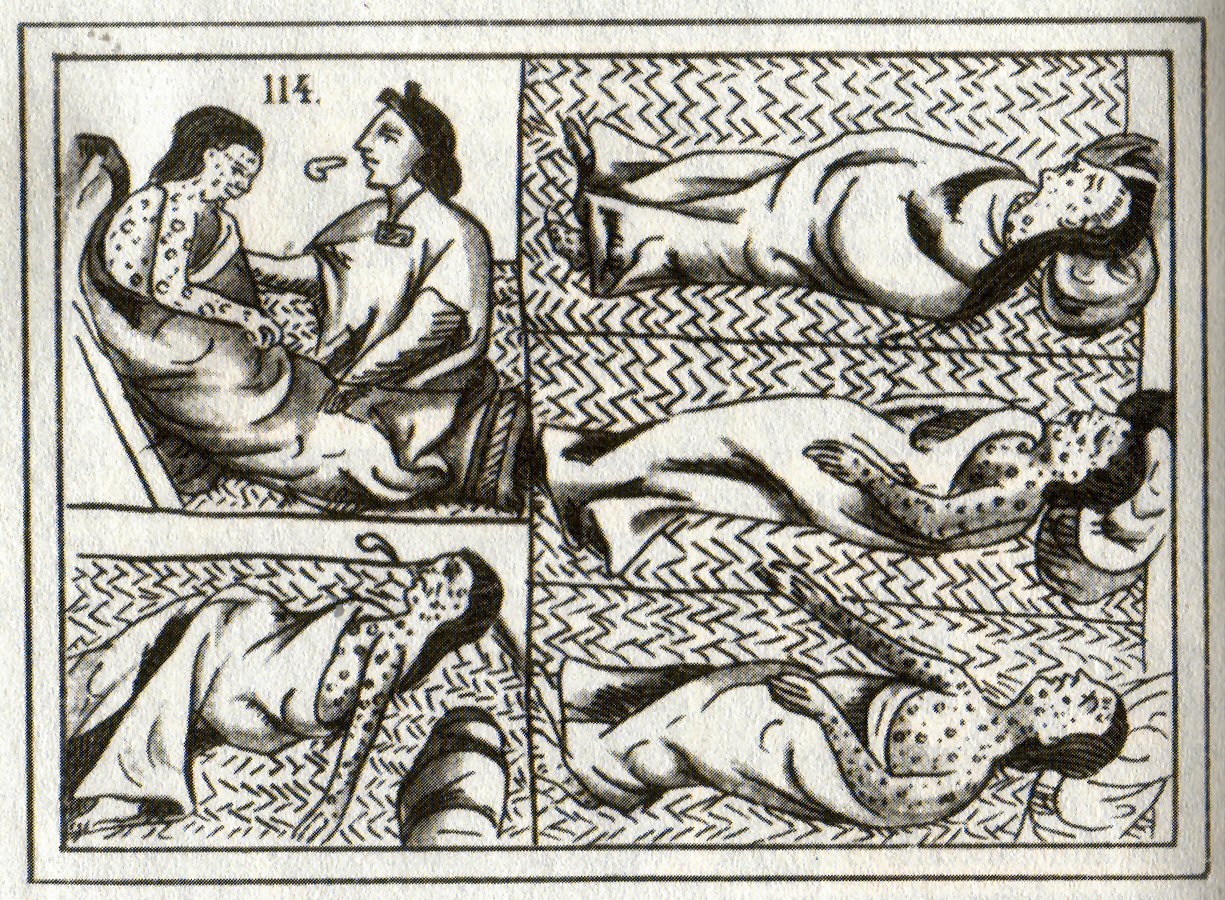
Aztec drawing of smallpox victims.


None of this is a surprise these days.  Maybe you've read Guns, Germs, and Steel or 1491 and you know all about the Great Dying.  It was probably an inevitable plague.  And with human nature as it is, the conquest of America and the near-extermination of a large part of mankind's culture may, sadly, have been inevitable too.

So I started to wonder what it would be like if the apocalypse struck both sides, indigenous and colonial alike.  What if the European world came to an end at the same time?  How would the survivors of both sides move forward?  Who would rule this New World, with the ashes of the old worlds swept away?
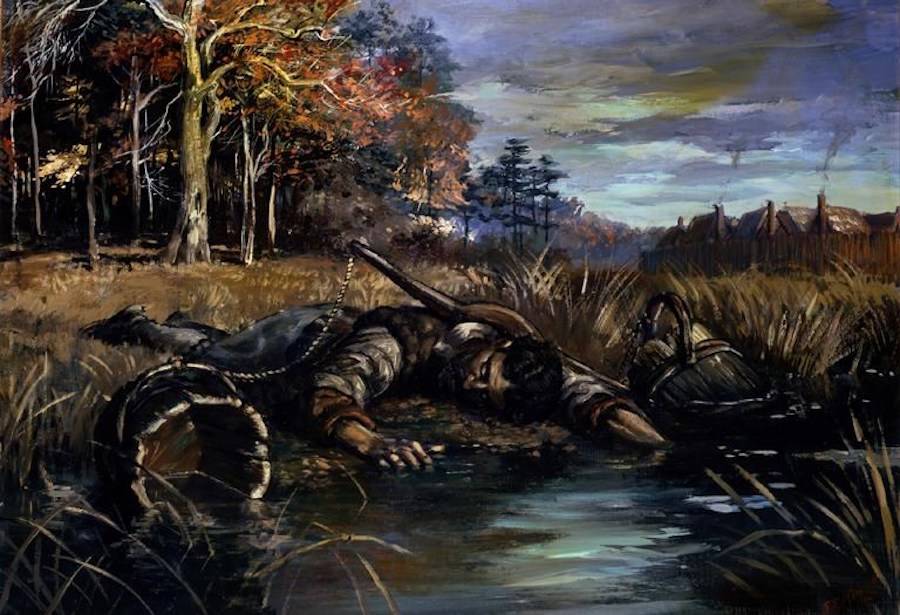
Jamestown settler dead, Sydney King


What would that European apocalypse even look like?  Imagine if, somehow, Europe itself just went missing.  News from the old country would cease, as would immigrants and supplies.  Ships sent out to investigate would leave Virginia, never to return as they ran out of food somewhere in the ocean where Europe once was.  The fledgling colonies might die out or be absorbed into the local populace, Roanoke writ large.

Signs in the Wilderness is about the frontier between civilizations, but also between the lost world of the past and the new world to be built.  The apocalypse has already happened.  One way or another, most people died, and their worlds died with them.  Now the survivors have grown up, and their children have grown up, and they've begun to build something new.

It's a world that's still mostly empty, with ruins of the past but hope for the future.

William McAusland


So how did the world end?  I like to leave plenty of mystery around the days of the apocalypse.  It's a dark time that the elderly survivors don't like to talk about.  But it left scars not only among the people, but on the world itself.  At some point, you'll need to know how it happened.

Pick two items from the table below.  The first is what actually caused the end of the world.   The second isn't the main event, but it may have happened as well or it might just be a widespread rumor.

Apocalypse (d10)signs
1-2meteorite impactwave-scoured shores, tales of darkened skies and crop failures, meteor shower every year
3-4pandemicbones and abandoned villages, fearful isolated settlements, chance the plague may return
5-6forbidden knowledgescientific research into terrible things, backlash against science
7divine retributionnew theology, theories about what distinguished those who were allowed to live
8long wintertales of starvation and years of ice, dead forests
9hibernating creaturesphysical remains, legends, theories about how many centuries the creatures sleep
10years of droughtland scorched by fire, fallen trees, lost crops from the old days


apocalypse
the real cause of the apocalypse
but at least one rumor or sign points to

Saturday, August 11, 2018

Great kingdoms long ago

Before the apocalypse, before the elven ships ever came across the sea, there was a human civilization that rose and fell, leaving traces to this very day.

Mississippian mound-builder society


Decide what they say about this society, if anyone still tells stories about it.

What was it like? (d6)
1A peaceful utopia on a lake that fell to betrayal.
2A maritime society based on an island that sank beneath the waves.
3Five cities that warred and traded, with high kings and legendary craftsmen.
4A mighty empire whose god-king ruled with an iron fist, whose capital was consumed by the forest.
5-6There was no ancient lost society. The height of human civilization is yet to come. (Stop rolling here.)

Inca procession (Ned Seidler)


How long ago did it fall? The older it is, the less remains of it today.

When did it fall? (d6)
1-2Over a thousand years ago. Only one culture still remembers it. A few ruins and artifacts survive.
3-5A few centuries ago. Early elven explorers heard legends about it. Artifacts and stories are handed down in families with a veneer of myth.
6During the apocalypse. Some elders alive today were part of it. Leaders appeal to the old society as a source of legitimacy. Treaties from those days are still invoked. Sites are still known and many artifacts still in use.

Easter Island statues (Fernando Baptista)

Choose 1-3 remnants of the old civilization.

What signs are left? (d6)
1-2great stone statues of people or animals
3-4golden amulets, breastplates, wands, figurines
5-6earthen mounds as holy places, fortifications, burial sites of ancient kings
7-8animal figures across the landscape, cut from turf or earth
9-10hidden knowledge passed down by a few

Scythian golden ornaments (Ariadne Galleries)


In my own version of the setting, there are two ancient societies:
  • One religion among the humans originated in one of the five cities that fell over a thousand years ago, in the interior of the continent.  Heavily-worn, cryptic stone statues and odd bits of goldwork remain.
  • One human tribe is all that remains of a mighty kingdom that fell a hundred years ago, a generation or two before the apocalypse.  The elves have heard legends of it, but don't believe they're true.  The kingdom left earthen holy burial mounds with treasures inside.  Their descendants appeal to the memory of the old kingdom all the time, keeping up the royal lineage, the old religion, and its complex taboos and laws.

Try rolling up your own:

great civilizations of old
What was it like?
When did it fall?
What signs are left?

Thursday, July 5, 2018

What we lost in the Starving Time

There's a reason for people to be optimistic about the future: the past was probably worse.

A generation ago, the world came to an end.  The sky grew dark, crops failed, sickness and hunger plagued the earth.  So much was lost in the starving time.

(Reza Afshar)

When you're writing up a new human tribe, roll to see what they lost:

Starving Time (d10)
1They lost their history.
2No one is left who can do their craft.
3Their sacred items went missing.
4No one knows how to plant or harvest their old crop.
5They're all that's left of a powerful city/kingdom.
6Several groups of refugees came together to form this tribe.
7There was once a great hunt among this tribe.
8They abandoned their old religion.
9Danger drove them far from their old home.
10The elders are ashamed of what they did in the dark days.

In a way, the apocalypse was harder on the ones who survived.  The dead were gone more quickly; the living had to carry the burden of losing their entire world and doing whatever it took to survive.  For that generation, everything was defined by the apocalypse.  Their lives were divided into two parts: life before and life after.

The younger generation grew up knowing nothing else.  The starving time was just a story their parents told; the days before just a time of legend.  Most people today don't mourn the old world because they never knew it.